
After the Storm - Madelon Uljee
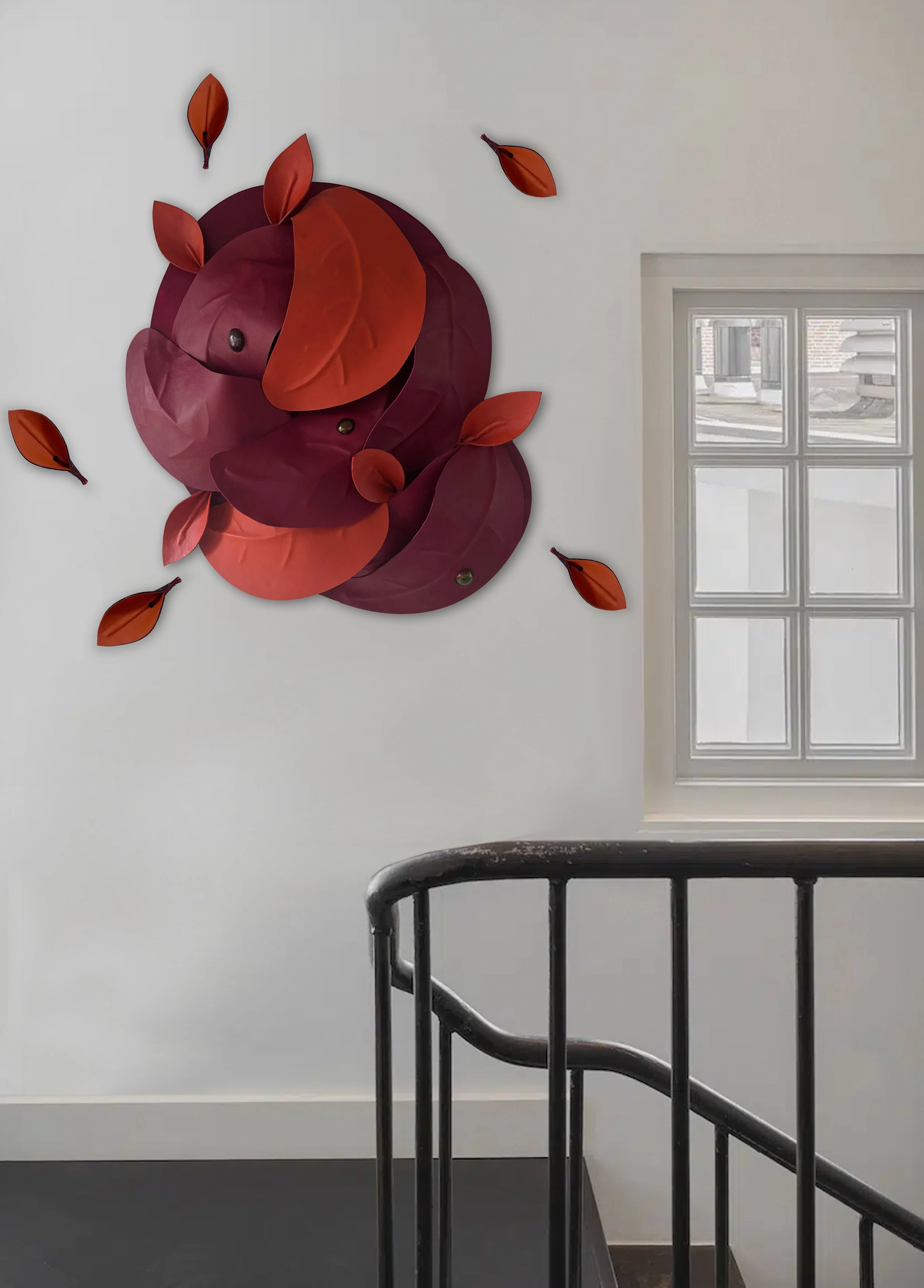
After the Storm is a sculptural leather wall installation by Dutch artist Madelon Uljee, created for its first presentation at Big Art Rotterdam. Composed of three substantial wall sculptures and a constellation of individual leaves, the work unfolds across the architecture rather than remaining contained within a fixed frame.
Its modular character allows the installation to respond to the proportions, sightlines and function of a particular setting. The complete work can occupy a large wall, while its individual elements can also form more concentrated compositions. This makes After the Storm particularly relevant to interior architects, art advisers and collectors looking for contemporary art that enters into a direct relationship with its surroundings.
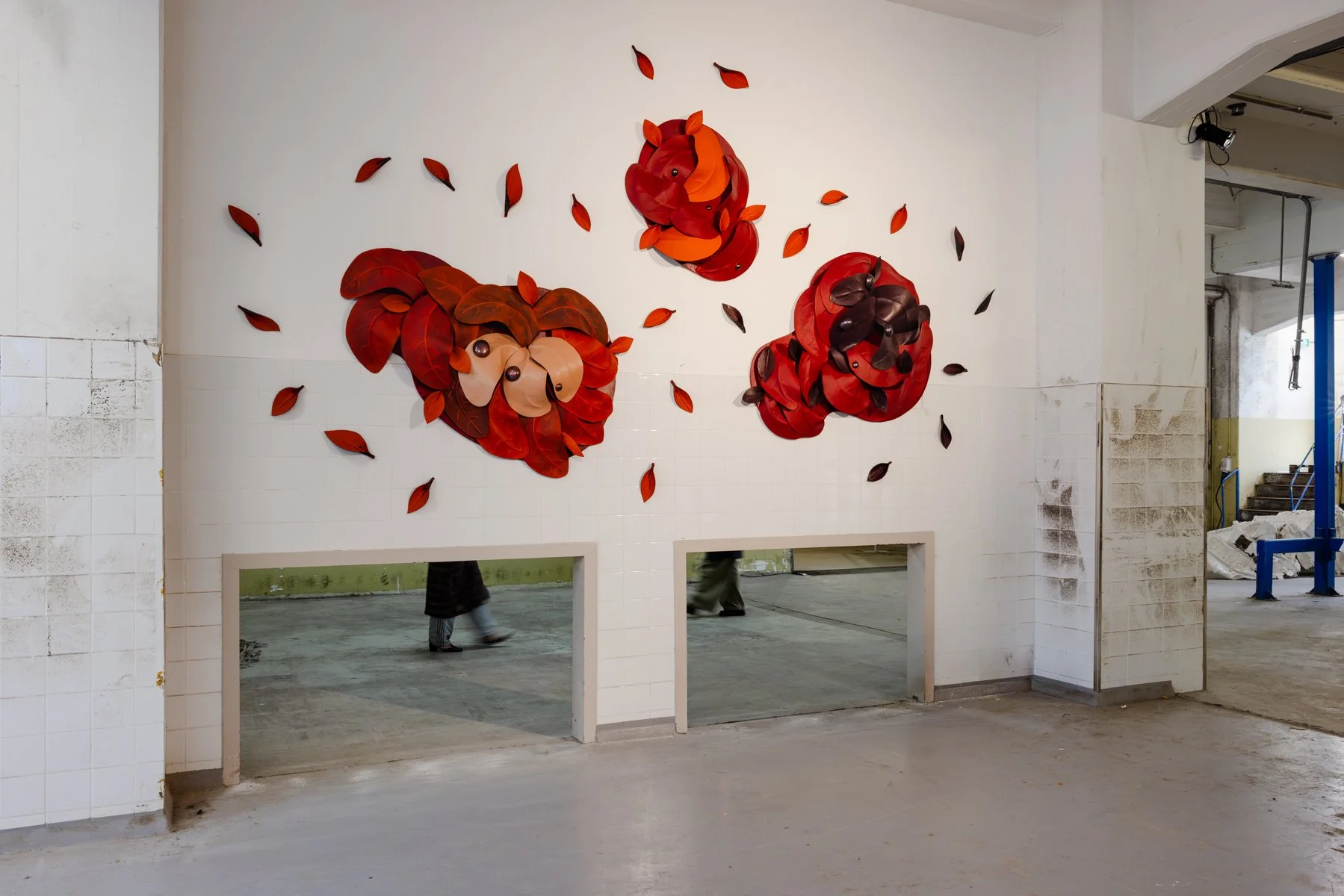
Nature, resilience and renewal in After the Storm
Madelon Uljee’s practice begins with a sustained observation of the natural world. She is drawn not only to recognisable forms such as leaves and flowers, but also to the forces acting upon them: growth, movement, decay and regeneration. Her works do not reproduce nature literally. Instead, they isolate its structures and translate its changing states into sculptural form.
In After the Storm, the event itself has already passed. Leaves appear to have been torn from their branches and dispersed across the wall, while larger, layered forms gather at the centre. Their arrangement suggests movement without illustrating a single, fixed moment. The installation remains suspended between turbulence and stillness.
Yet the work is not primarily concerned with destruction. Uljee focuses on the point at which recovery begins. The tree gathers strength, preparing for new growth and another bloom. Within the composition, vulnerability and resilience are inseparable: each displaced leaf signals loss, while simultaneously becoming part of a new formation.
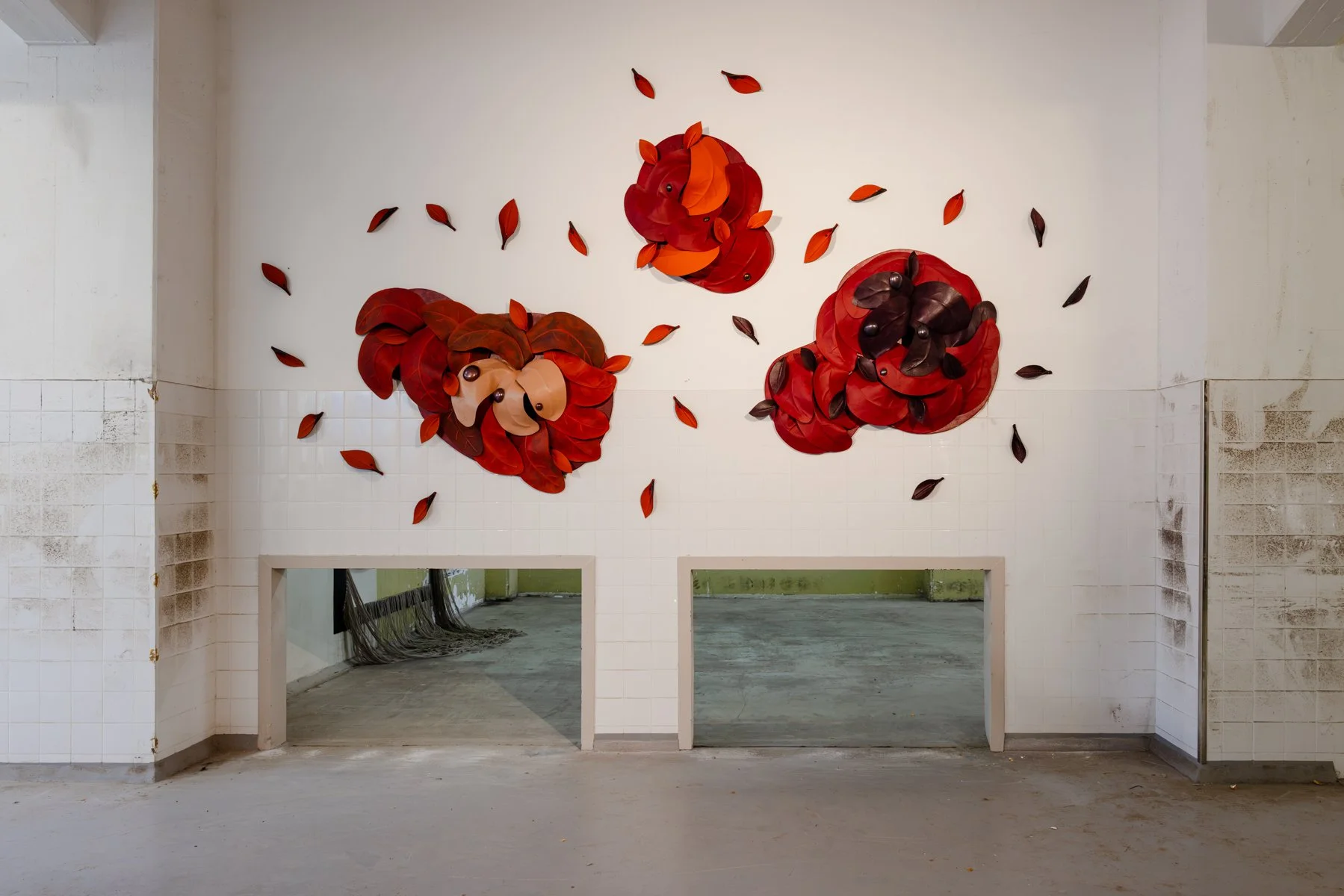
Surplus leather from haute couture and luxury fashion
Uljee works with high-quality surplus leather from the haute couture and luxury fashion industry. Luxury brands frequently order more material than is ultimately used for bags, footwear and other products. Uljee gives this unused leather a new purpose, transforming it into sculptural leaves and unique works of art.
The material carries an inherent tension. It is soft and responsive, yet strong enough to retain its sculptural form. Its natural texture remains visible, while folds, curves and layered surfaces capture the light differently throughout the day.
By working with existing surplus materials, Uljee limits the need for newly produced leather and preserves material of exceptional quality that might otherwise remain unused. This makes her work particularly relevant to corporate, hospitality and private collections seeking to combine a strong artistic identity with circular material use and more responsible acquisition policies.
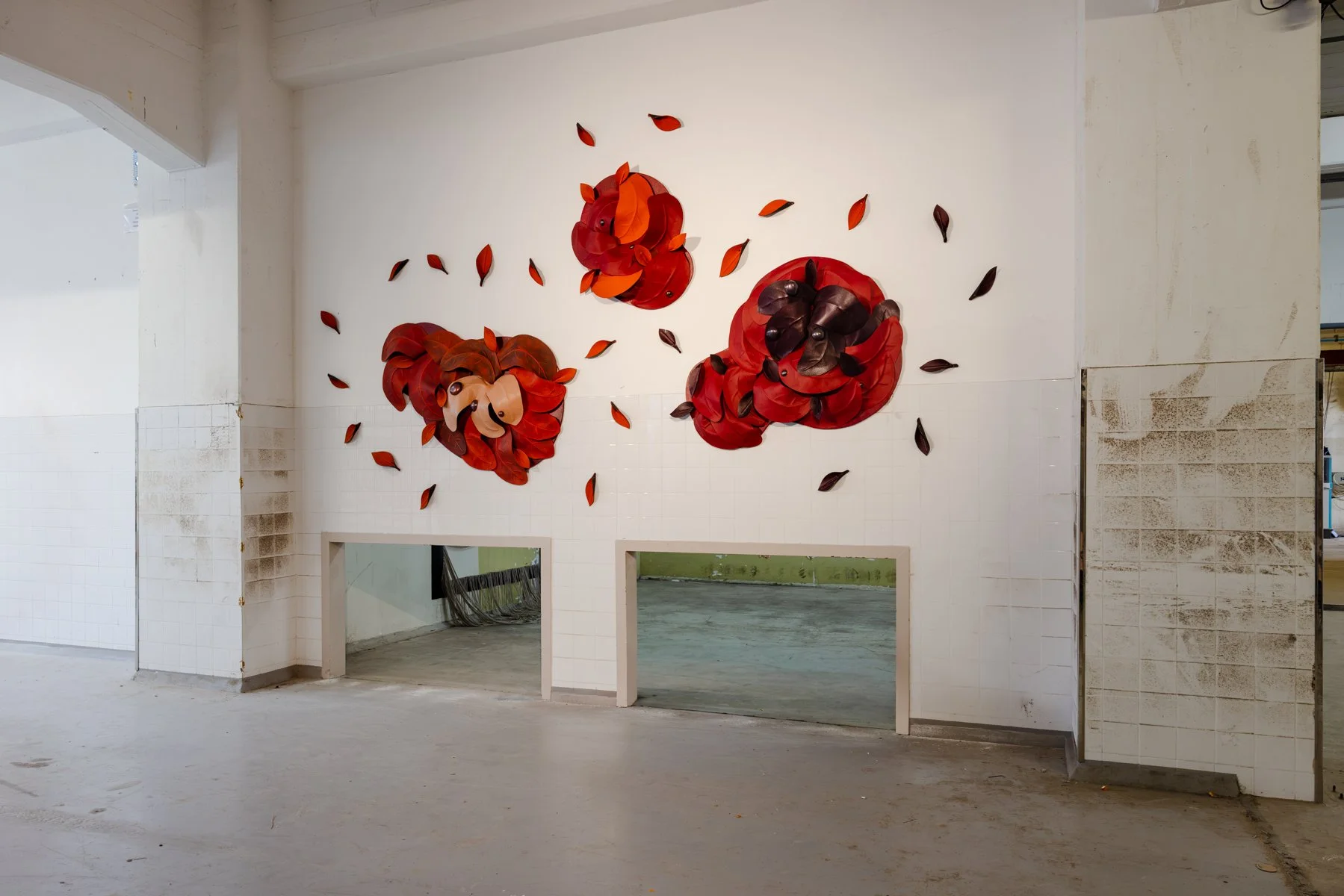
Photography by Jacqueline Fuijkschot
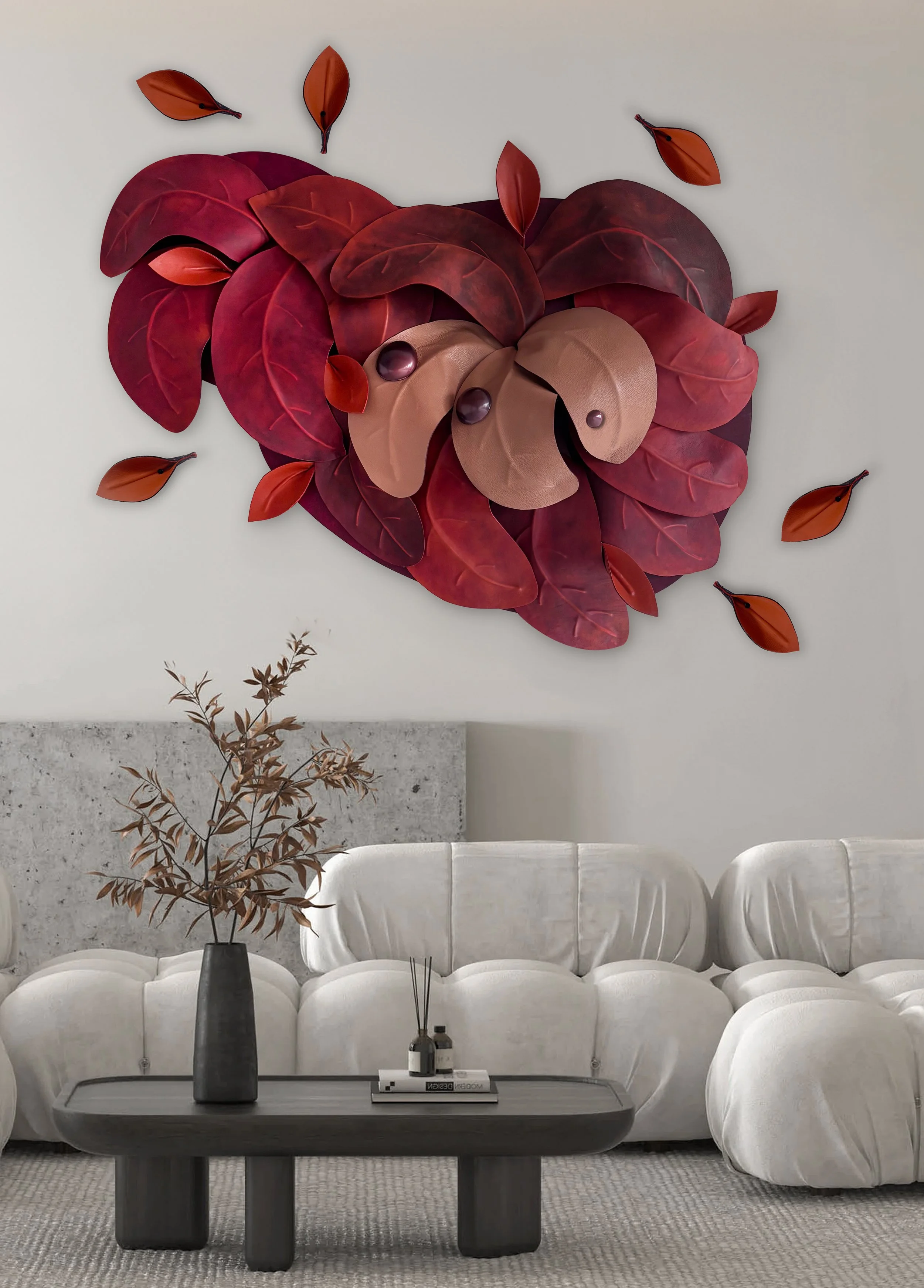
Burgundy, aubergine and burnt orange in sculptural Form
Colour plays a structural role within After the Storm. Deep red, burgundy, aubergine and burnt orange connect the individual components while allowing subtle contrasts to emerge.
The colours intensify the work’s emotional register. Darker tones suggest the weight and turbulence of the storm, while the warmer orange and red elements introduce energy and the possibility of renewal. As daylight moves across the leather, the colours and shadows shift, continually altering the appearance of the installation.
A site-responsive artwork for interior architecture
After the Storm consists of three main sculptural works accompanied by individual leather leaves. Together, they create an expansive installation, but the composition is not permanently fixed. The spacing, direction and overall scale can be adapted to the architecture in which the work is placed.
A long wall may allow the leaves to travel broadly through the space, while a more contained setting can bring the elements together into a denser composition. The installation can follow an architectural line, activate a transitional area or create a focal point within a residential, corporate, hospitality or public interior.
This adaptability enables interior architects and art advisers to consider the work as part of the spatial design from an early stage. The composition can be developed in response to circulation routes, furniture, natural light and the proportions of the surrounding architecture.
Available as a complete installation or individual composition
The complete installation is available as a single work. The three main sculptures and individual leather leaves may also be acquired separately, allowing new configurations to be developed in consultation with Madelon Uljee and Root Gallery.
Installation within the Netherlands is included with the complete installation and with each of the three main sculptural works.
Further inquiries
With its sculptural depth, rich colour palette, circular use of materials and adaptable composition, After the Storm is particularly suited to architectural environments in which the work can unfold across the space.
If you are developing or managing a private, corporate, hospitality or public interior and are considering a site-responsive artwork, Root Gallery can advise on the scale, arrangement and installation of an existing or newly developed composition.
Interested in discussing the possibilities for your space? Please get in touch.