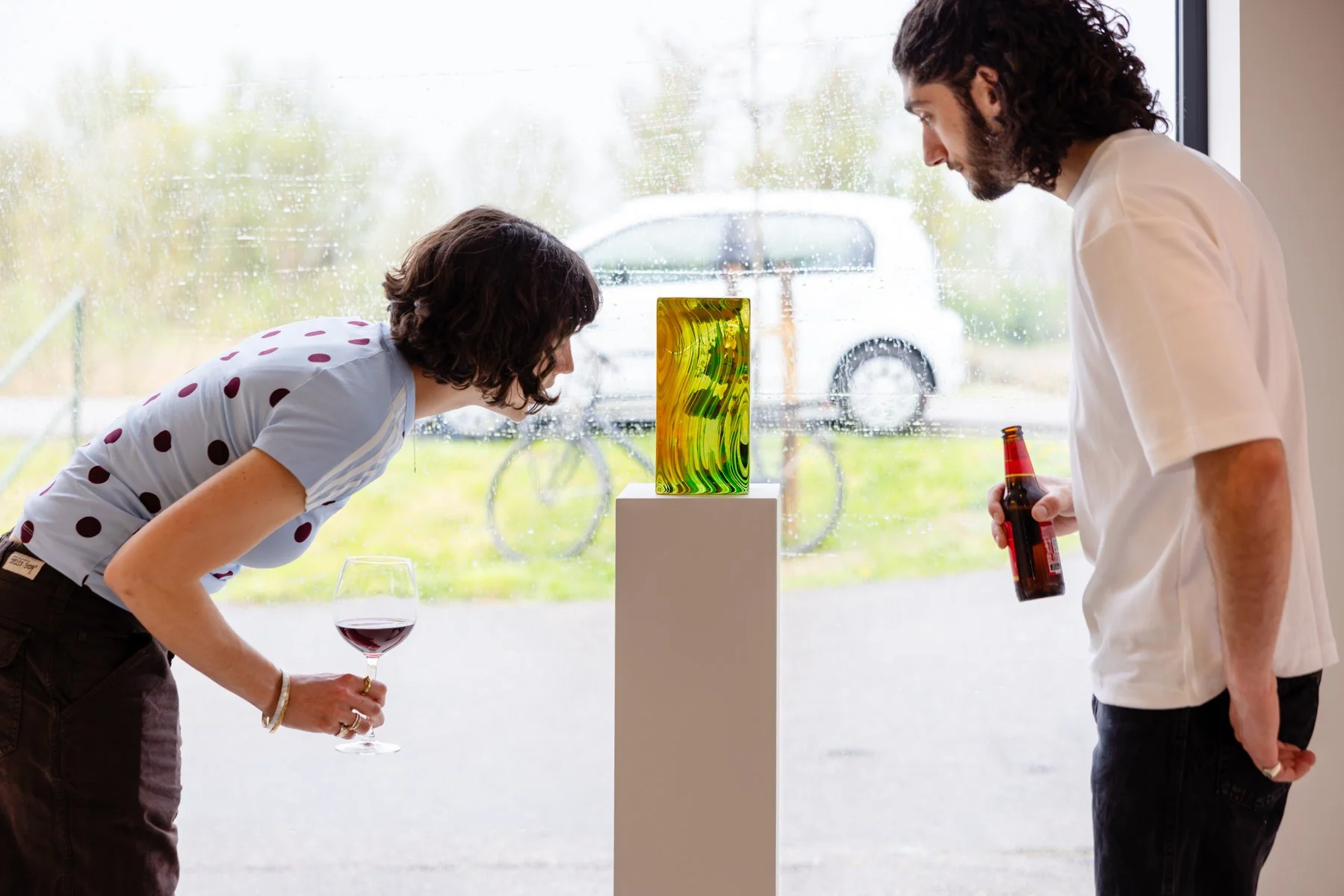
From brick to Venetian glass: Lisette Schumacher’s Spatial Shade
A brick is usually understood as something solid, repetitive and practical. In Lisette Schumacher’s Spatial Shadesculptures, it becomes a means to explore colour, transparency and the way light changes our perception of an object.
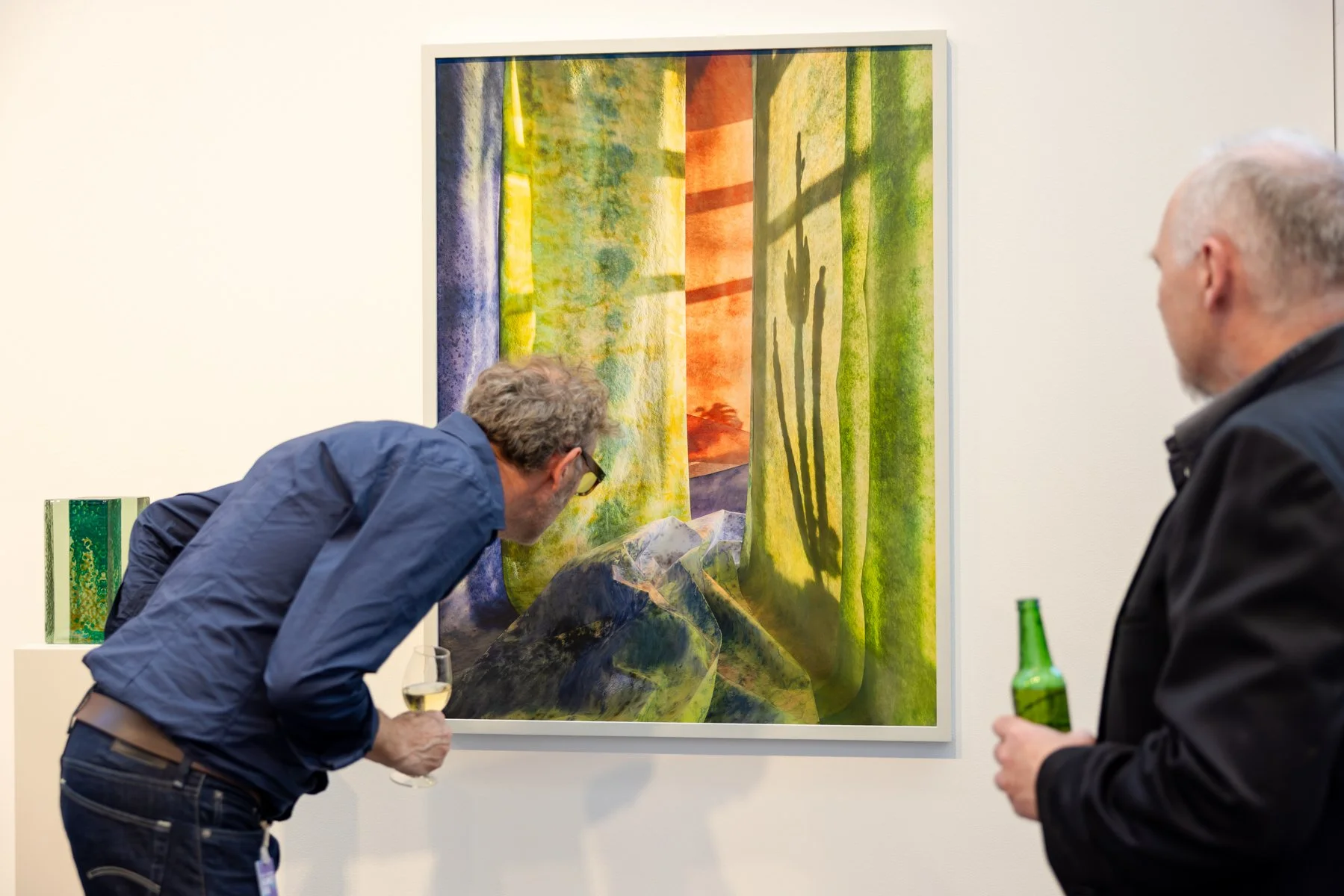
Working with solid, hand-cast Venetian glass, paint and varnish, Schumacher brings together two traditions: glassmaking and architecture. At PAN Amsterdam 2026, we will once again present works from Spatial Shade, alongside the new Segment and Arch subseries inspired by the Amsterdamse School.

By Lisette Schumacher
25 × 15 × 10 cm, 2026
Solid hand-cast glass, paint, varnish
From the series Spatial Shade
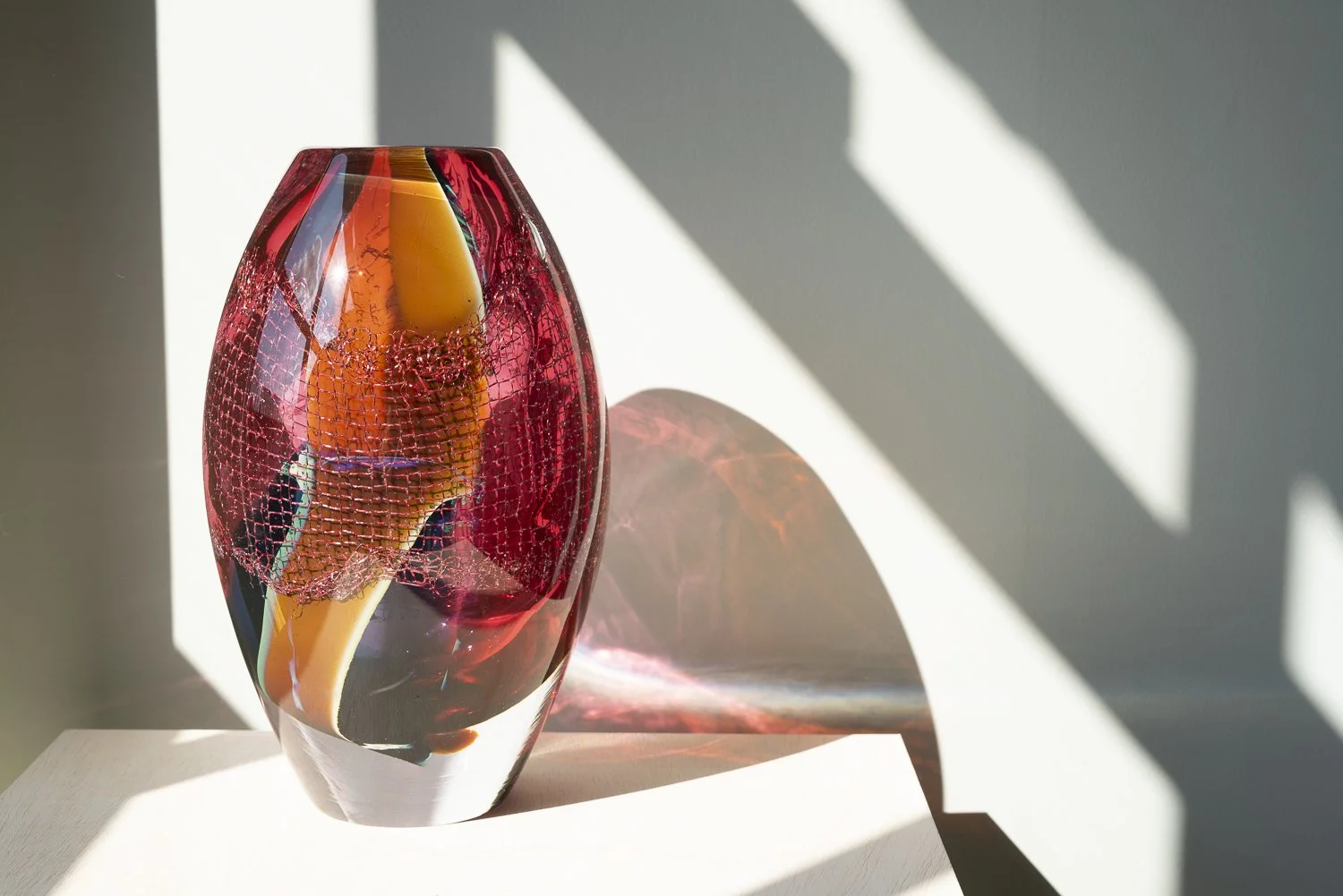
Spatial Shade XVIII is a contemporary glass sculpture by Lisette Schumacher, made from solid, hand-cast Venetian glass, paint and varnish. Upright rectangular glass forms create a compact architectural composition. Blue, turquoise and gold-coloured passages appear through the translucent glass, with one side emphasising deep blue and the other revealing warmer golden tones.
For her Spatial Shade series, Schumacher takes the brick as a building block. Its modular use in modern architecture, including the work of Mies van der Rohe, Alvar Aalto and Le Corbusier, provides a starting point for her exploration of balance, proportion and elementary forms. Replacing stone with glass allows light and transparency to become part of that architectural language.
In Spatial Shade XVIII, painted colour and the substantial depth of the glass interact. Looking through and around the sculpture reveals overlapping surfaces, reflections and changes in the apparent position of colour. The work invites viewing from several sides, each offering a different relationship between its structure and painted composition.
Delivery in the Netherlands and Belgium is complimentary, carefully arranged in consultation, either in person or securely shipped. We’re happy to advise on placement and presentation.
Venetian glass: a history of material invention
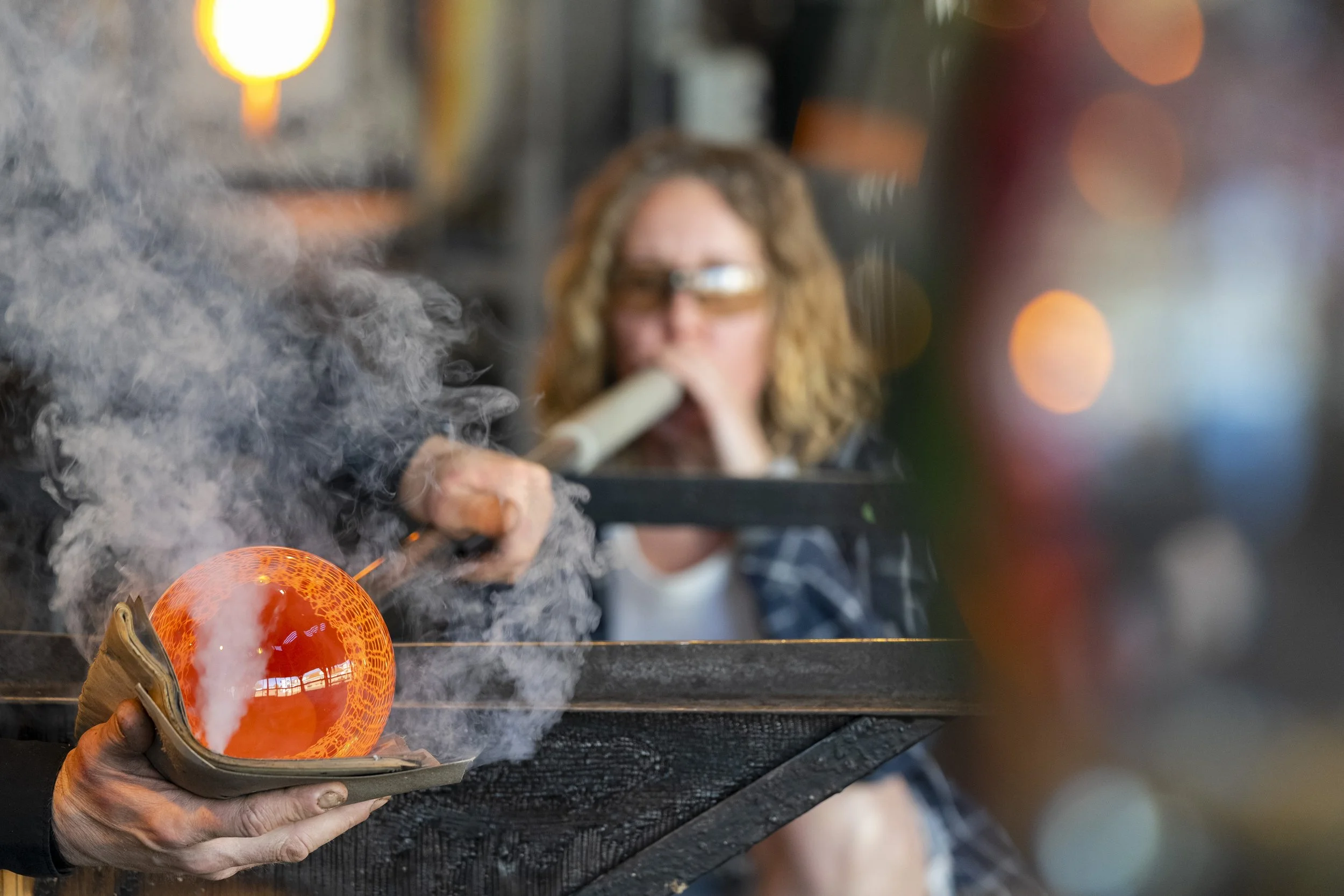
Venetian glass carries a history of technical experimentation developed over centuries, particularly on the island of Murano in the Venetian lagoon. Its reputation grew through advances in transparency, colour and intricate techniques that demanded exceptional control of the material.
One influential development was Angelo Barovier’s exceptionally clear glass in the fifteenth century. Known as cristallo, it helped establish Murano’s reputation for glass whose clarity approached that of rock crystal. Later innovations included filigree, with fine threads of white or coloured glass incorporated into clear glass, creating elaborate linear patterns.
That history continued through collaborations with artists, architects and designers in the twentieth century. At Venini, architect Carlo Scarpa served as artistic director between 1932 and 1947. Alongside delicate blown forms, heavier and solid glass became an important area of exploration, opening different possibilities for colour, volume and sculptural expression.
This background offers a useful context for Schumacher’s choice of material. In her sculptures, the substantial glass forms give colour a physical depth. Painted marks can be seen through the glass, alongside reflections and overlapping views of other surfaces. Looking at a work means looking both at its surface and into its volume.
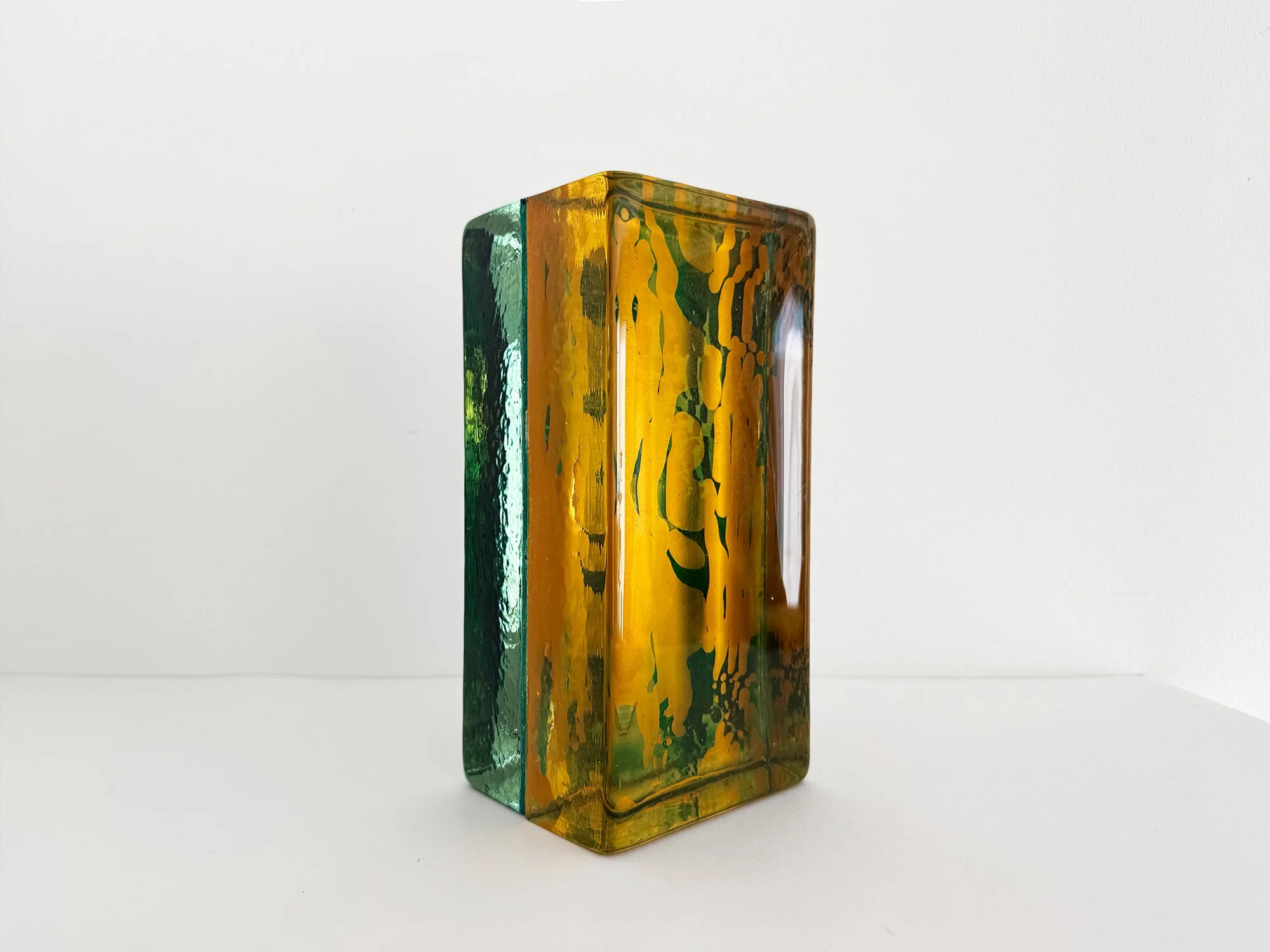
By Lisette Schumacher
25 × 15 × 10 cm, 2025
Solid hand-cast glass, paint, varnish
From the series Spatial Shade
In the Spatial Shade series, Lisette Schumacher creates glass sculptures from solid handcast coloured glass. Each work is carefully composed from individual glass elements, resulting in balanced forms that reveal subtle differences in colour and transparency.
Light plays an essential role in these sculptures. As light moves through the glass, reflections and colour variations appear within the material. The sculpture changes depending on the angle from which it is viewed, revealing different layers and tones.
The compact scale of the work allows for close viewing, where the depth of the glass and the transitions between colours become visible. The weight and clarity of the material give the sculpture a strong physical presence.
Schumacher’s sculptures highlight the qualities of glass as a material, where colour, light and form come together in a single object.
Delivery in the Netherlands and Belgium is complimentary, carefully arranged in consultation, either in person or securely shipped. We’re happy to advise on placement and presentation.
Spatial Shade: building with colour and light
For Spatial Shade, Schumacher takes the brick’s modular form as her starting point. She references its use in modern architecture, including the work of Mies van der Rohe, Alvar Aalto and Le Corbusier, to develop arrangements of glass blocks in different shapes and sizes.
The resulting sculptures explore balance and proportion through elementary forms. Their architectural character is immediately recognisable, yet their transparency changes how those forms are experienced. The edges define a solid object, while the view through it creates another, less certain sense of space.
In Spatial Shade XVIII, upright rectangular glass forms bring blue, turquoise and gold-coloured passages together. From one side, blue dominates; from another, warmer golden tones become more prominent. The painted composition and the depth of the glass make each viewpoint different.
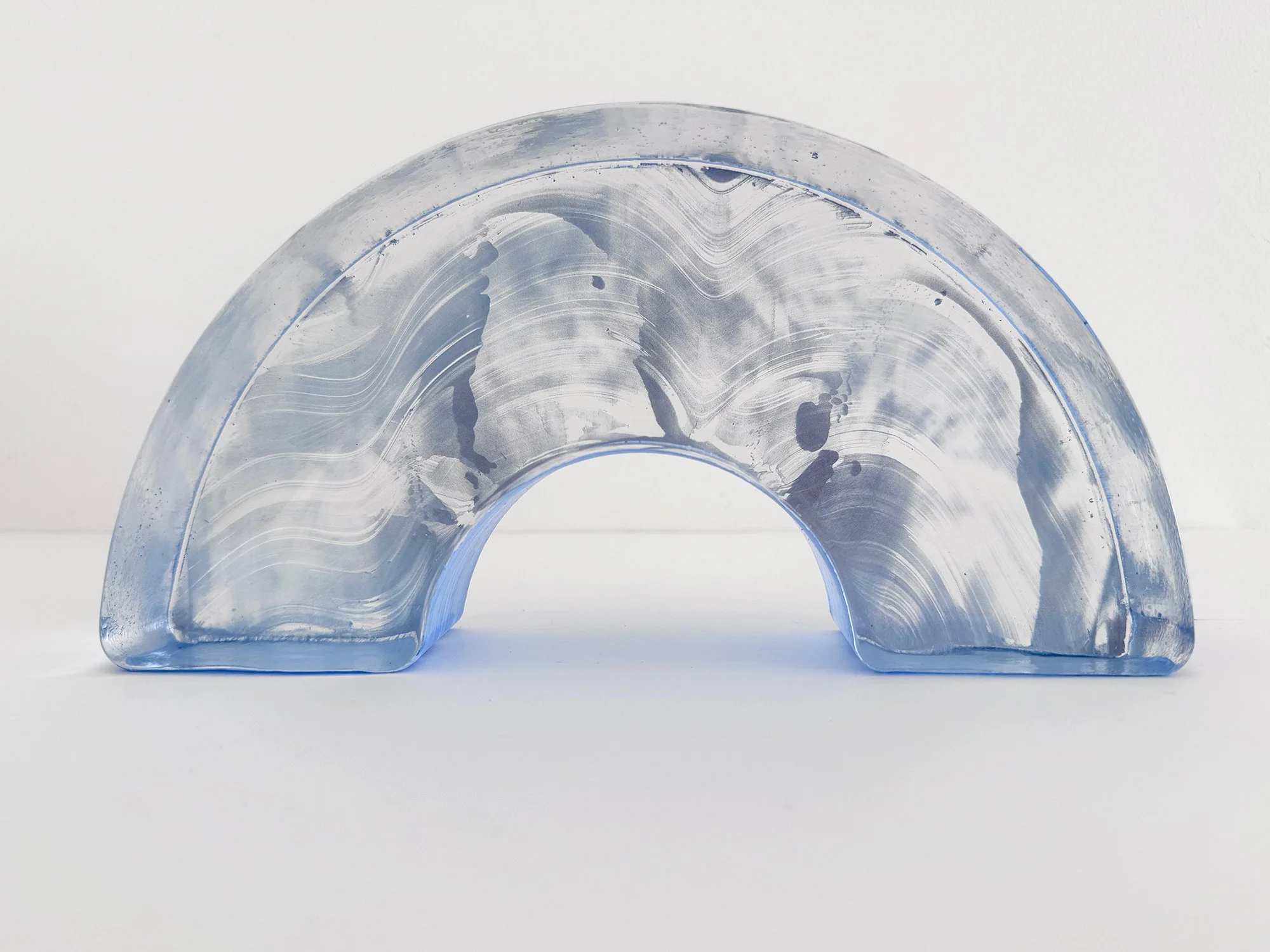
By Lisette Schumacher
28 × 14 × 5,3 cm, 2026
Solid hand-cast glass, paint, varnish
From the series Spatial Shade
Spatial Shade Arch I is a pale blue glass and mixed-media sculpture by Lisette Schumacher. Its semicircular arch surrounds an open centre, while flowing white markings extend across the translucent form. The substantial glass edges catch the light, giving the architectural shape a changing visual depth.
The work belongs to Spatial Shade — Segment and Arch, a series inspired by the curved brick walls and decorative façade reliefs of the Amsterdamse School. Schumacher draws on the use of brick in the designs of Jo van der Mey, Michel de Klerk and Piet Kramer, translating an architectural building block into solid, hand-cast Venetian glass.
The open arch makes the space around and beneath the sculpture part of the composition. It brings together Schumacher’s interest in architecture, craftsmanship and the relationship between solid material and light.
Delivery in the Netherlands and Belgium is complimentary, carefully arranged in consultation, either in person or securely shipped. We’re happy to advise on placement and presentation.
The Amsterdamse School: when brickwork becomes sculpture
The new Segment and Arch subseries turns towards a particularly expressive chapter in Dutch architecture.
The Amsterdamse School emerged in the early twentieth century, with architects including Jo van der Mey, Michel de Klerk and Piet Kramer. Its buildings are known for expressive materials, rich detailing and undulating façades. Brickwork became a way to shape the character of a building and its relationship with the street.
Michel de Klerk’s Het Schip in Amsterdam is a striking example. Designed as workers’ housing, it brought architectural ambition and carefully considered craftsmanship into everyday life. De Klerk’s attention extended from the exterior to the post office interior, including its stained glass and clock. This concern for the whole, down to individual details, was central to the movement’s approach.
For Schumacher, the curved walls and decorative brick reliefs provide a starting point for sculptural forms. In Segment and Arch, the shaped brick is translated into solid, hand-cast Venetian glass. Arches, concave edges and curved segments retain a recognisable connection to masonry, while allowing light to pass through them.
The material transformation is significant. A brick wall creates a boundary; these glass forms allow us to look through that boundary. Pale blue, deep blue and rose-coloured passages interact with flowing painted marks, introducing a painterly movement within the architectural outline.
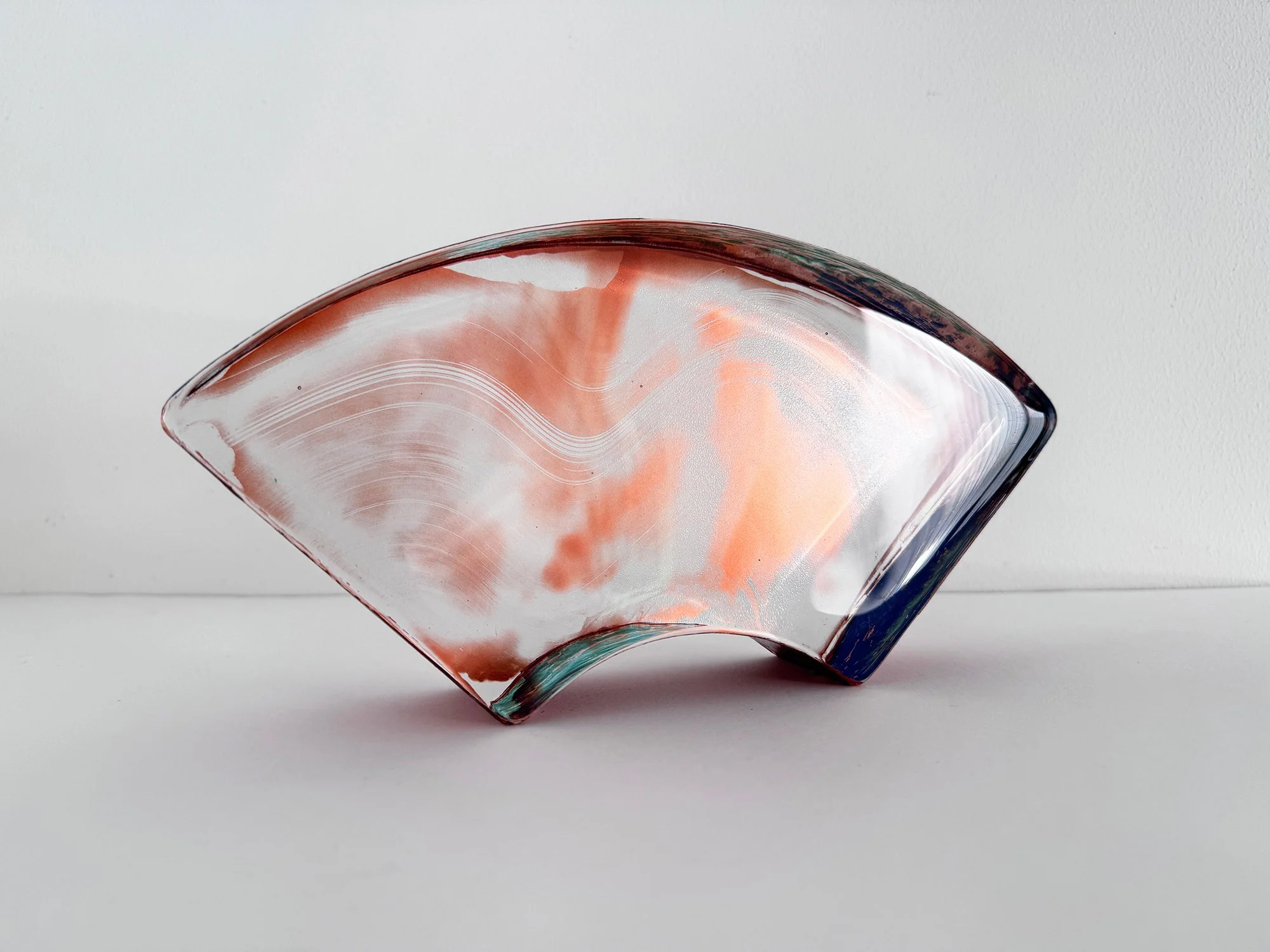
By Lisette Schumacher
17 × 14 × 5,3 cm, 2026
Solid hand-cast glass, paint, varnish
From the series Spatial Shade
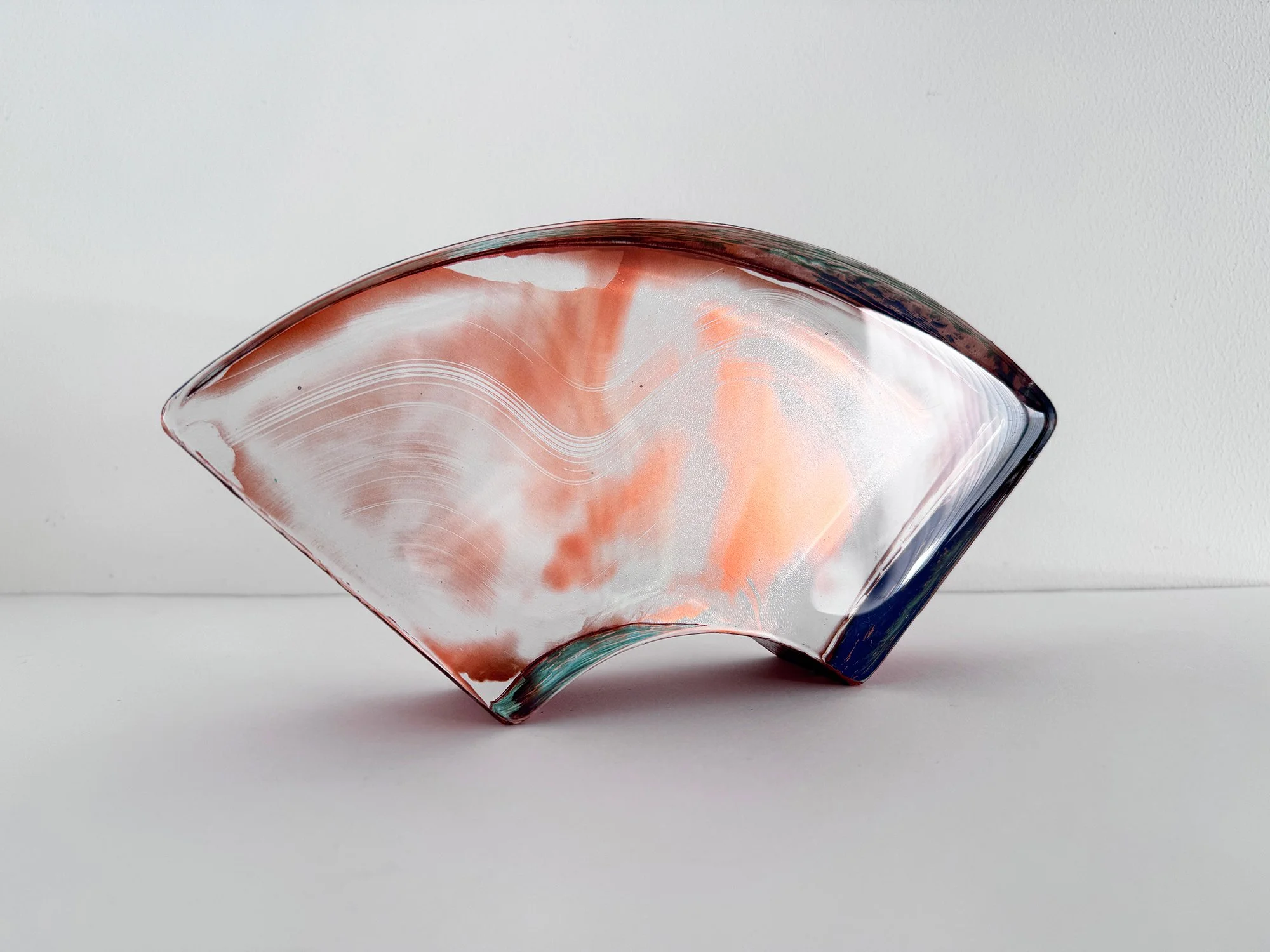
Spatial Shade Segment II is a pink glass and mixed-media sculpture by Lisette Schumacher, inspired by architectural brickwork. Warm rose and reddish-brown tones meet translucent areas and delicate white lines. The glass edges have a subtle green tint, framing the colour within a fan-shaped form.
The sculpture belongs to Spatial Shade — Segment and Arch, a series rooted in the curved brick walls and decorative reliefs of the Amsterdamse School. Schumacher takes the brick as a sculptural building block, referencing the craftsmanship and material sensitivity found in the designs of Jo van der Mey, Michel de Klerk and Piet Kramer.
Rendered in solid, hand-cast Venetian glass, this familiar architectural element acquires transparency and visual depth. Segment II combines the rhythm of its curved outline with soft colour transitions and flowing marks, inviting close attention to the relationship between glass, colour and light.
Delivery in the Netherlands and Belgium is complimentary, carefully arranged in consultation, either in person or securely shipped. We’re happy to advise on placement and presentation.
Experiencing the sculptures in light
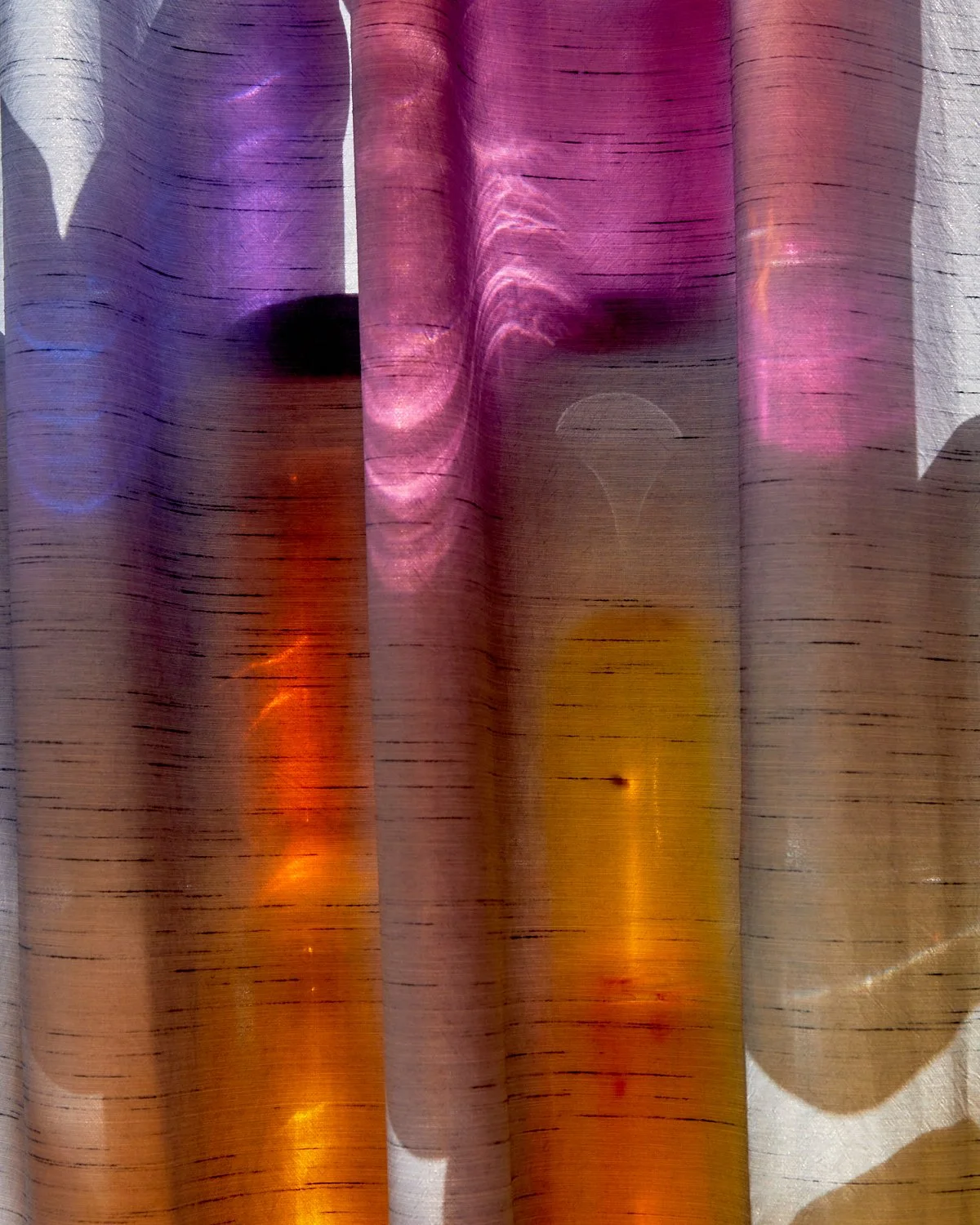
Good light reveals the colour and visual depth of these works. Near a window, changing daylight offers different views of the glass throughout the day. On darker days or in the evening, a carefully positioned spotlight helps bring out the painted passages, translucent areas and reflections.
We are happy to advise on a suitable position and lighting for a particular sculpture. Seeing the works in person also allows you to move around them and experience the relationship between their solid forms and the views through the glass.
Lisette Schumacher at PAN Amsterdam 2026
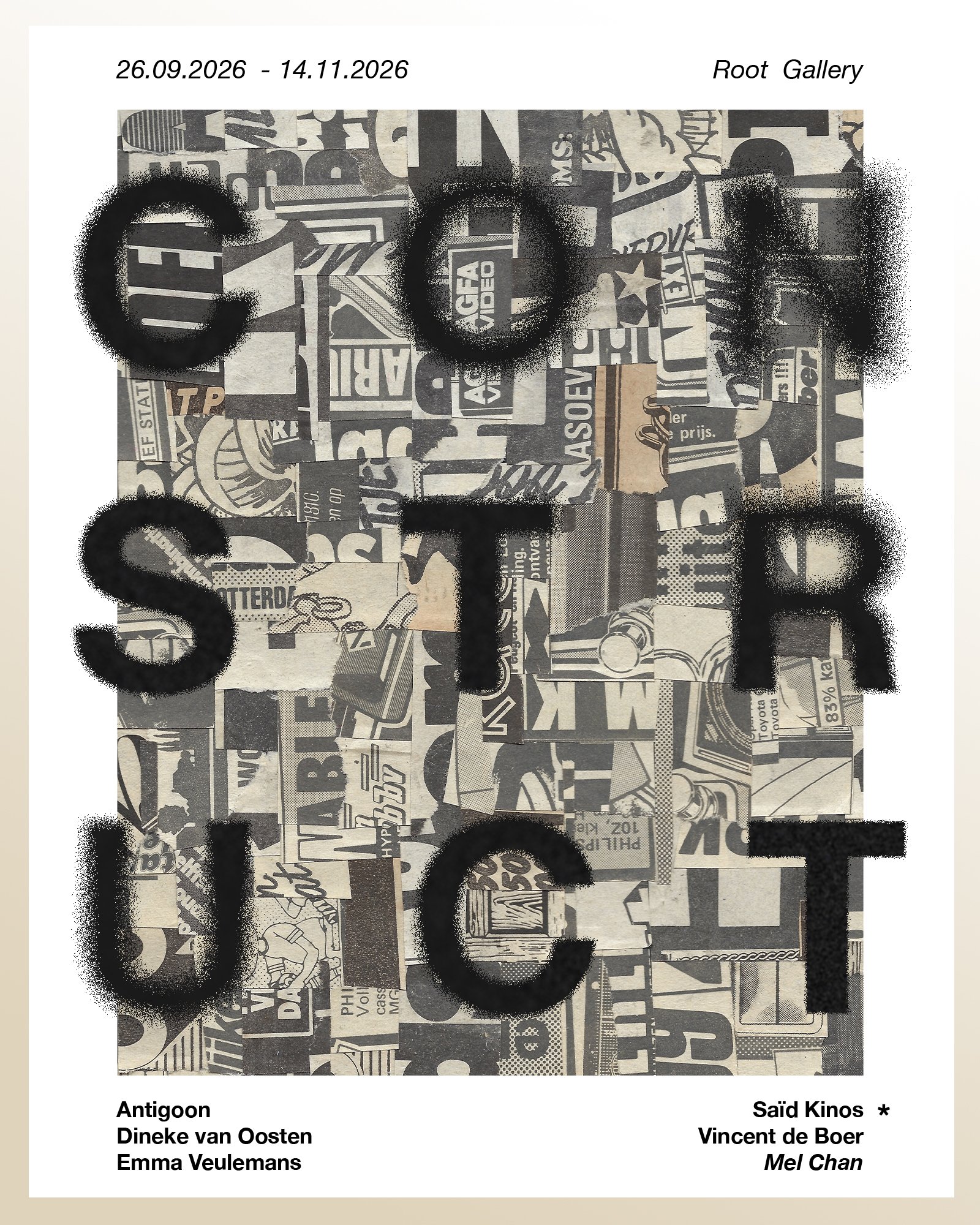
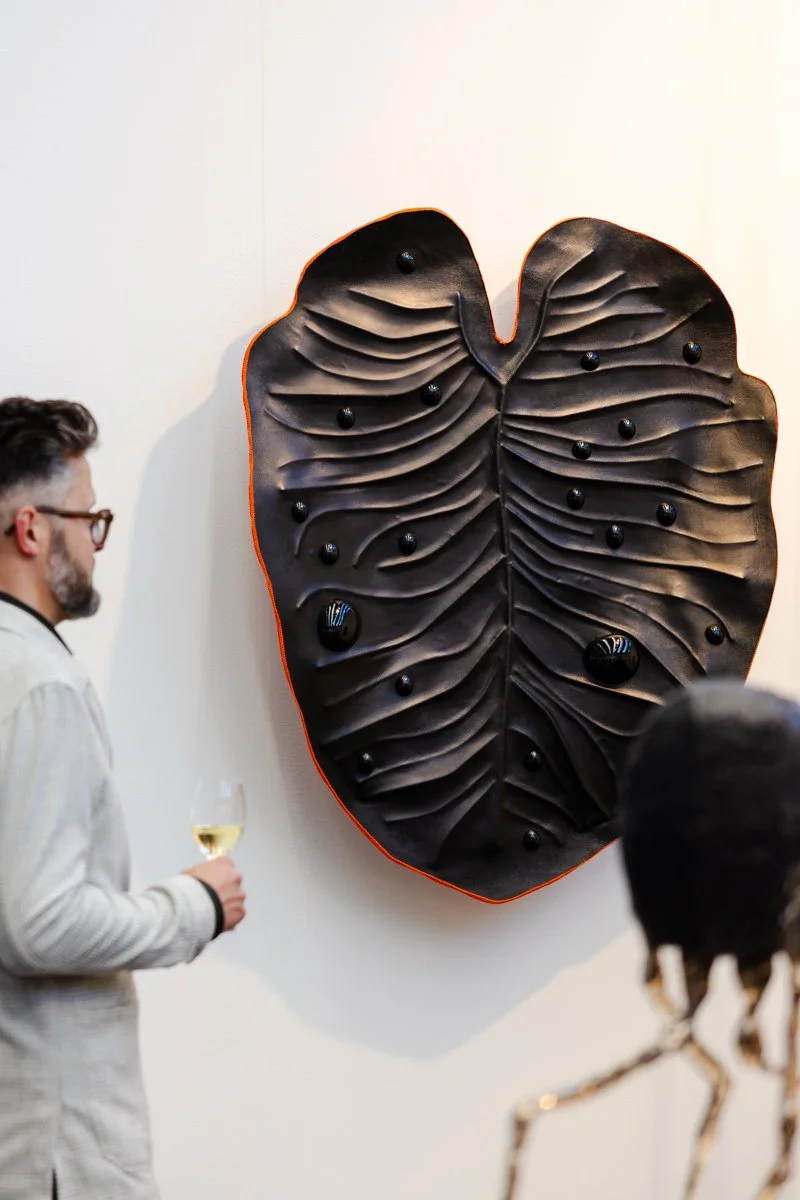
We will present sculptures from Spatial Shade and the new Segment and Arch subseries at PAN Amsterdam, 1–8 November 2026 at RAI Amsterdam.
Visit Root Gallery at stand 129 to discover the works in person. You can also explore the available sculptures on our website or contact us to arrange a viewing at the gallery in Krimpen aan de Lek. We offer insured worldwide shipping.