Where Light Lands
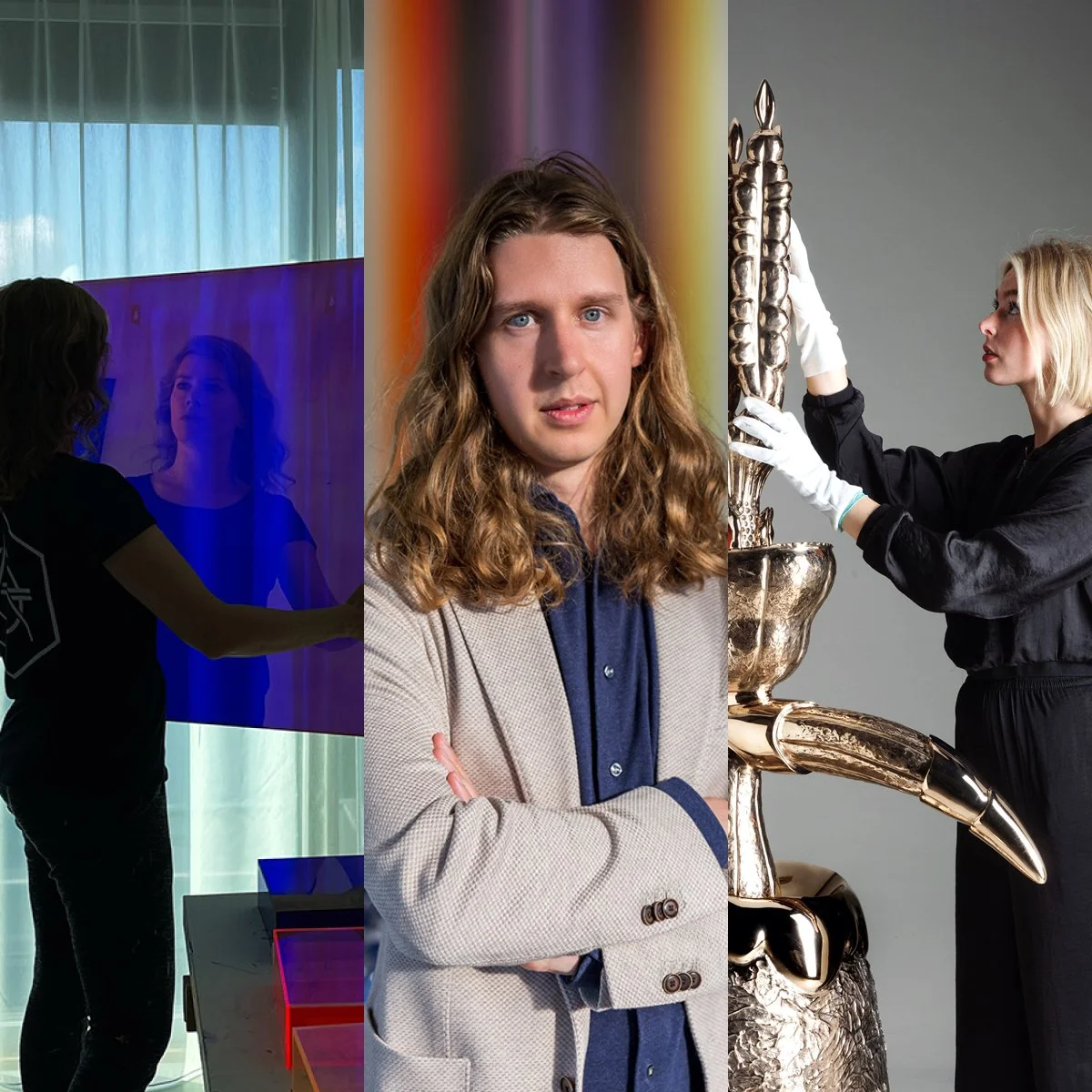
Donald Schenkel · Jeske Haak · Lisette Schumacher
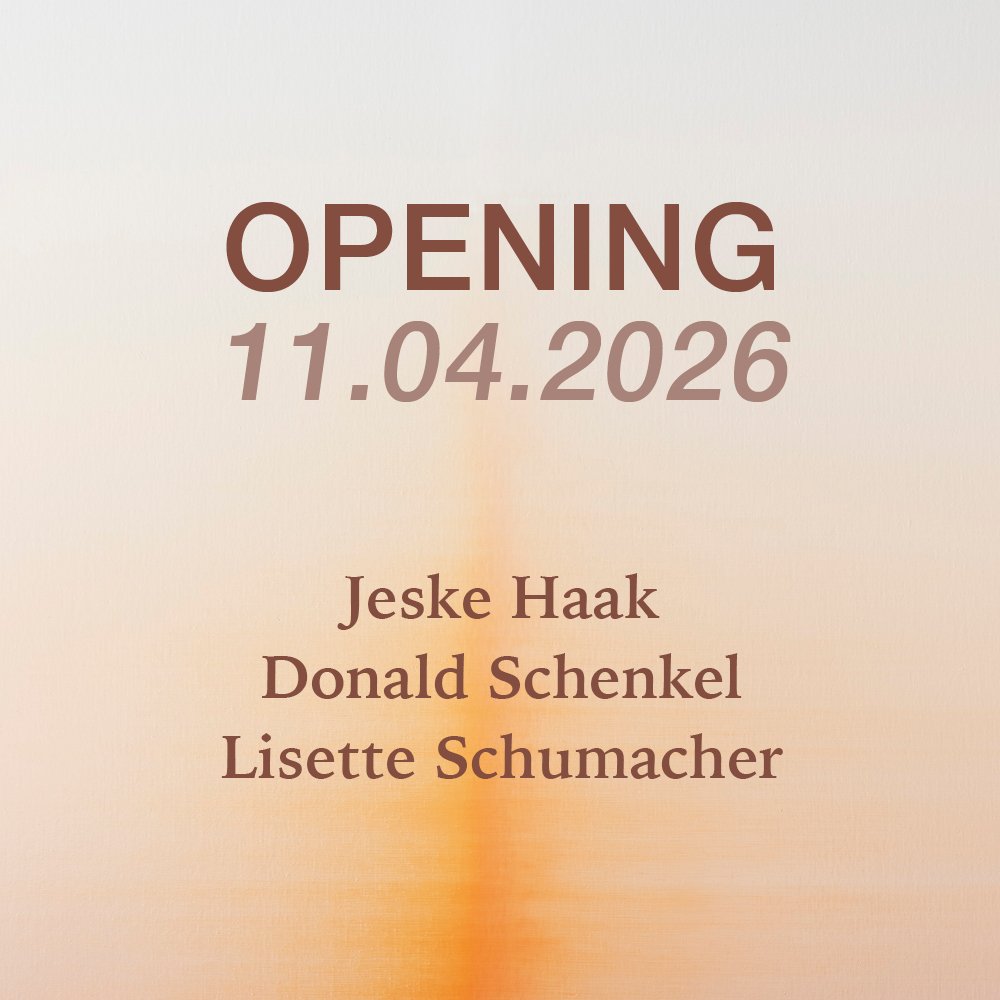
In April, Where Light Lands will open at the gallery.
In the months leading up to the exhibition, we spoke with Donald Schenkel, Jeske Haak and Lisette Schumacher about where they are now, what they carry into a new year, what they want to deepen, and what they are allowing to shift in their practice.
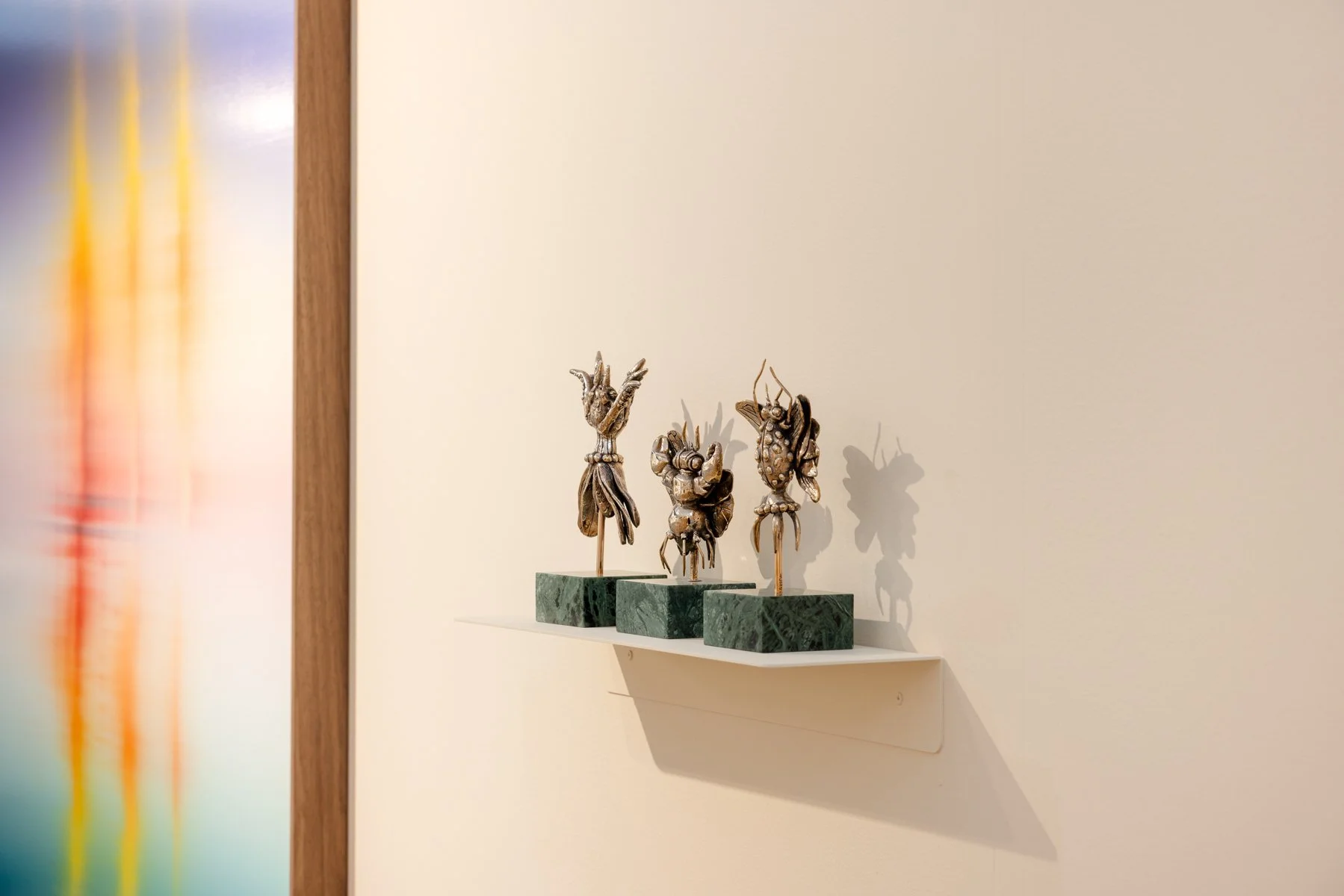
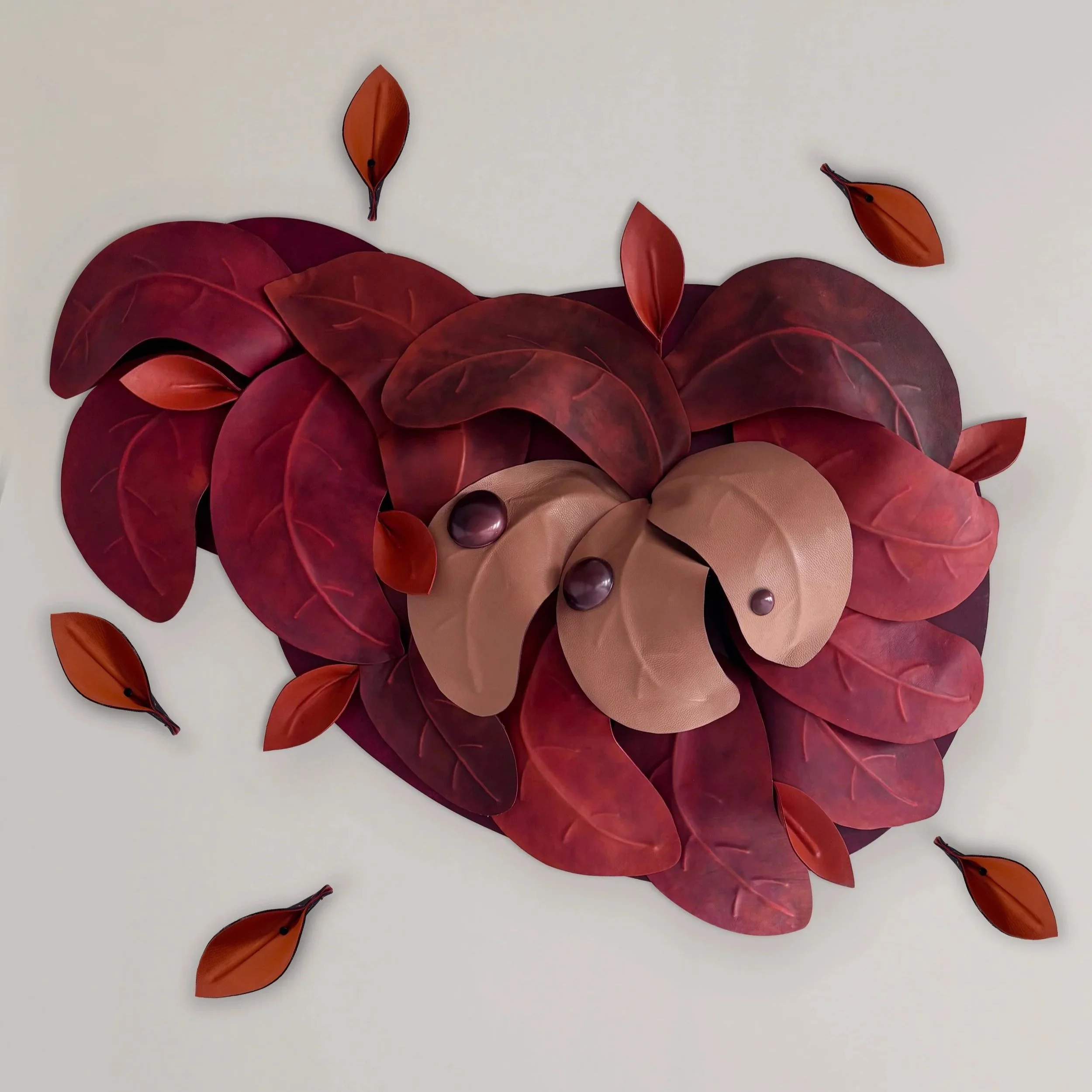
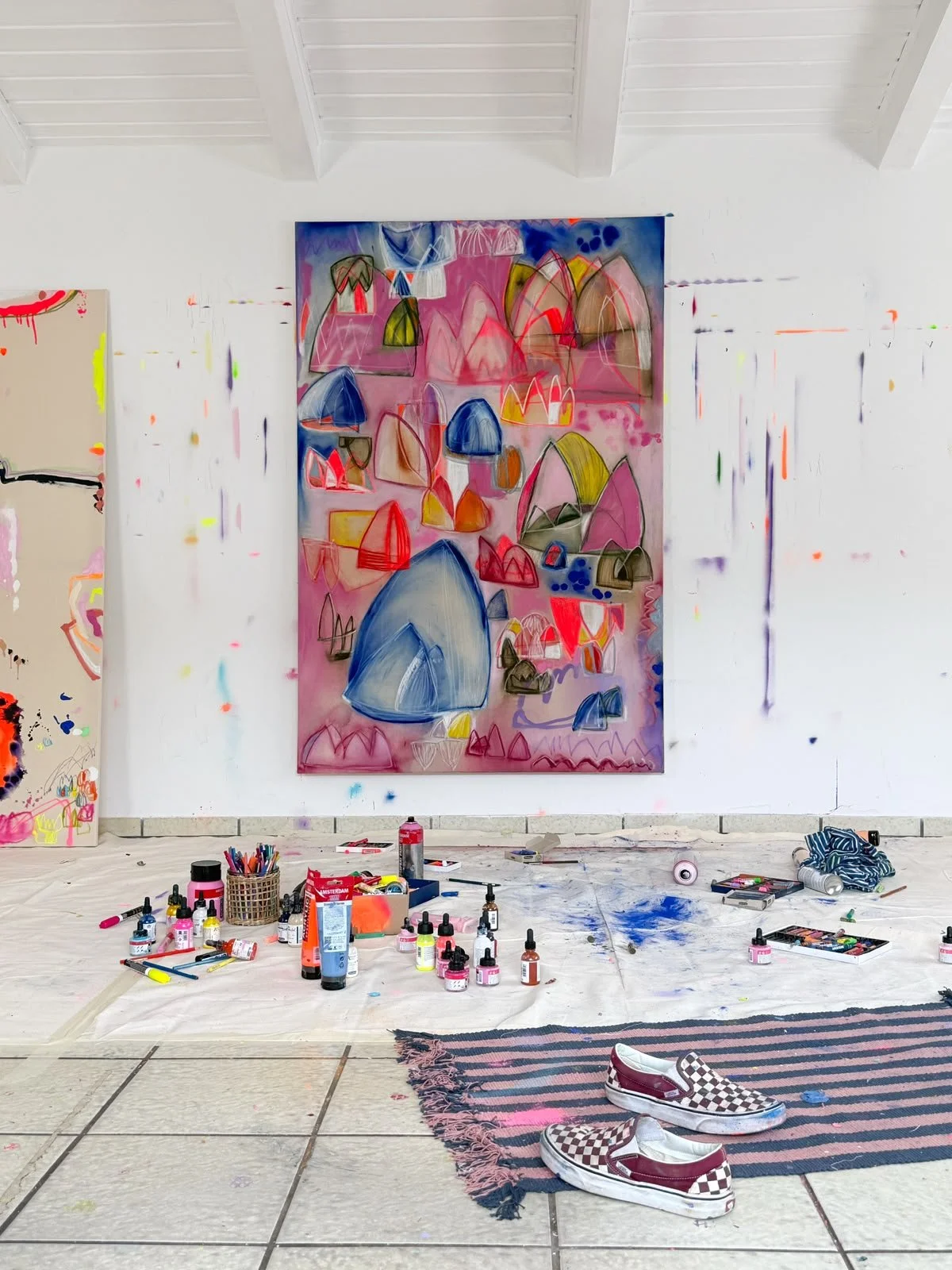
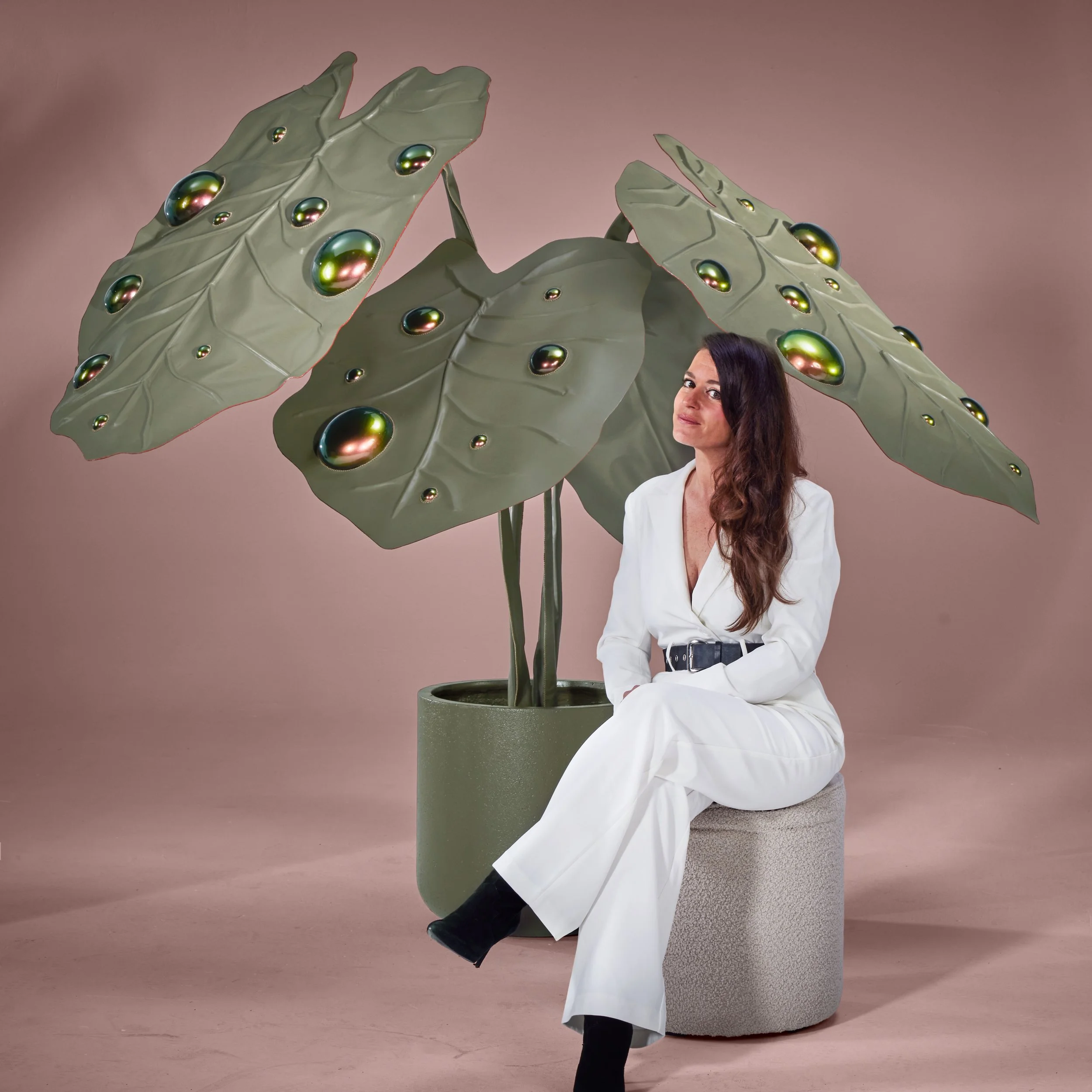
Flowers series by Jeske Haak
Where Light Lands
It begins with a sense of measured clarity.
Not the kind that demands explanation, but one that reveals itself slowly, in the way light moves across a surface, in how a form holds still yet feels alive. In the rhythm between one work and the next, not in repetition, but in restraint.
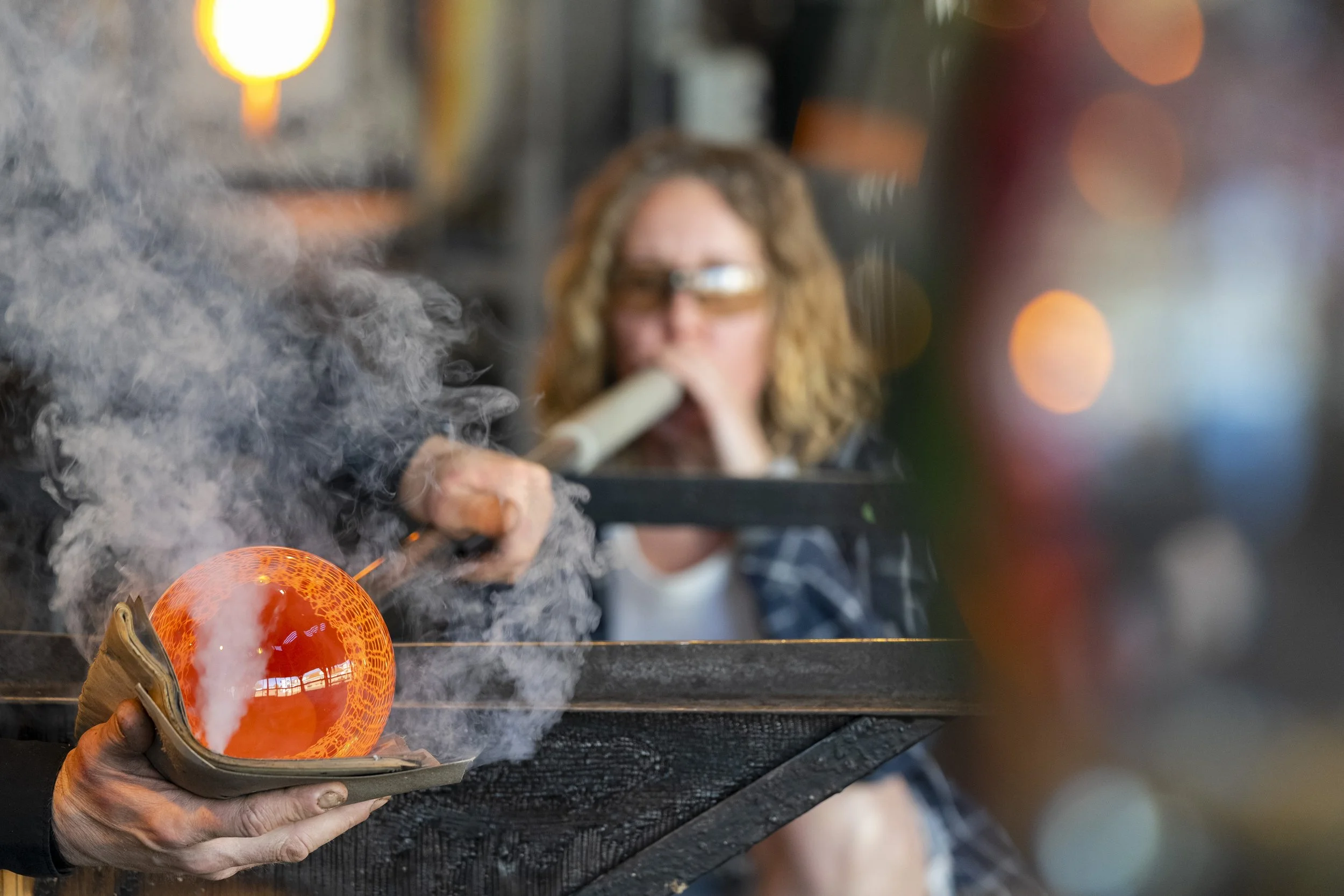
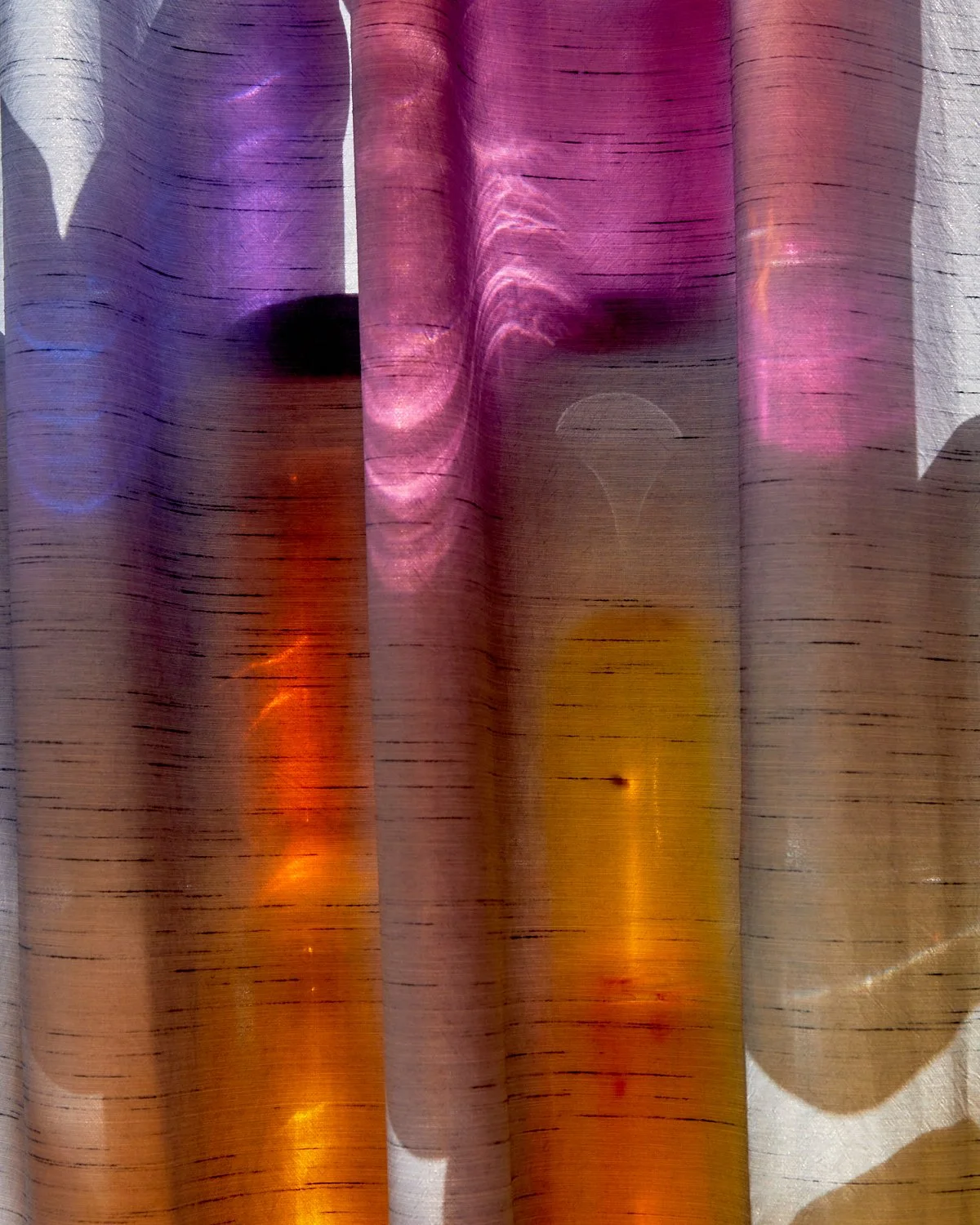
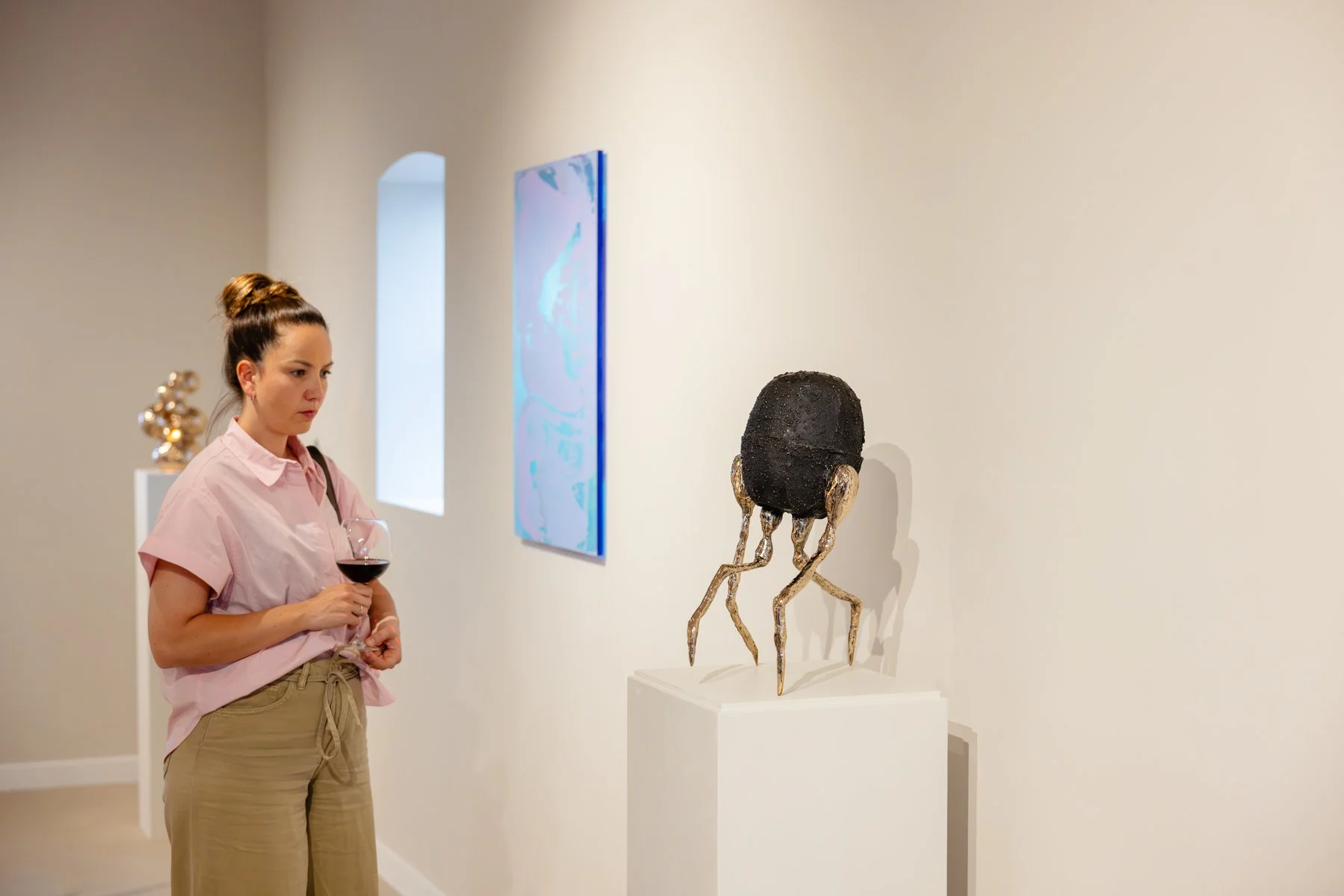
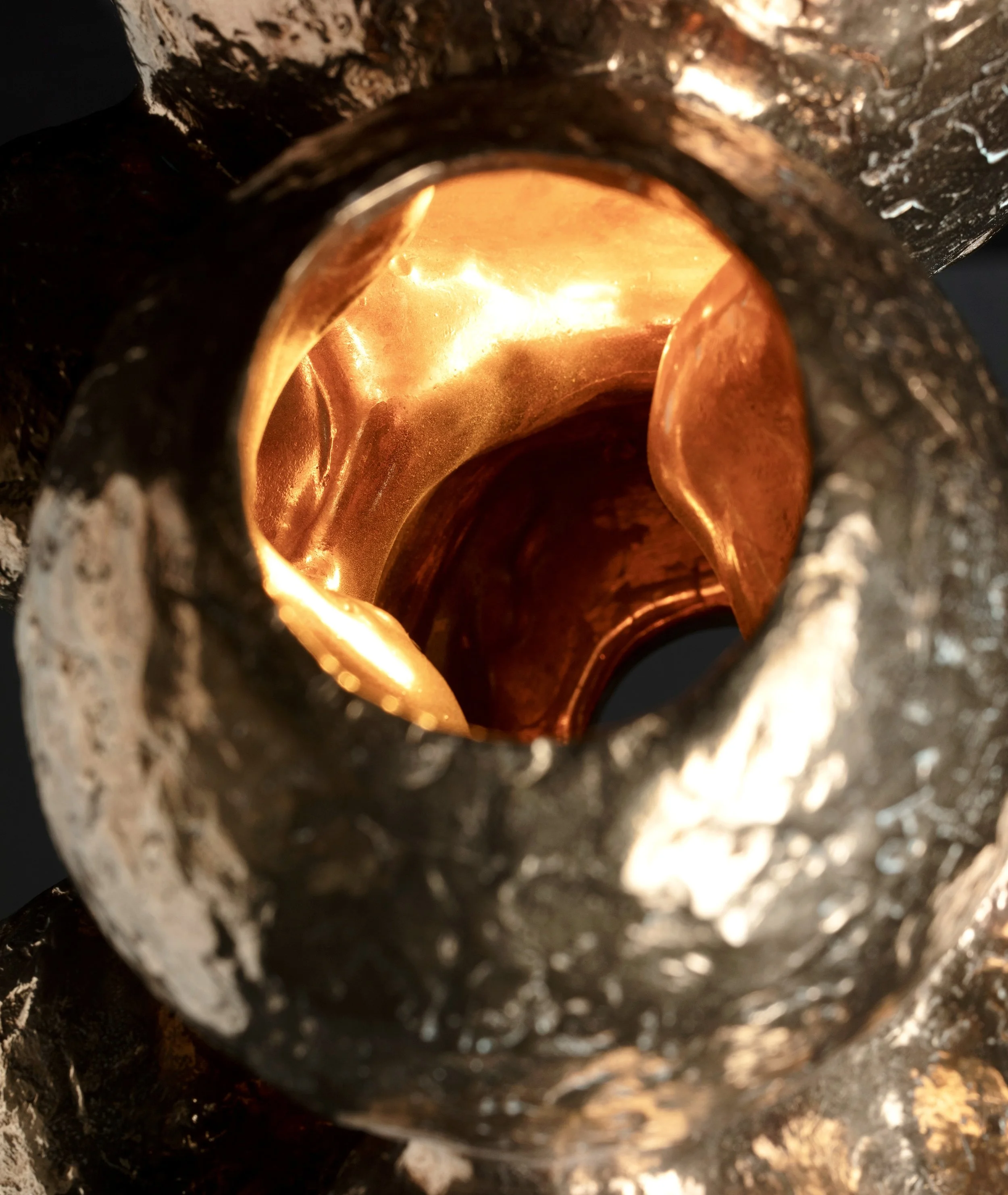
In this exhibition, space plays an equal role. Natural light shifts slowly across the floor. Pigments respond. Reflections shift. Bronze catches the air. Surfaces absorb and release, depending on where you stand, and how long you stay.
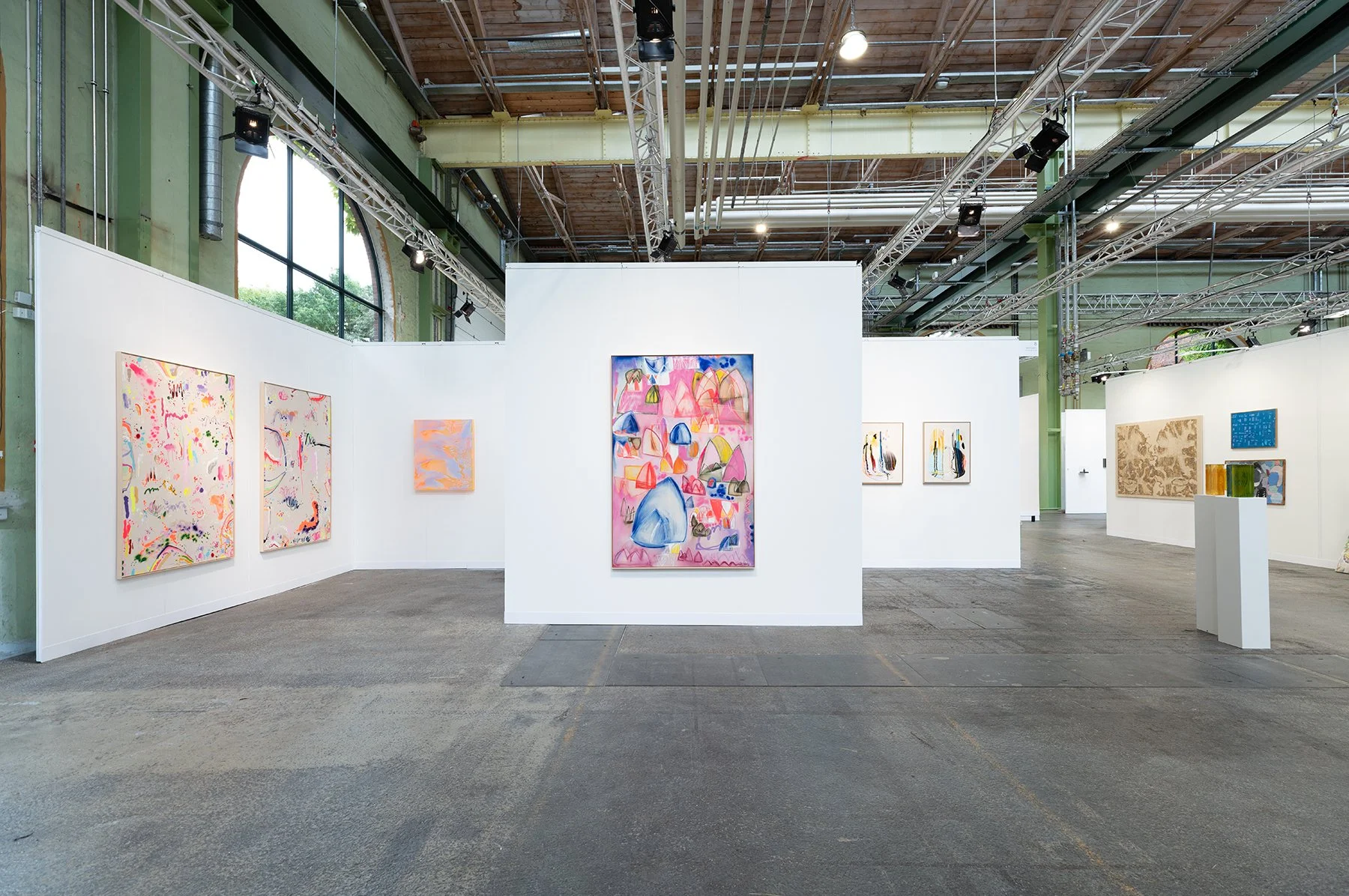
There is no single story being told. Instead, three artists present parallel practices, each grounded in material, form, and the act of looking. What connects them is a shared clarity, a deliberate pace, and a sensitivity to presence.
The exhibition is shaped by natural light and spatial rhythm, allowing the works to unfold gradually over the course of the day.

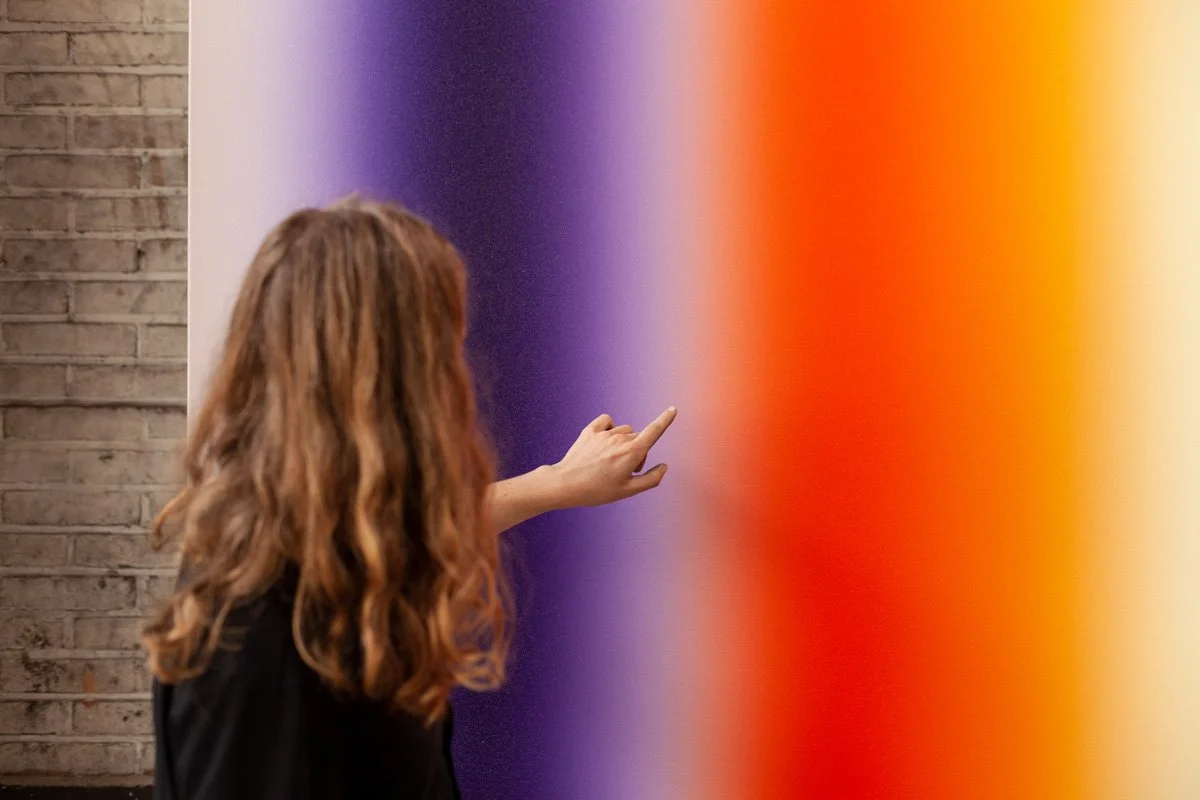
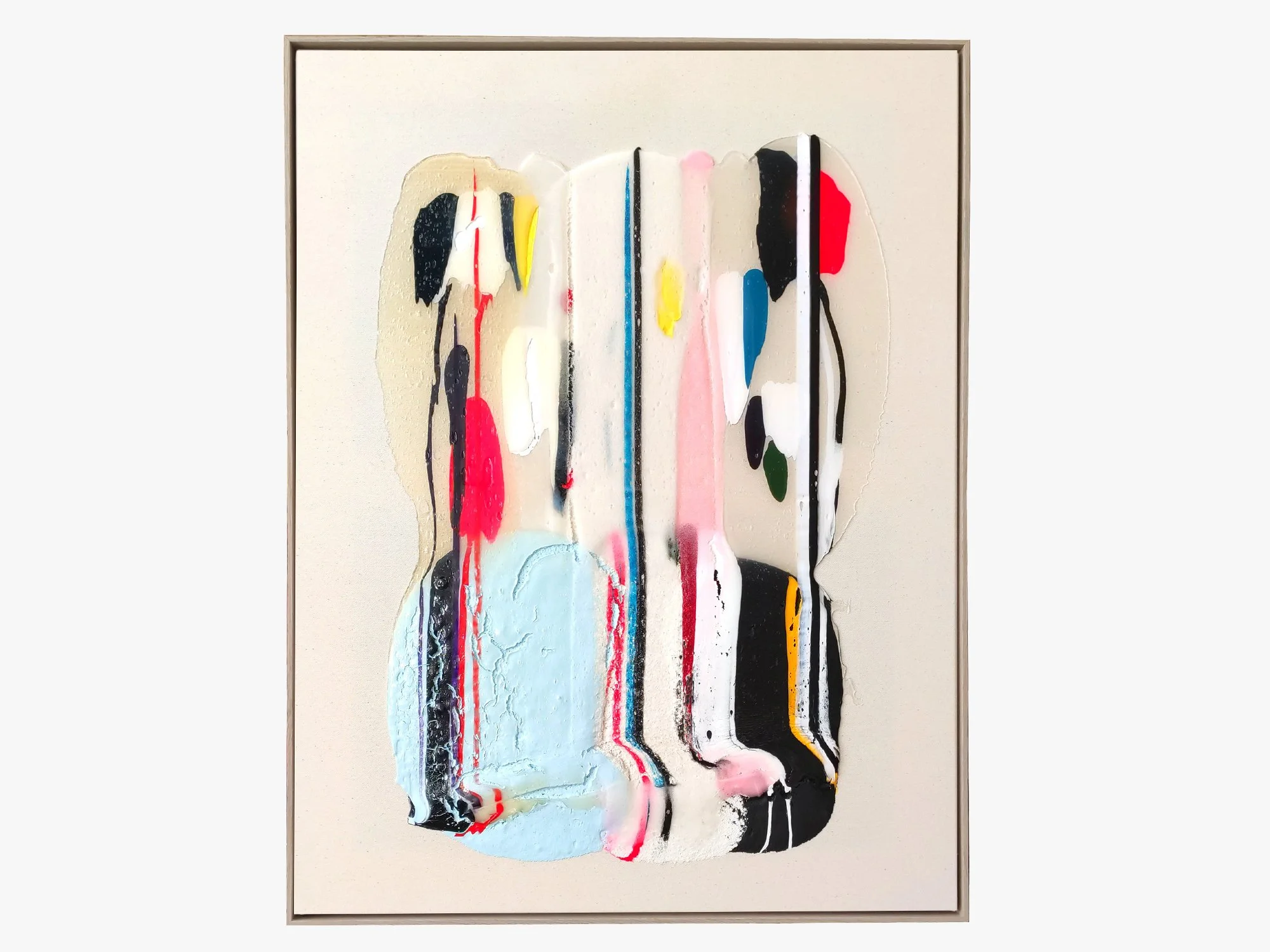
Detail of Last Shimmer, a painting by Donald Schenkel
Three practices, three directions
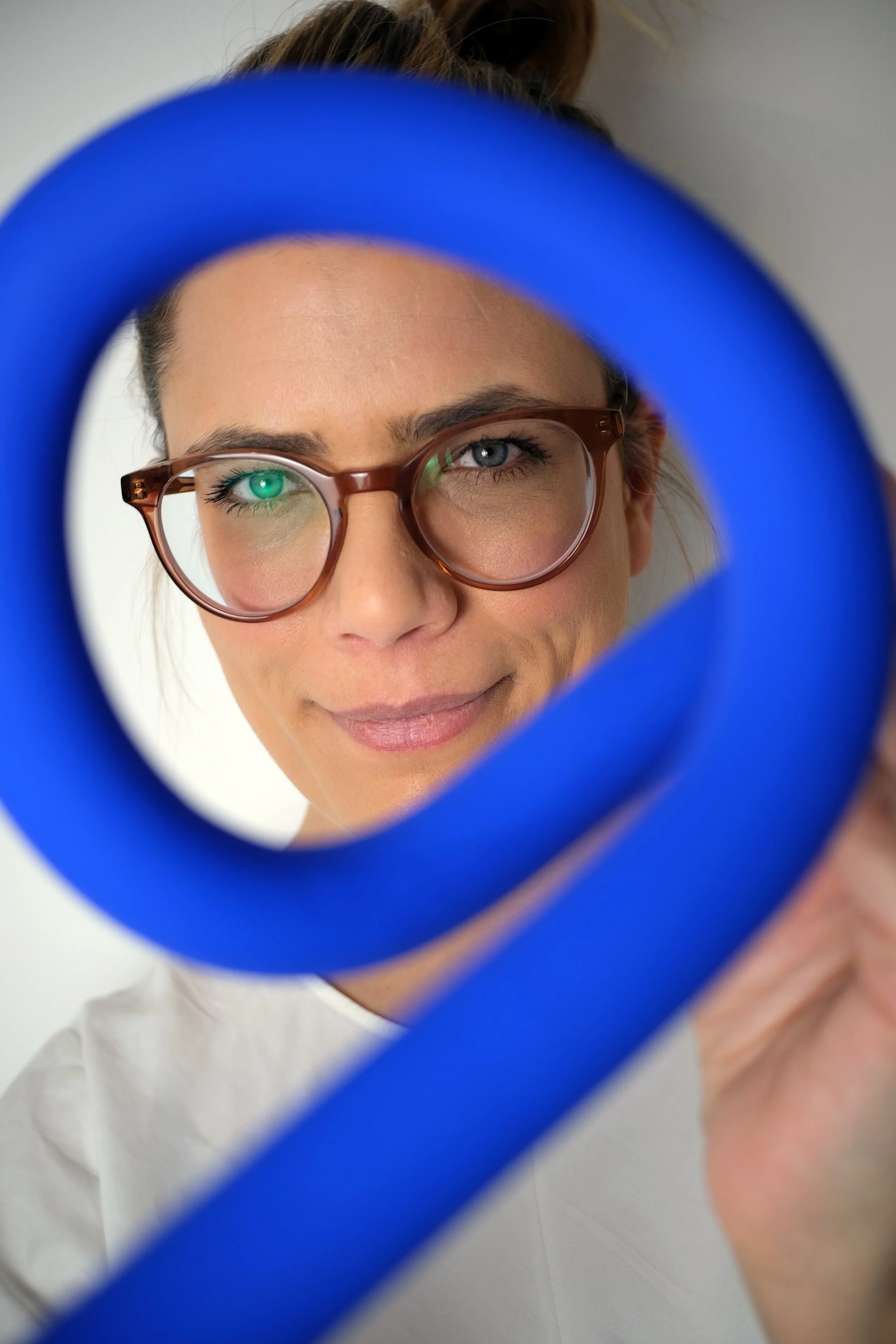
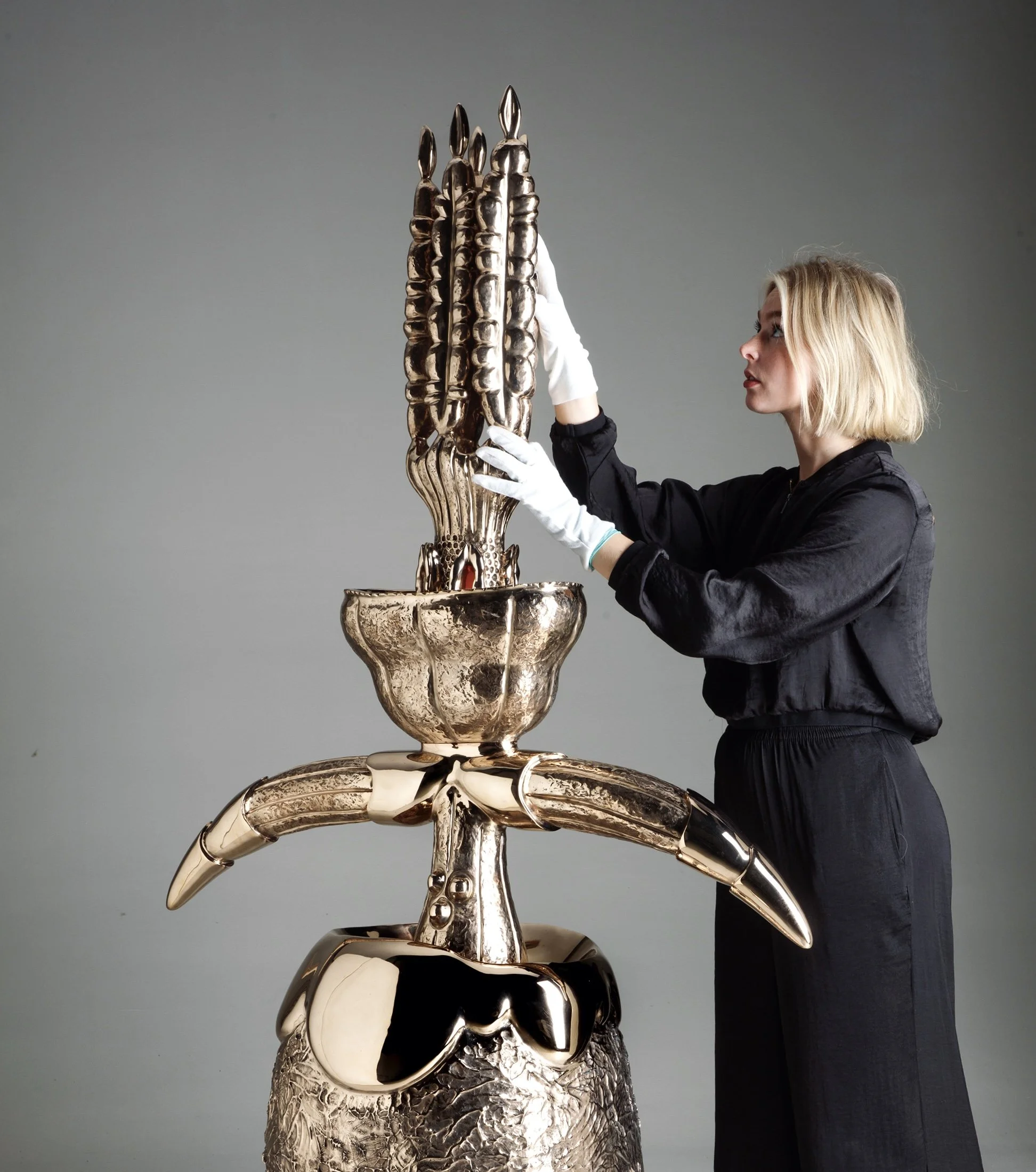
Jeske Haak moves into the new year with openness and focus.
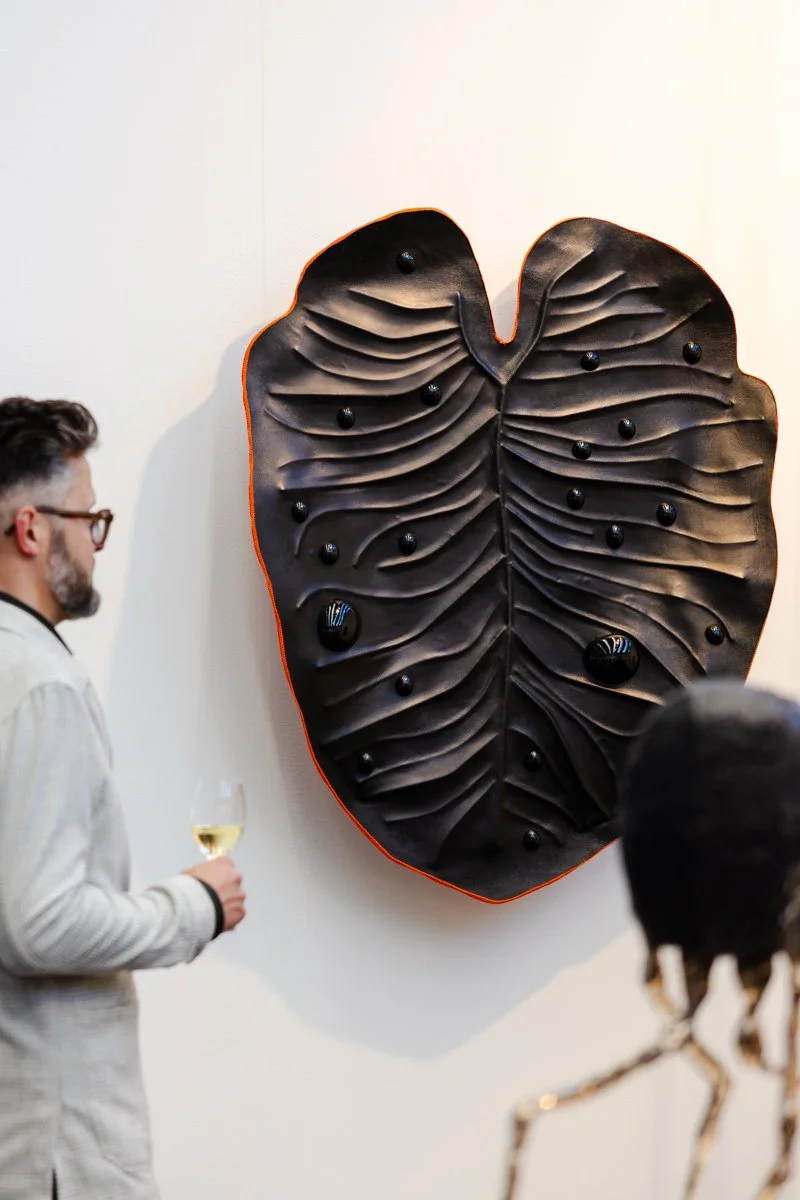
In 2025, she became increasingly aware of how valuable unexpected conversations and collaborations can be, and she carries that openness forward into 2026. At the same time, her attention is narrowing. A growing fascination with insects has opened up a new field of forms and ideas she intends to develop into a complete body of work.
Her professional outlook is direct and practical. Selling work is not only framed as an abstract ambition,, but as a necessary condition for making, a way to create space for new ideas, new materials and new scale. Asked to capture her year ahead in a single word, her answer is precise: insects.
Donald Schenkel reflects on balance and movement.
For a long time, painting dominated almost every aspect of his life. In 2025, that shifted. Marriage, travel and a broader engagement with life outside the studio altered both his rhythm and his work. Obsession gave way to motion; the paintings became less rigid, more layered, more dynamic.
Technically, he is in the middle of a longer process of relearning and recombining his own painting methods. New disruptions in colour and surface are integrated into his earlier visual language, not as a break, but as a continuation. Alongside this, new conceptual interests have entered his practice, financial systems, markets as abstract movements, and the visual intensity of screens and data flows. These ideas do not dictate the work, but quietly inform its rhythm and tension.
For 2026, his intention is to stay close to painting, while allowing more pleasure and play into the process. One word for the year ahead: musings.
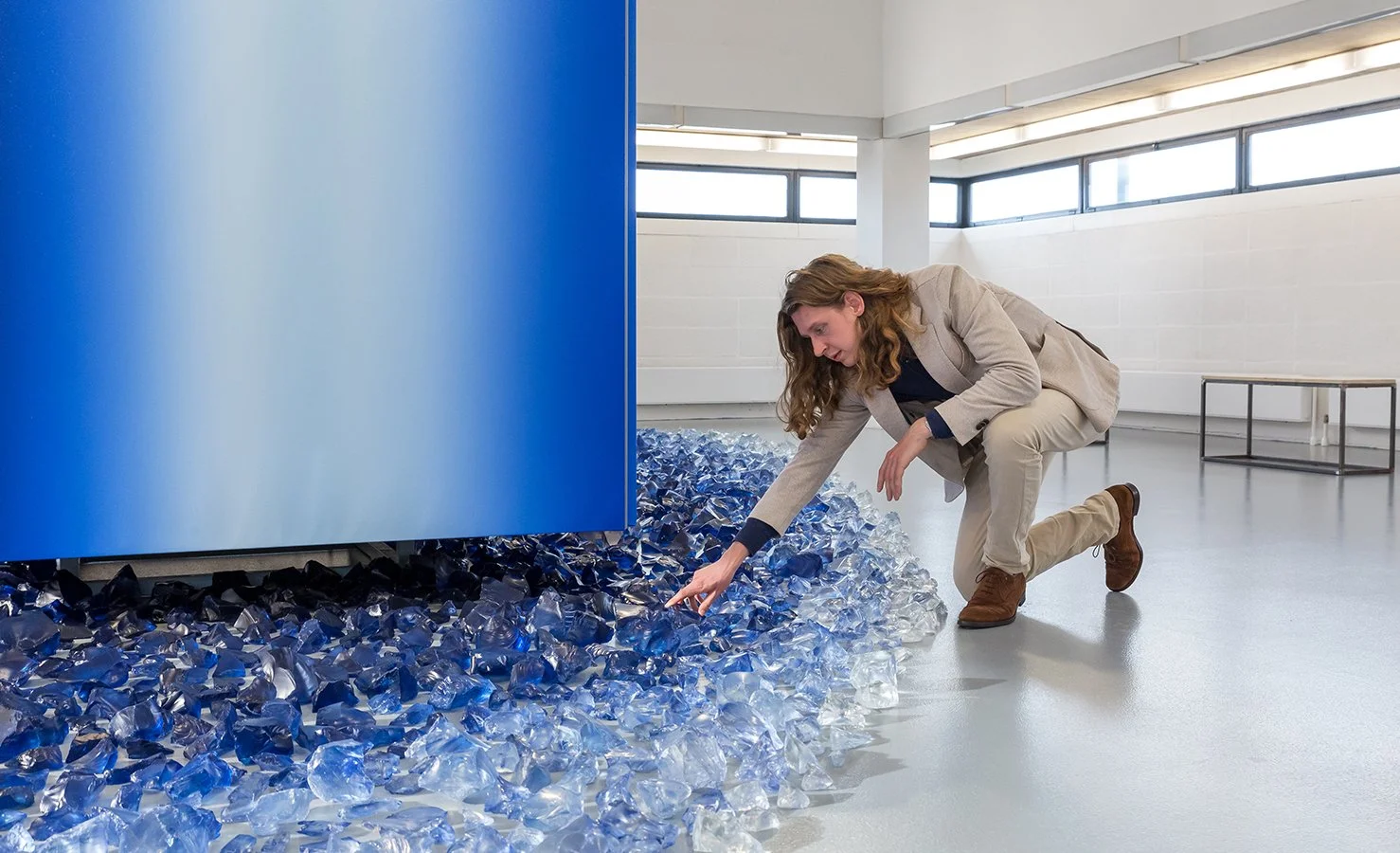
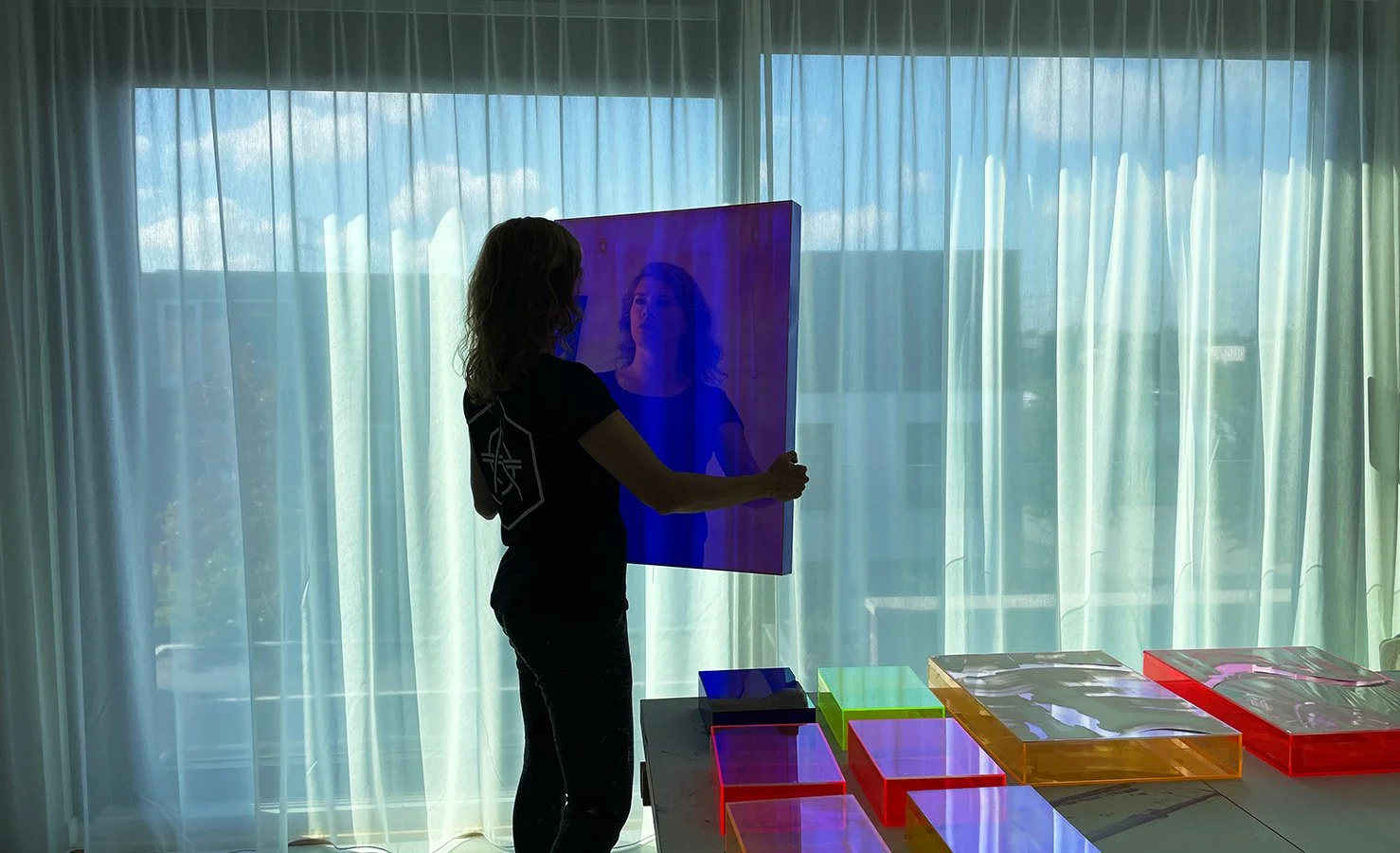
Lisette Schumacher describes her direction as deepening.
In 2025, she learned the value of saying yes to things that feel intimidating, such as giving a public lecture during Art Rotterdam. What initially felt daunting turned into an experience of confidence and enjoyment, an insight she brings with her into the new year.
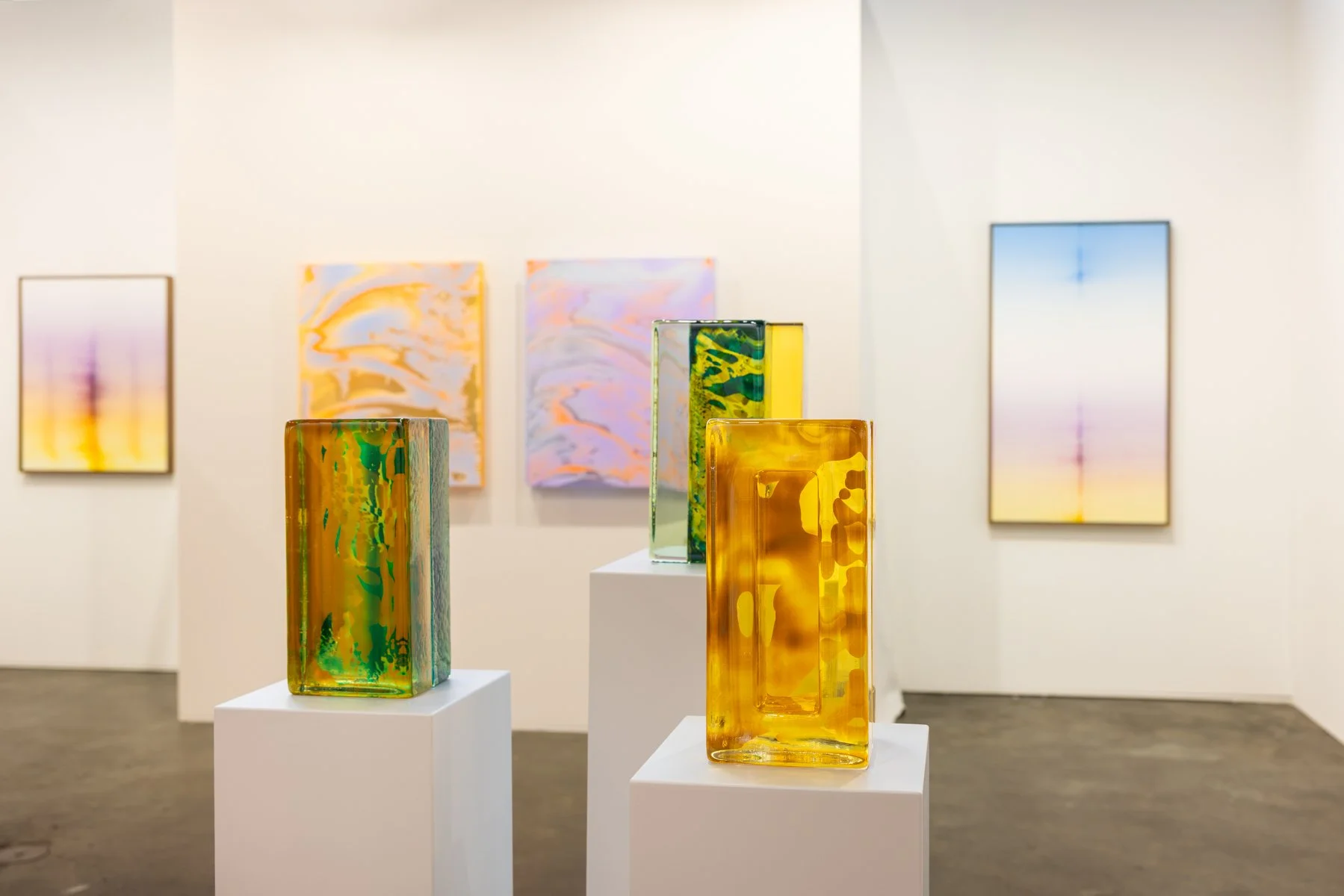
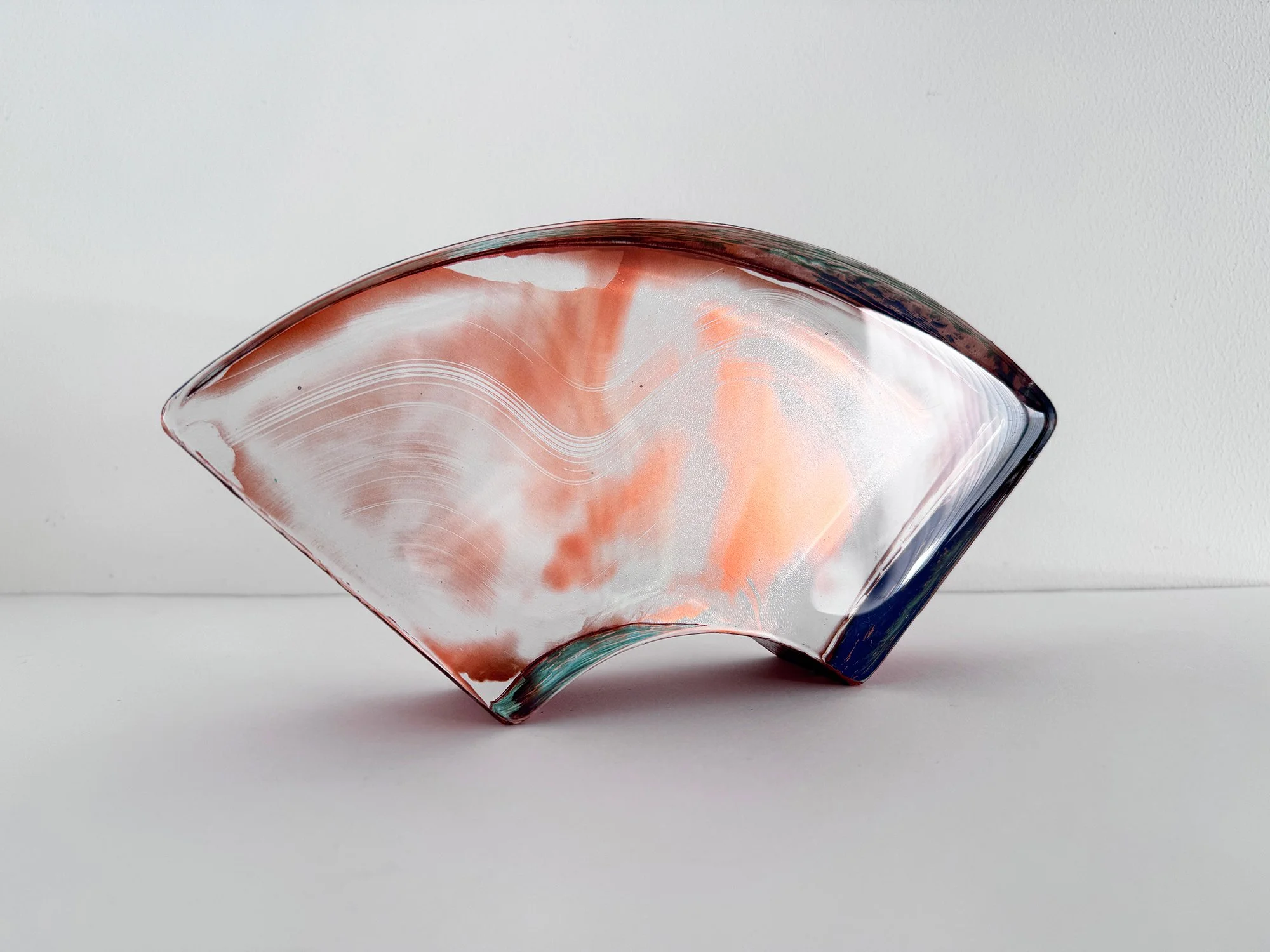
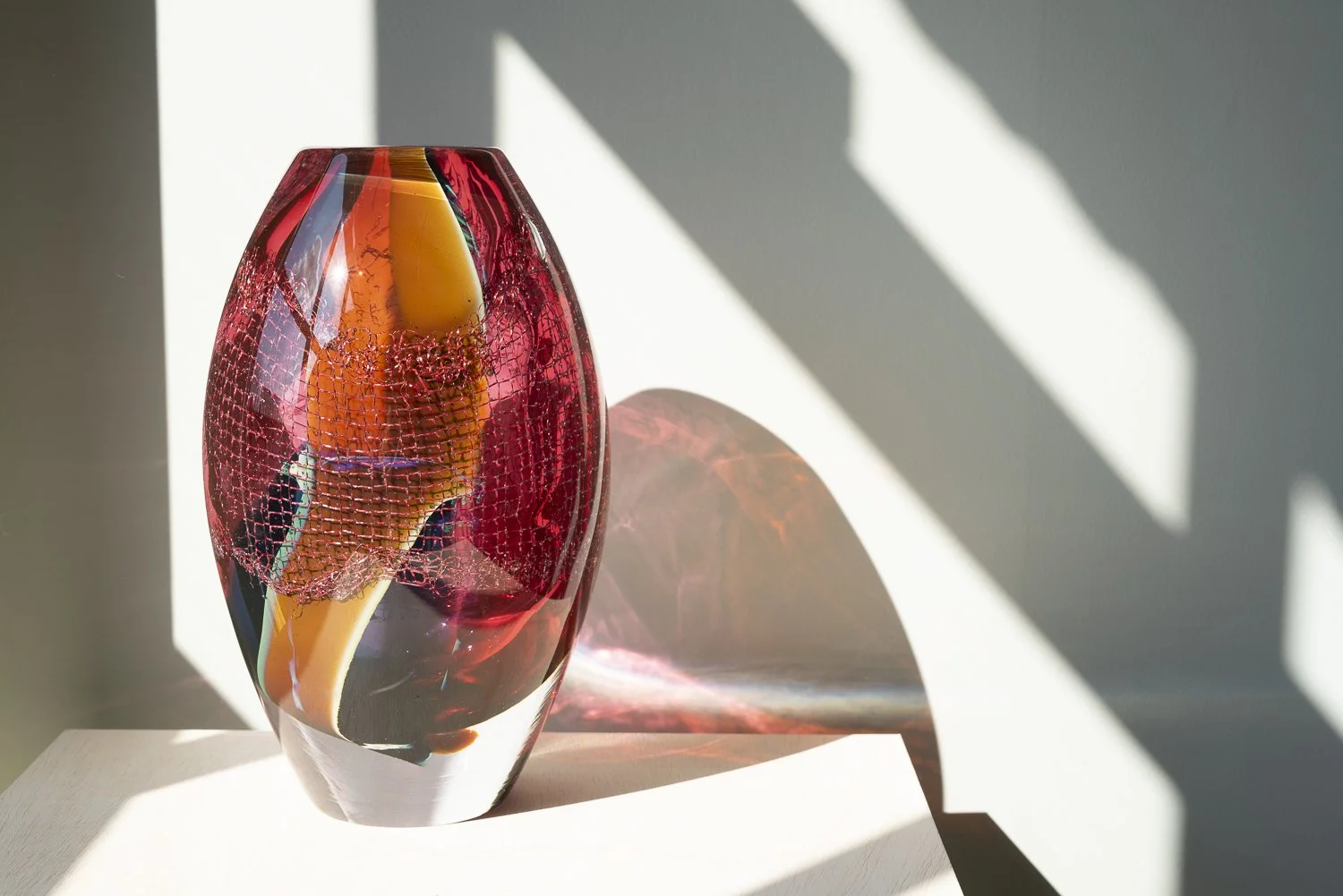
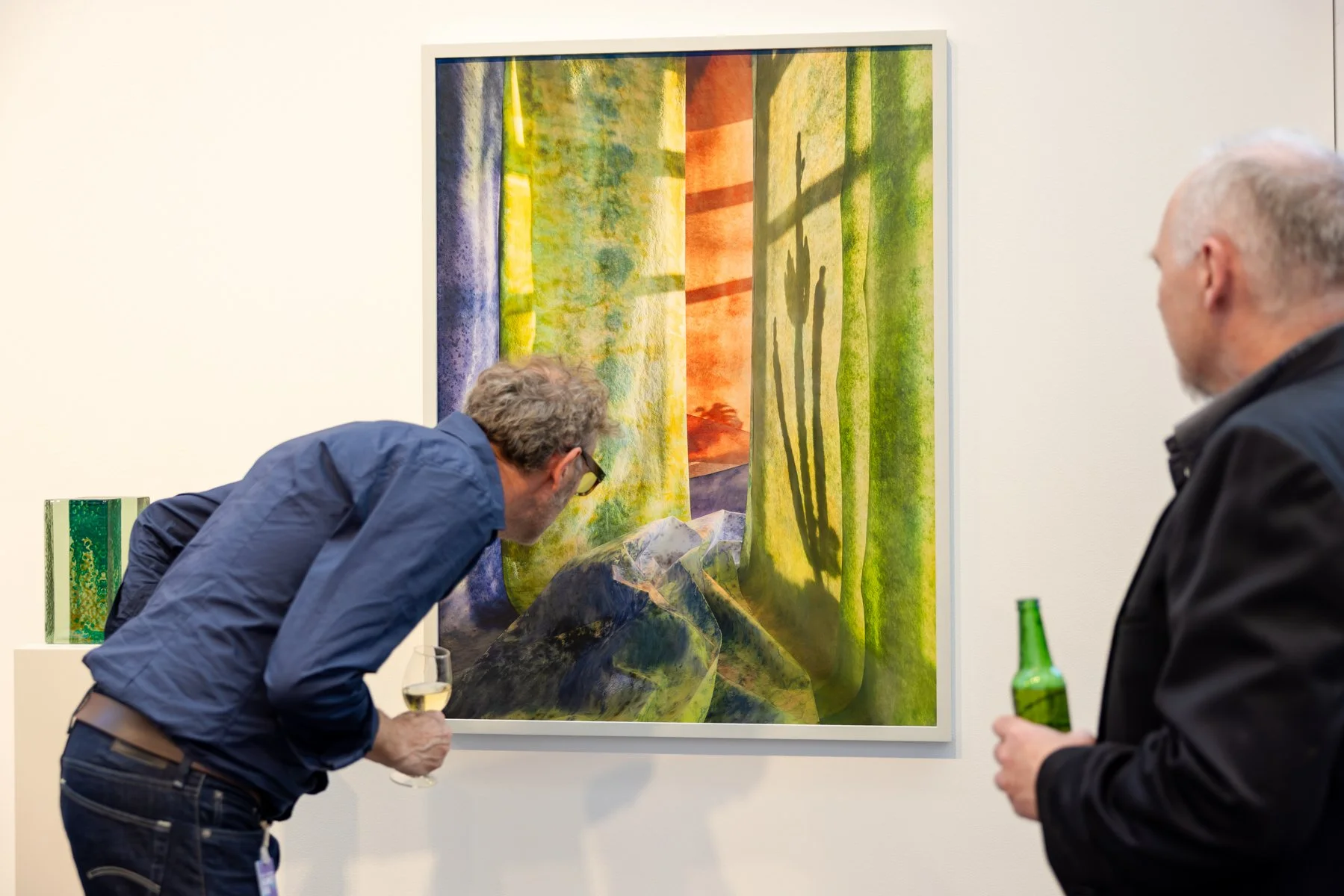
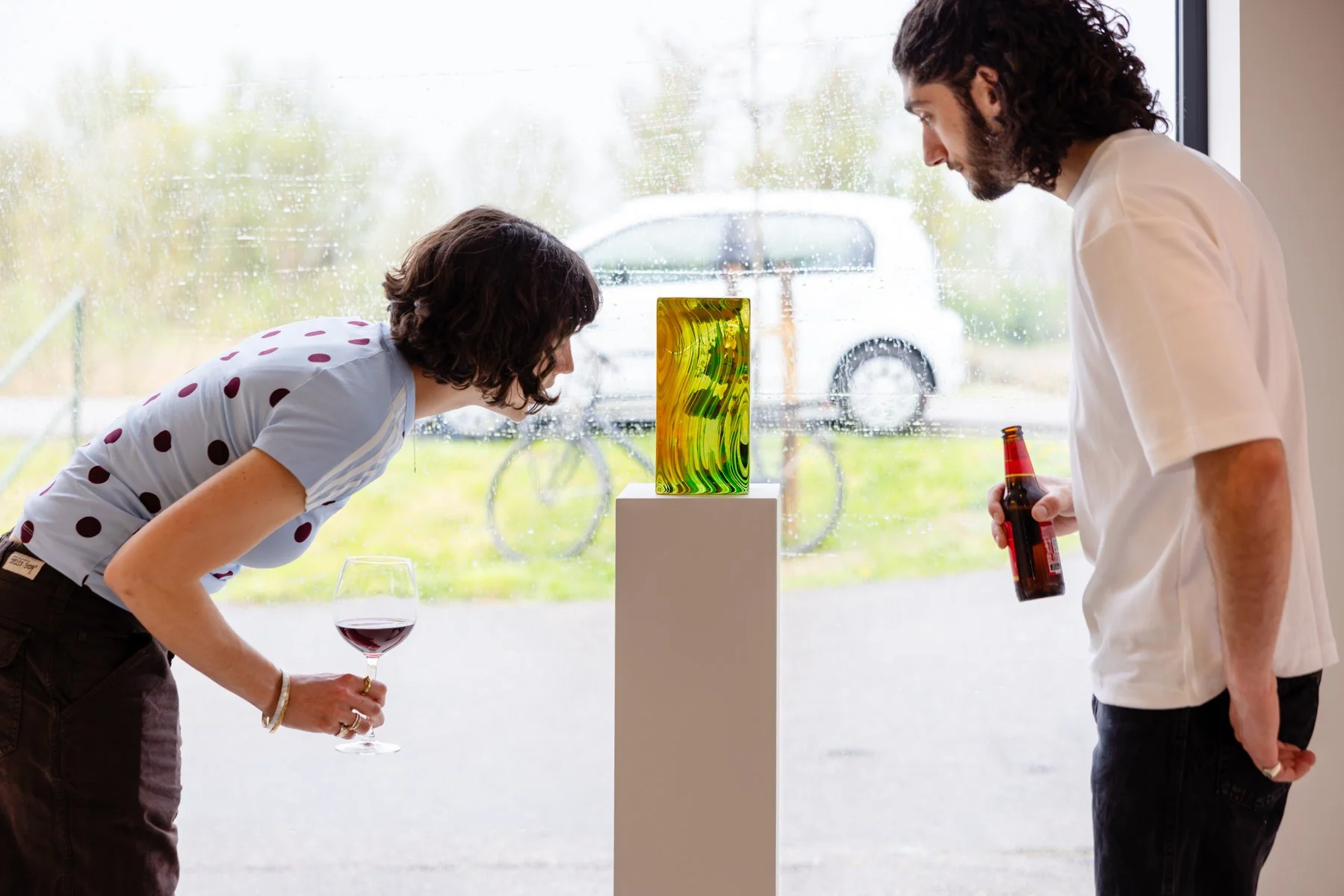
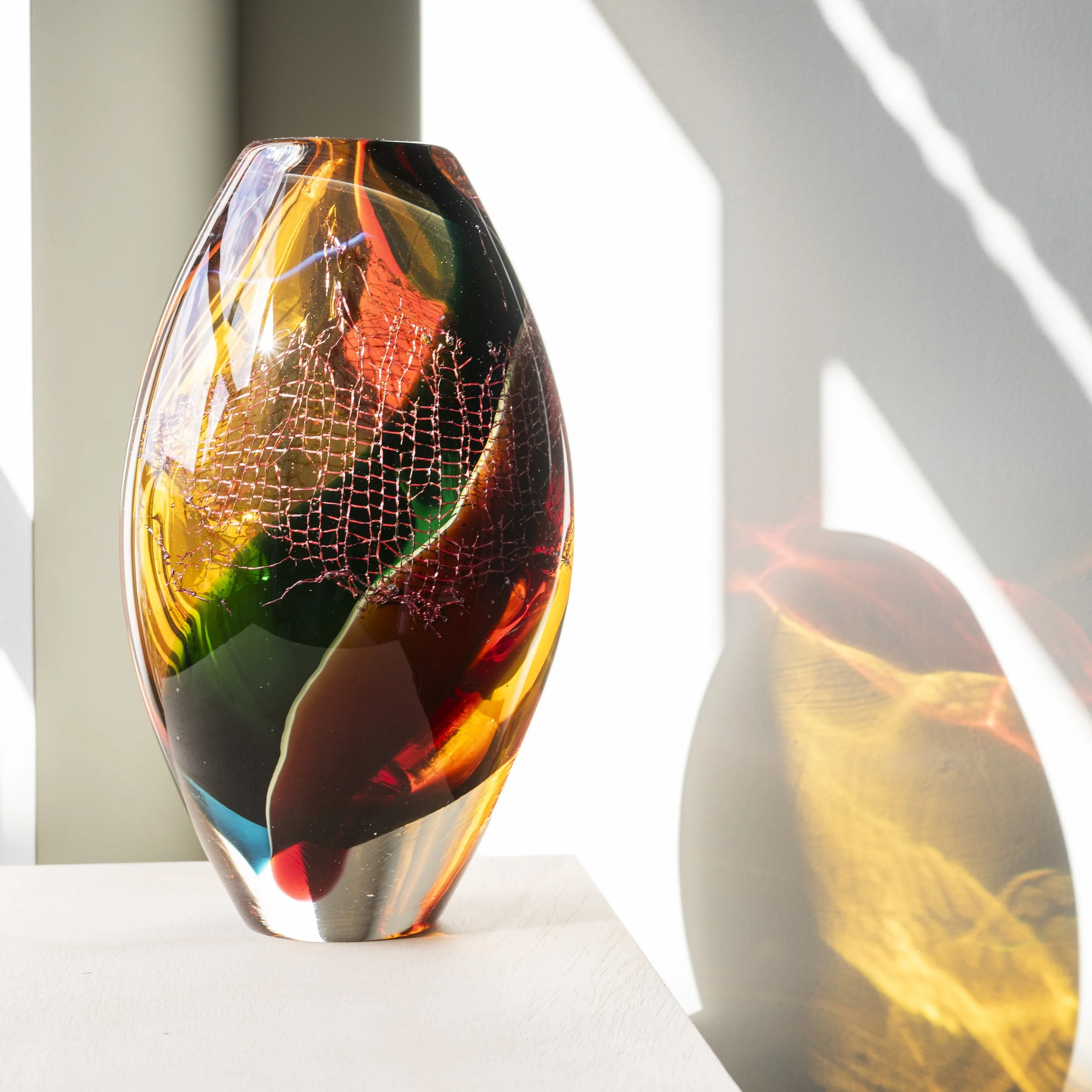
Materially, she continues to expand her work with glass, with the aim of developing more sculptural pieces. At the same time, she is beginning a new series inspired by modernist houses in Palm Springs and Desert Hot Springs, translating architectural experience, light and history into painterly and spatial compositions. Rather than moving quickly to the next step, her focus for 2026 is reflection: taking time to fully appreciate the work she has just made.
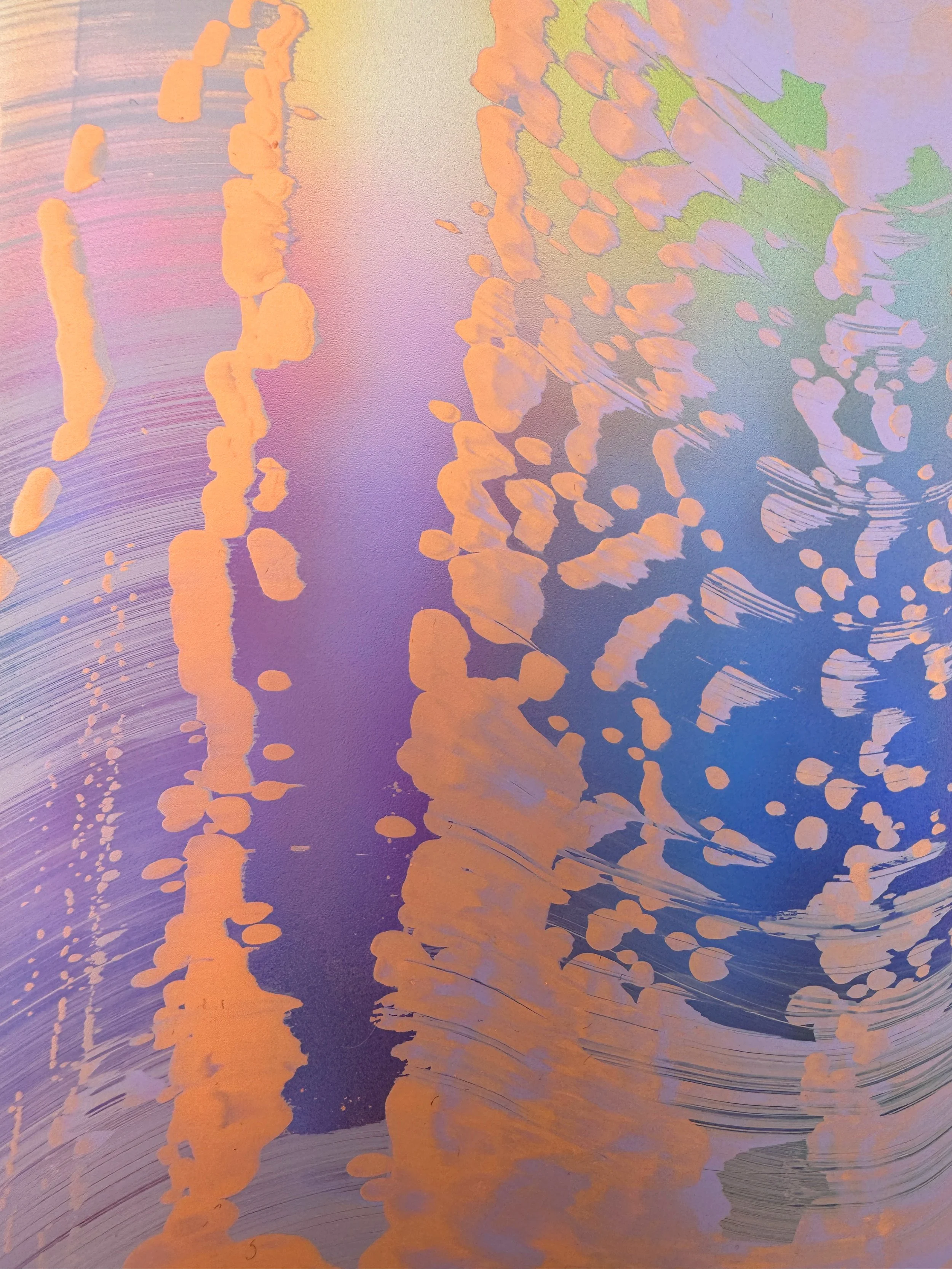
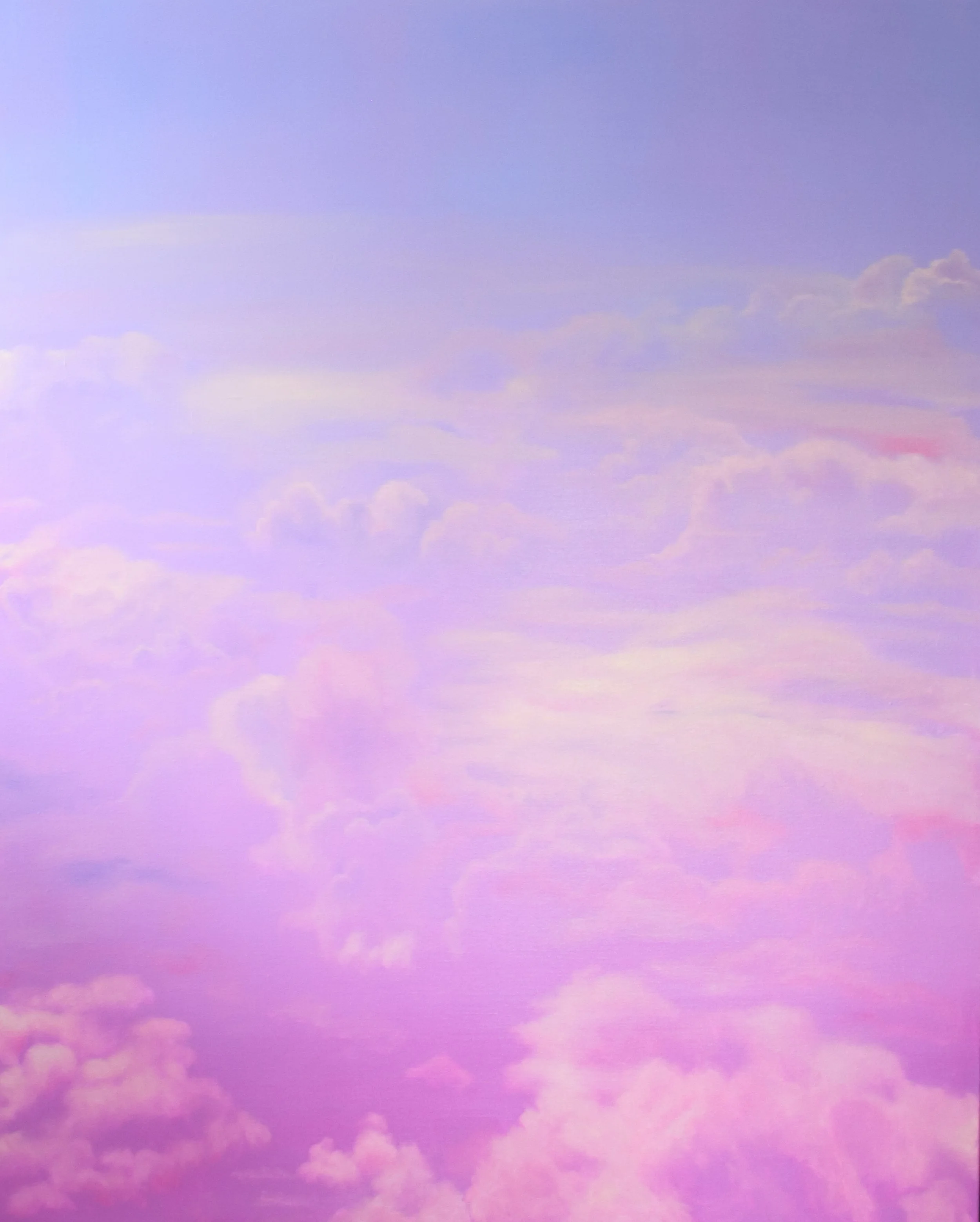
Detail of Dawn, a painting by Lisette Schumacher
Looking ahead
Where Light Lands will take shape in the gallery in the coming months.
What brings these works together is a shared attention to material, rhythm and light, and a way of working that values restraint, precision and time.
The exhibition forms a measured composition, asking for time, attention and presence, and unfolding through the physical experience of the gallery.