
How to care for your artwork? Simple tips to make it last
How to protect your art at home: From photography to bold paintings
The moment a piece of art moves you, it becomes part of your story. You hang it with love, you walk past it every day. Naturally, you want to keep that feeling - that connection - alive for years to come. The good news: you don’t need a museum to preserve the beauty of a work. A few small habits at home can make all the difference.
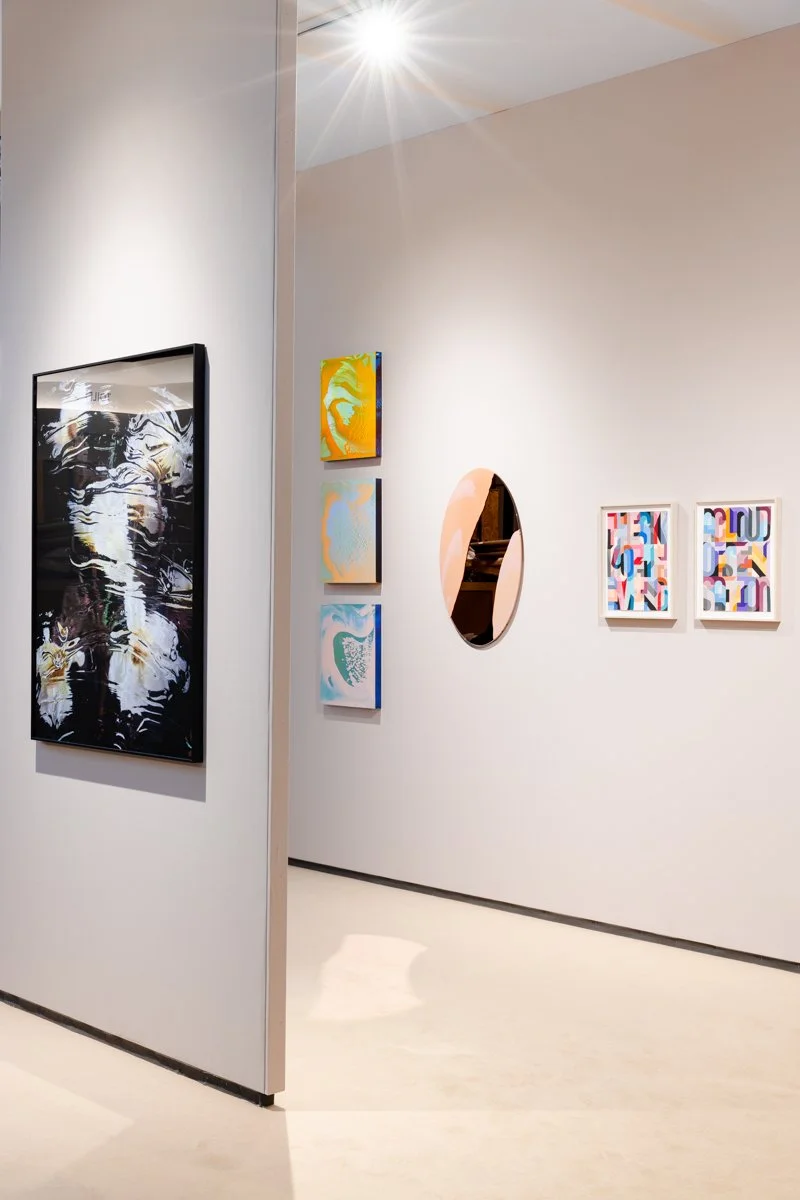
At Root Gallery, we work with photography, painting, works on paper and more. Each material with its own needs. Many of our collectors ask how to care for their new pieces, and we believe in offering honest, easy guidance. Because loving art also means looking after it.
And behind every artwork we show is an artist who has thought carefully about materials, about how a surface will age, how colour will hold, how a work will live in your space. These choices matter. And so do yours.


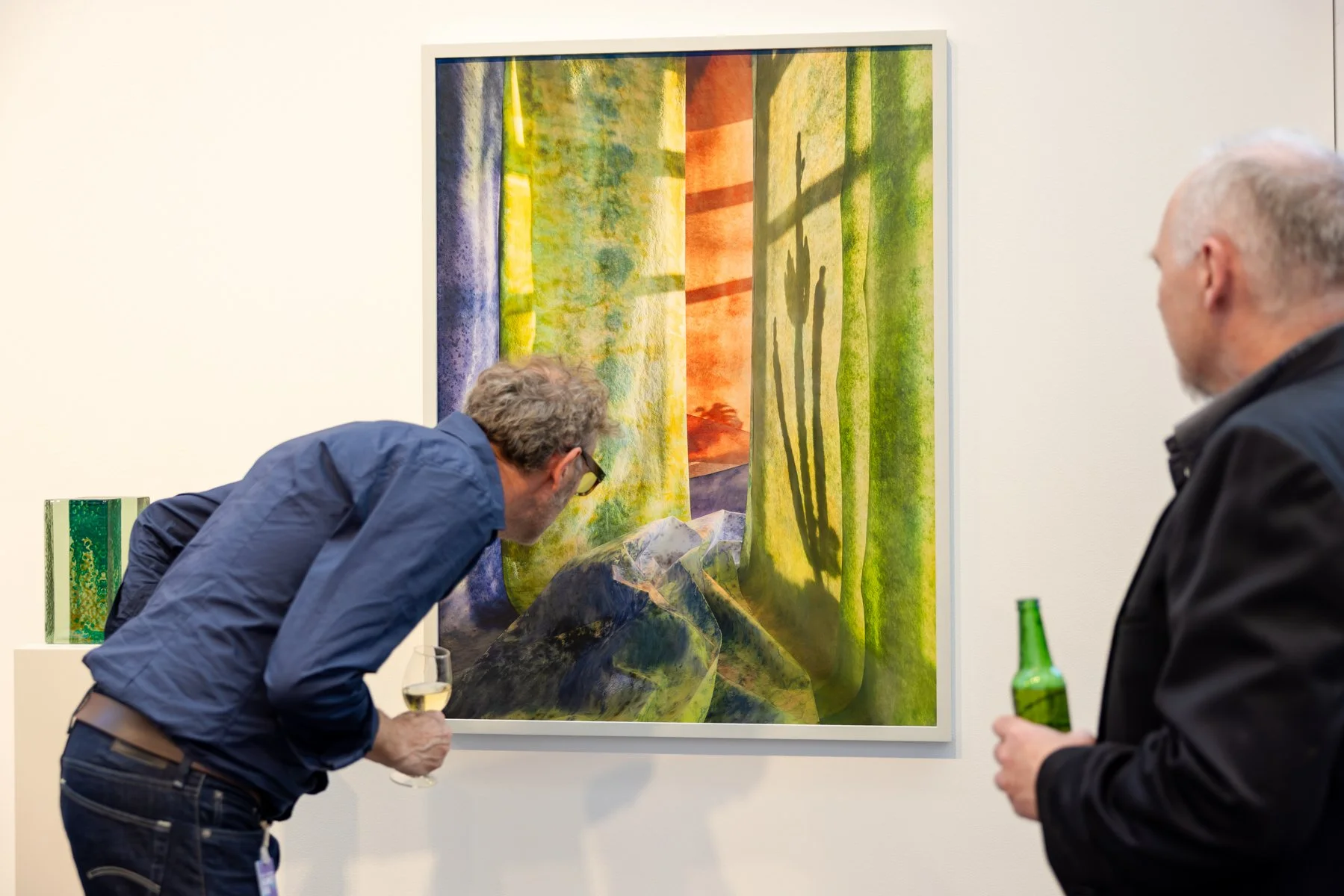
Photography: protect what you see
Our recent photographic works are professionally framed using museum glass – typically with 70% UV protection, as higher grades can reflect more. But even with protection, photography is light-sensitive. Avoid direct sunlight and spots above radiators or fireplaces to keep the image crisp and vibrant.
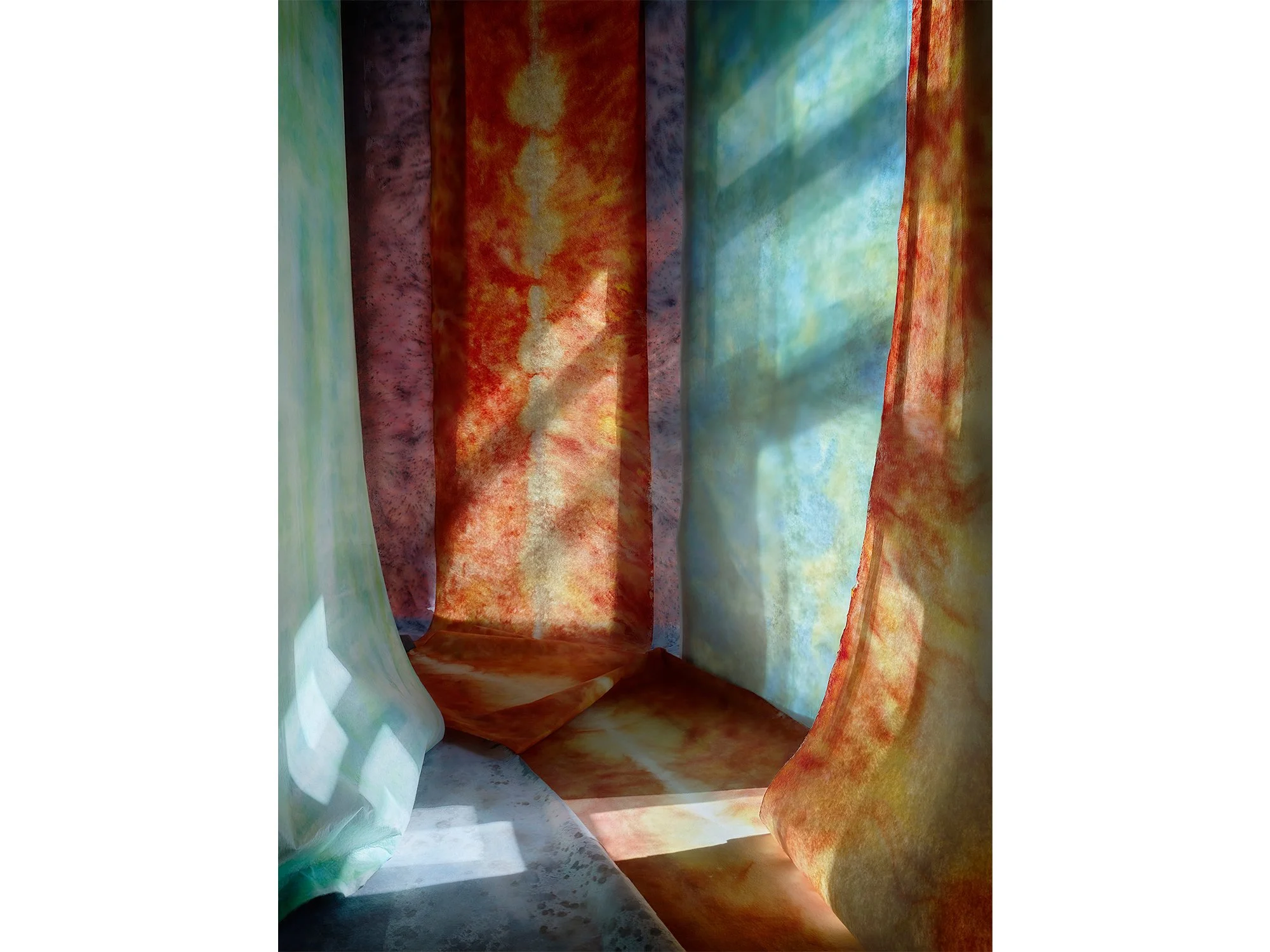
By Jan Theun van Rees
122 × 91,5 cm, ed. 3, 2026
Pigment ink on acid free Innova Soft Textured Bright White - frame, raw nutwood with spacers and Museumglass (UV70)
Also available in 60 × 45 cm, ed 2/5, 2026
This work is part of the series Painted Room
Licht Omloop is part of Jan Theun van Rees' ongoing series Painted Room. Through a process of constructing, observing and continuously repositioning elements in relation to changing daylight, the artist creates photographs in which colour and space remain in constant flux.
In Licht Omloop, warm orange tones are balanced by areas of aqua blue and subtle touche of purple. The image hovers between abstraction and architecture, suggesting depth and movement without revealing the temporary set from which it emerged. Rather than depicting an existing space, the work presents a carefully constructed situation in which light, perspective and colour come together in a single moment.
Shipping within the Netherlands and Belgium is on us.
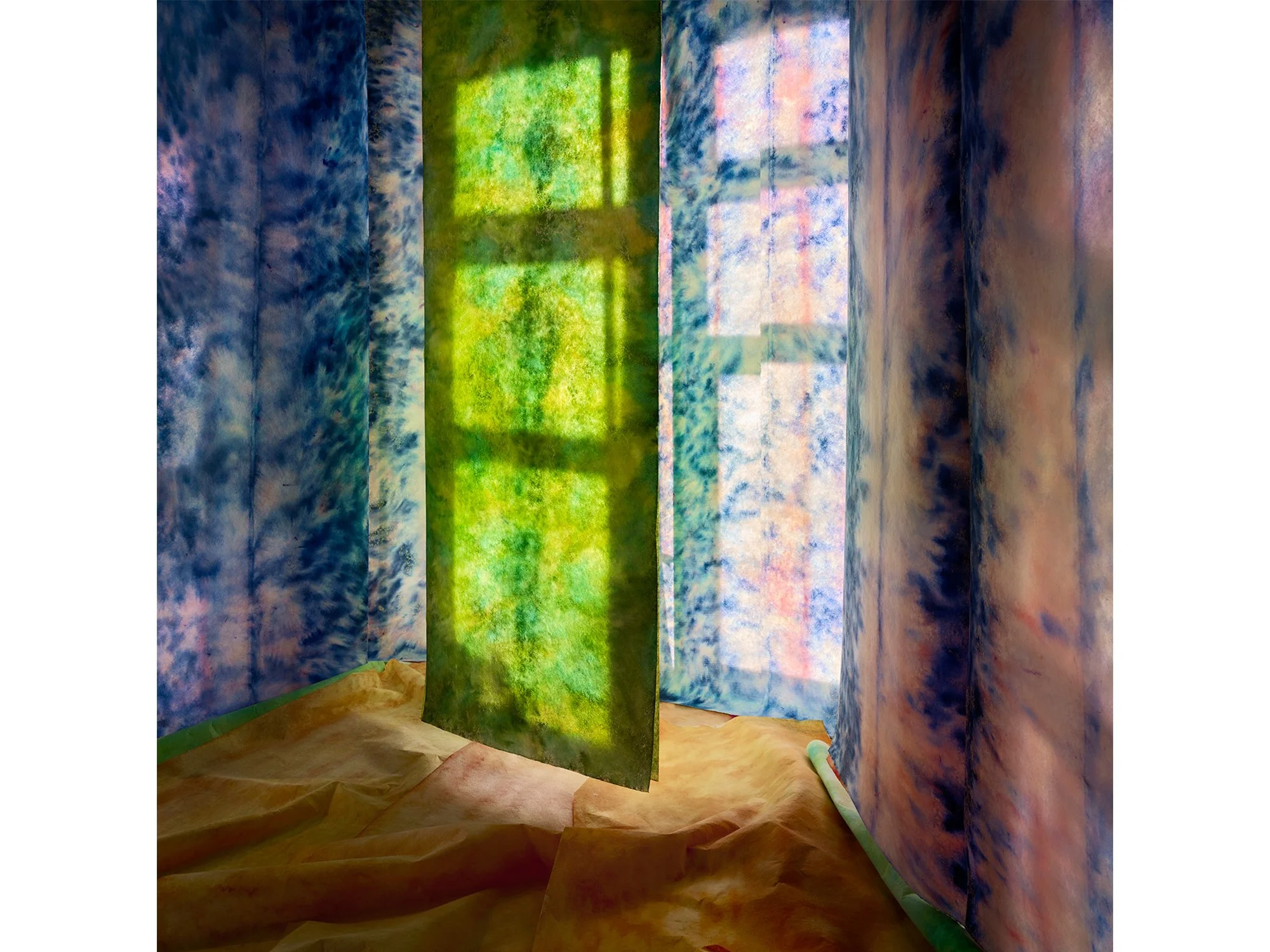
By Jan Theun van Rees
90 × 90 cm, ed. 3, 2026
Pigment ink on bright white Photorag mounted on museum board, framed with spacer and UV70 museum glass
Also available in 45 × 45 cm, ed 5, 2026
This work is part of the series Painted Room
Zeldzaam Groen is part of Jan Theun van Rees' ongoing series Painted Room. Working with temporary constructions, shifting daylight and carefully positioned elements, the artist creates photographs in which colour, space and perspective remain in constant flux.
In this work, a soft green surface and subtle spatial cues create an image that moves between abstraction and architecture. The final composition is not predetermined but emerges through observation, adjustment and photography. What appears to be a simple image reveals itself as a carefully balanced construction, resulting in a photograph that invites a slower way of looking.
Shipping within the Netherlands and Belgium is on us.
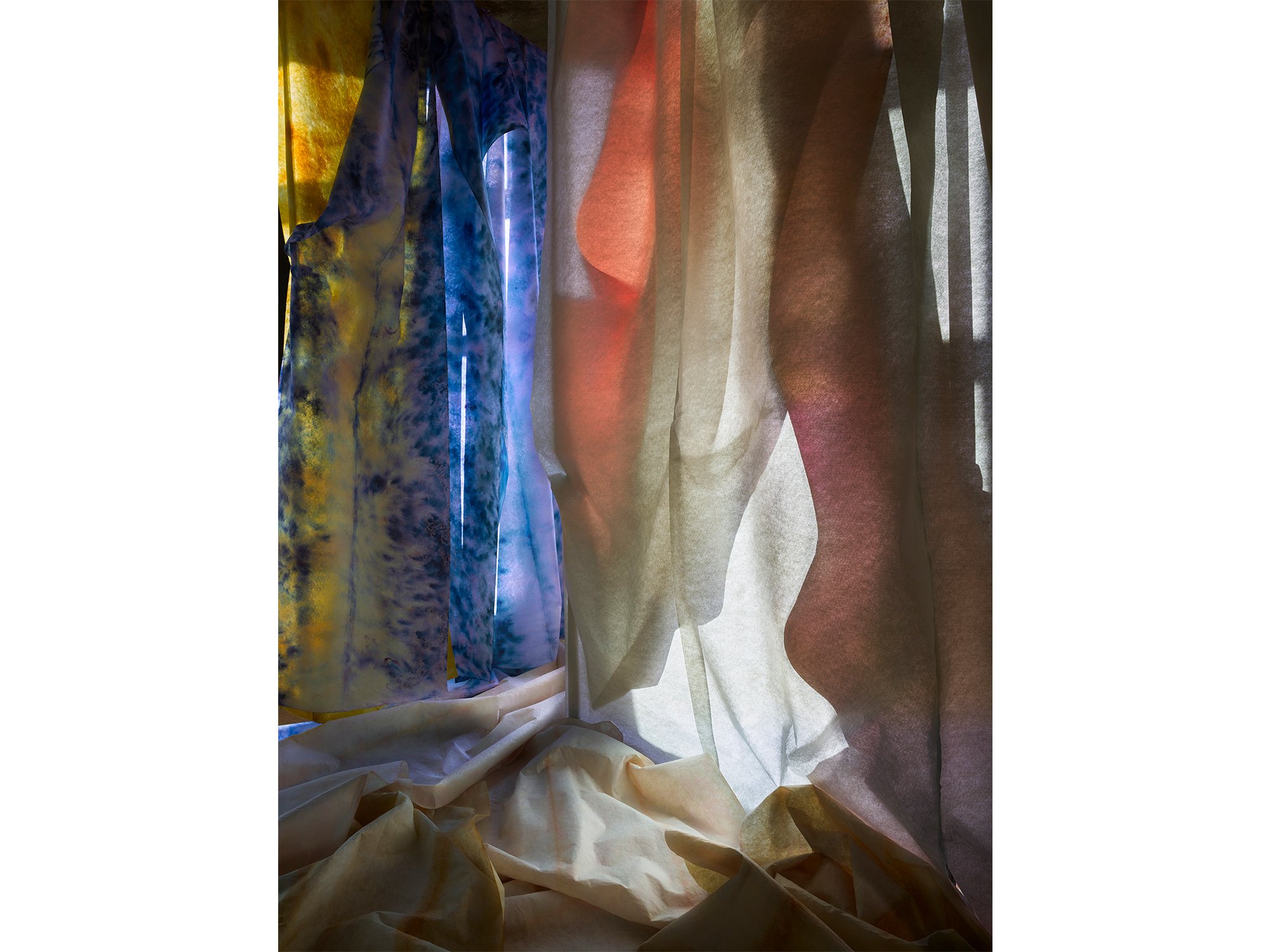
By Jan Theun van Rees
122 × 91,5 cm, ed. 3, 2026
Pigment ink on bright white Photorag mounted on museum board, framed with spacer and UV70 museum glass
This work is part of the series Painted Room
This photograph is part of the ongoing Painted Room series by Jan Theun van Rees, in which temporary architectural spaces are constructed using painted strips of textile. Through the careful interplay of light, colour, material, and perspective, the artist creates compositions that exist only for a brief moment before being transformed into photographic works.
Natural daylight plays a central role in the process. As the light changes throughout the day, shadows shift across the installation, creating visual relationships that are unique to a specific place and moment in time. The installation is continuously adjusted in response to these changing conditions, while the camera position evolves alongside the work.
Rather than documenting a fixed scene, the photograph captures a temporary spatial construction in constant transition. Light, space, material, and viewpoint influence one another throughout the process, resulting in an image whose final outcome remains uncertain until the photographs are reviewed afterwards.
Van Rees' work explores the relationship between photography, architecture, abstraction, and perception. By transforming simple materials into immersive spatial compositions, he challenges the viewer's understanding of depth, scale, and reality.
Shipping within the Netherlands and Belgium is on us.
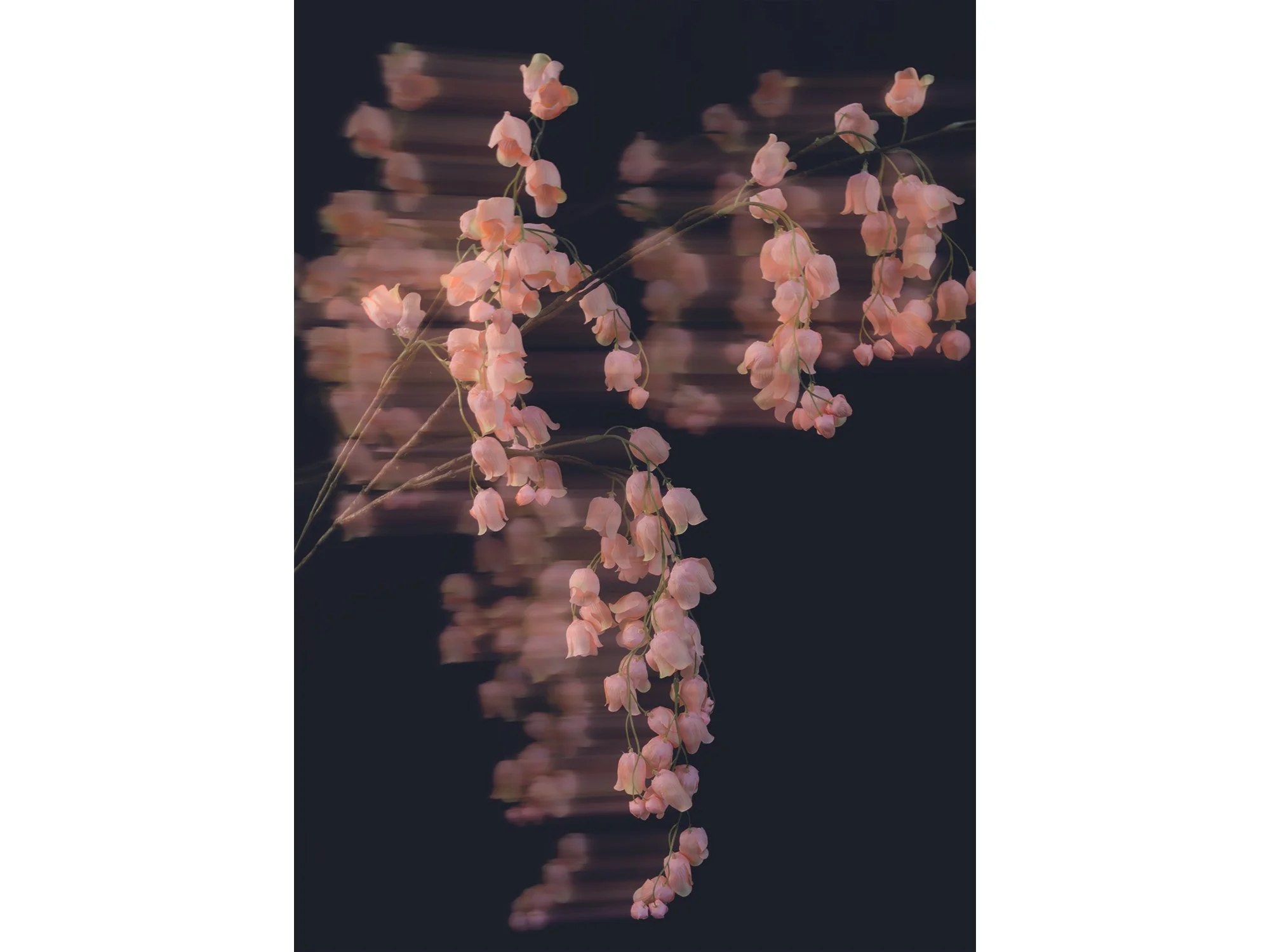
By Sophie de Vos
70 × 50 cm, ed. 1/3, 2026
Hahnemuhle, framed in black, museumglass
From the series Fragments of Clarity
The word ‘reflecting’ carries dual meanings; it can refer to an actual reflection - seeing an image mirrored in a glossy surface like glass - or it can describe the process of deep, thoughtful contemplation.
The photographic series ‘Fragments of Clarity’ by Sophie de Vos explores this duality, moving between the literal and metaphorical aspects of reflection. In most works, Sophie uses glass as a physical and conceptual layer over her subjects, creating subtle distortions that question how we perceive the world. When we look at something, are we truly seeing it as it is, or through the lens of our own experiences, memories, and emotions?
In the work ‘What Lingers After’, this approach shifts. Instead of glass, Sophie uses a photographic intervention, where movement and time become the material of distortion. Here, perception is not refracted by a physical surface, but shaped by duration and what remains after the moment has passed.
Shipping within the Netherlands and Belgium is on us.
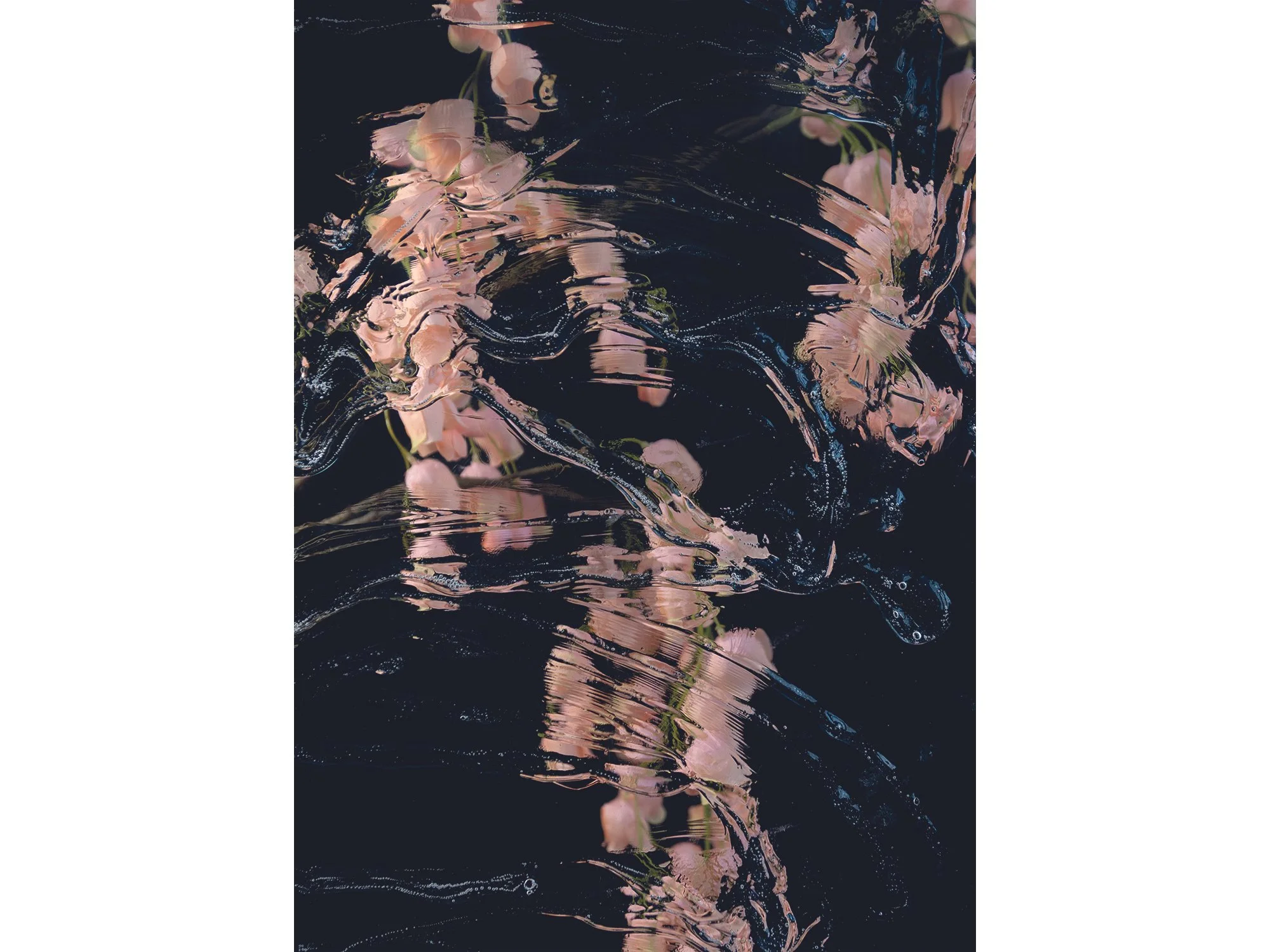
By Sophie de Vos
70 × 50 cm, ed. 1/3, 2026
Hahnemuhle, framed in black, museumglass
From the series Fragments of Clarity
The word ‘reflecting’ carries dual meanings; it can refer to an actual reflection - seeing an image mirrored in a glossy surface like glass - or it can describe the process of deep, thoughtful contemplation.
This photographic series by Sophie de Vos intertwines both interpretations, exploring the intersection between the literal and metaphorical aspects of reflection. In this series, Sophie incorporates glass as a physical and conceptual layer over her subjects, manipulating its positioning to create dynamic visual distortions. By alternating and playing with these layers, she raises profound questions about perception: When we look at something, are we truly seeing it as it is, or are we viewing it through the complex prism of our own experiences, biases, and emotions? Sophie challenges the viewer to consider the nature of clarity itself, suggesting that true understanding may be filtered and refracted by the lenses through which we observe the world.
Through this blending of visual and philosophical reflection, the series becomes not just a study of surfaces and subjects, but a deeper inquiry into the limits of perception and understanding.
Shipping within the Netherlands and Belgium is on us.
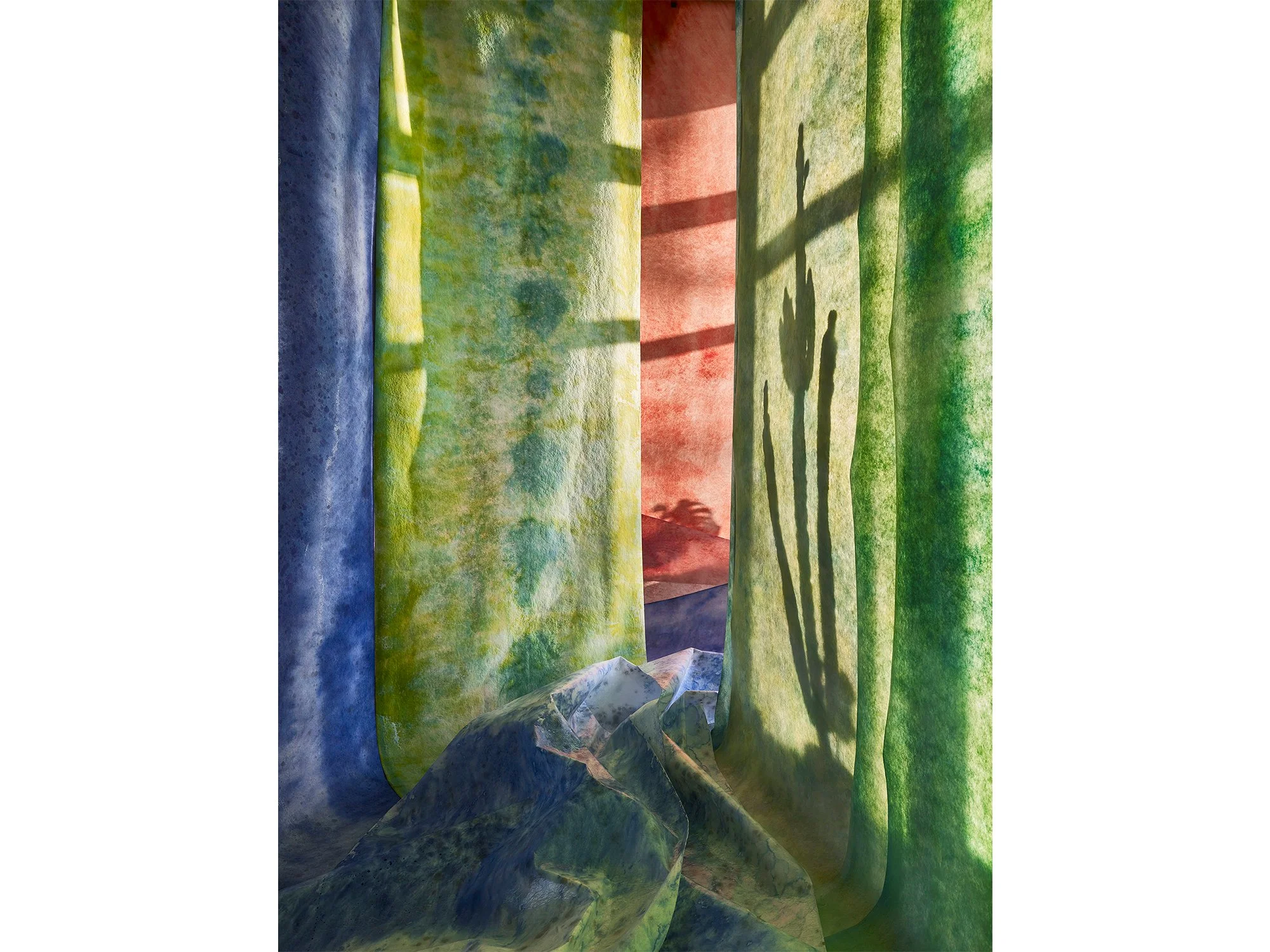
By Jan Theun van Rees
122 × 91,5 cm, ed. 3, 2026
Pigment ink on bright white Photorag mounted on museum board, framed with spacer and UV70 museum glass
This work is part of the series Painted Room
In Painted Room, Jan Theun van Rees constructs a temporary, immersive space using layered materials and painted surfaces, brought together through carefully controlled light. Soft textiles in shifting tones of blue, pink and grey create a spatial composition that feels both architectural and atmospheric. The interplay between shadow and colour blurs the line between physical structure and illusion, inviting the viewer to question depth, perspective and material reality.
This work is part of Van Rees’ ongoing exploration of spatial perception in contemporary photography, where constructed environments become the subject. Through subtle variations in light and surface, Painted Room offers a quiet, contemplative image that evolves with prolonged viewing.
Shipping within the Netherlands and Belgium is on us.
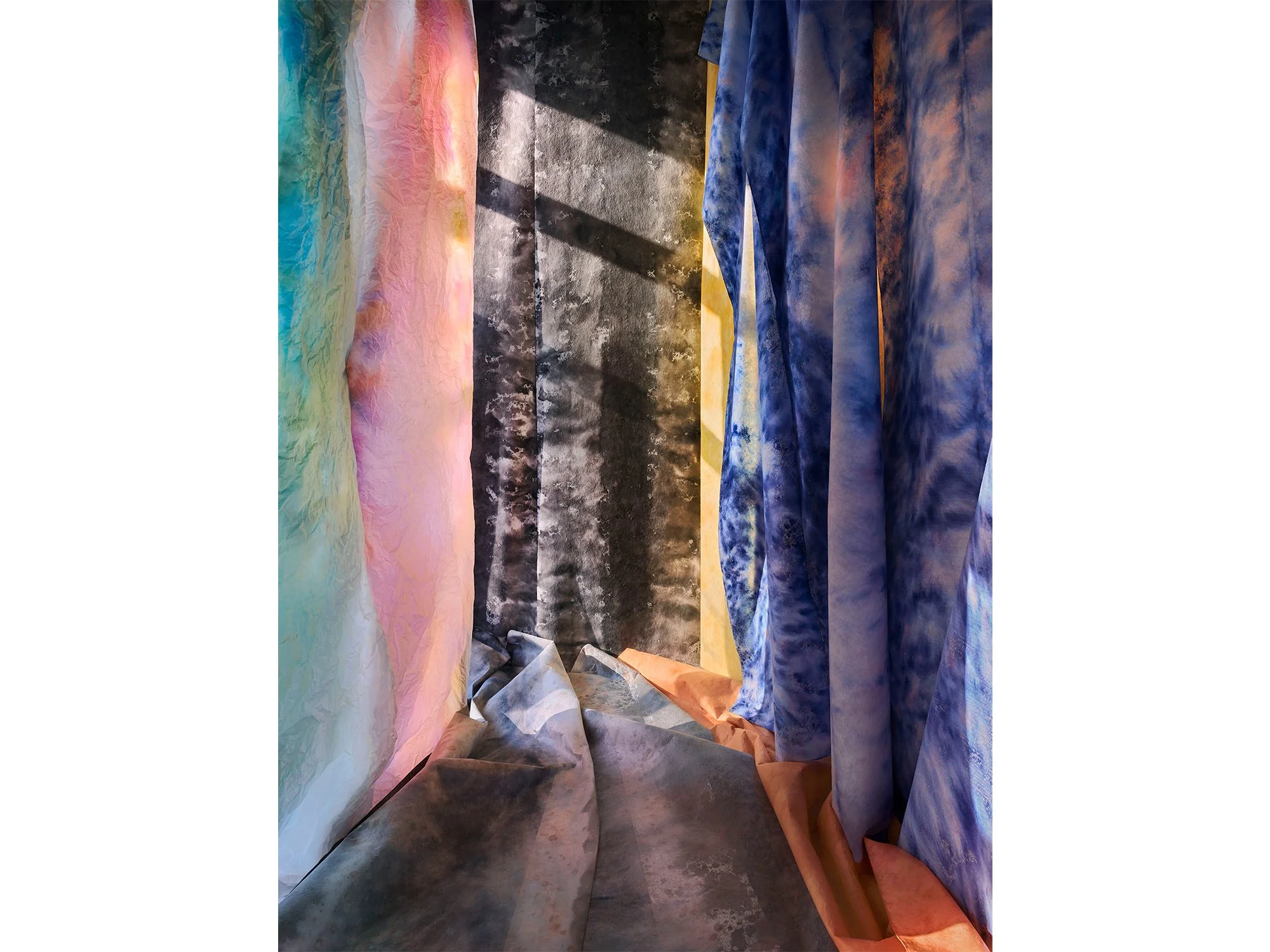
By Jan Theun van Rees
122 × 91,5 cm, ed. 3, 2026
Pigment ink on bright white Photorag mounted on museum board, framed with spacer and UV70 museum glass
This work is part of the series Painted Room
In Painted Room, Jan Theun van Rees constructs a temporary, immersive space using layered materials and painted surfaces, brought together through carefully controlled light. Soft textiles in shifting tones of blue, pink and grey create a spatial composition that feels both architectural and atmospheric. The interplay between shadow and colour blurs the line between physical structure and illusion, inviting the viewer to question depth, perspective and material reality.
This work is part of Van Rees’ ongoing exploration of spatial perception in contemporary photography, where constructed environments become the subject. Through subtle variations in light and surface, Painted Room offers a quiet, contemplative image that evolves with prolonged viewing.
Shipping within the Netherlands and Belgium is on us.

By Jan Theun van Rees
110 × 55 cm, ed. 3, 2025
Pigment ink on bright white Photorag mounted on museum board, framed with spacer and UV70 museum glass
This work is part of the series Painted Room
In Moonlit Corner, Jan Theun van Rees captures the quiet interplay between colour, light and constructed space. Created within his ongoing Painted Room series, the work depicts a temporary environment built and painted specifically for the photograph, a space that ceases to exist once the image is made.
Here, bands of deep blue and warm orange fabric interact with the cool grey tones of the floor, illuminated by a soft, angled light. The composition evokes both architecture and abstraction, balancing material presence with a sense of illusion.
Van Rees explores how light transforms painted surfaces into something ephemeral. Through this process, he turns photography into a form of painting, where each image becomes a moment of stillness, shaped entirely by colour and perception.
Shipping within the Netherlands and Belgium is on us.

By Jan Theun van Rees
50 × 40 cm, ed. 3/5, 2025
Pigment ink on bright white Photorag mounted on museum board, framed with spacer and UV70 museum glass. Also available 115 × 91,5 cm, ed 3.
This work is part of the series Painted Room
With his art, Jan Theun van Rees focuses on the appearance of space as an image, the perception of that (visualised) space in relation to the space that surrounds us. Through his photographs he tries to visualise the specific qualities of those spaces. “Camera Lucida” is the catch-all term for all his artistic projects that try to visualise a connection between (interior) spaces and the outside world through incoming light. He intervenes in the space, manipulates the incoming light, to emphasise the spatial qualities he experiences. These interventions have become essential to his current practice. He constructs his own spaces, his own versions of a new, not yet existing reality. A certain spatial quality is visualised by constructing a space with the sole purpose to photograph the result.
In his new series Painted Room you can step into a new reality and become mesmerised by the rays of light, colourful surroundings and mystic shadows.
Shipping within the Netherlands and Belgium is on us.

By Jan Theun van Rees
55 × 40 cm, ed. 5, 2025
Pigment ink on bright white Photorag mounted on museum board, framed with spacer and UV70 museum glass
This work is part of the series Painted Room
Wintergarden by Dutch artist Jan Theun van Rees continues his exploration of constructed spaces within the Painted Room series. Each work begins as a temporary environment, built, painted, and lit solely to be photographed, then dismantled afterwards.
In this piece, cool tones of blue, grey, and earthy brown merge across painted paper walls, evoking the quiet atmosphere of a winter interior. The folds and shadows suggest architectural depth while remaining entirely painterly.
Through this process, Van Rees turns photography into an act of creation rather than documentation. The result is a meditative image where light, surface, and perception converge, a space that exists only in the moment of being seen.
Shipping within the Netherlands and Belgium is on us.

By Jan Theun van Rees
125 × 76 cm, ed. 3, 2025
Pigment ink on bright white Photorag mounted on museum board, framed with spacer and UV70 museum glass
This work is part of the series Painted Room
In Dented Space, Dutch artist Jan Theun van Rees continues his Painted Room series, in which photography, painting, and architecture merge. The space we see does not truly exist, it is a temporary construction, built and painted solely to be photographed, and dismantled immediately afterwards.
This work captures the momentary play of light across hand-painted fabric walls. The folds and textures suggest both depth and fragility, transforming a constructed scene into something that feels organic and timeless.
Van Rees’s practice explores the perception of space and how light defines form. By painting his environments and then photographing them, he turns the act of observation itself into an artistic process, where what remains is not documentation, but transformation.
Shipping within the Netherlands and Belgium is on us.
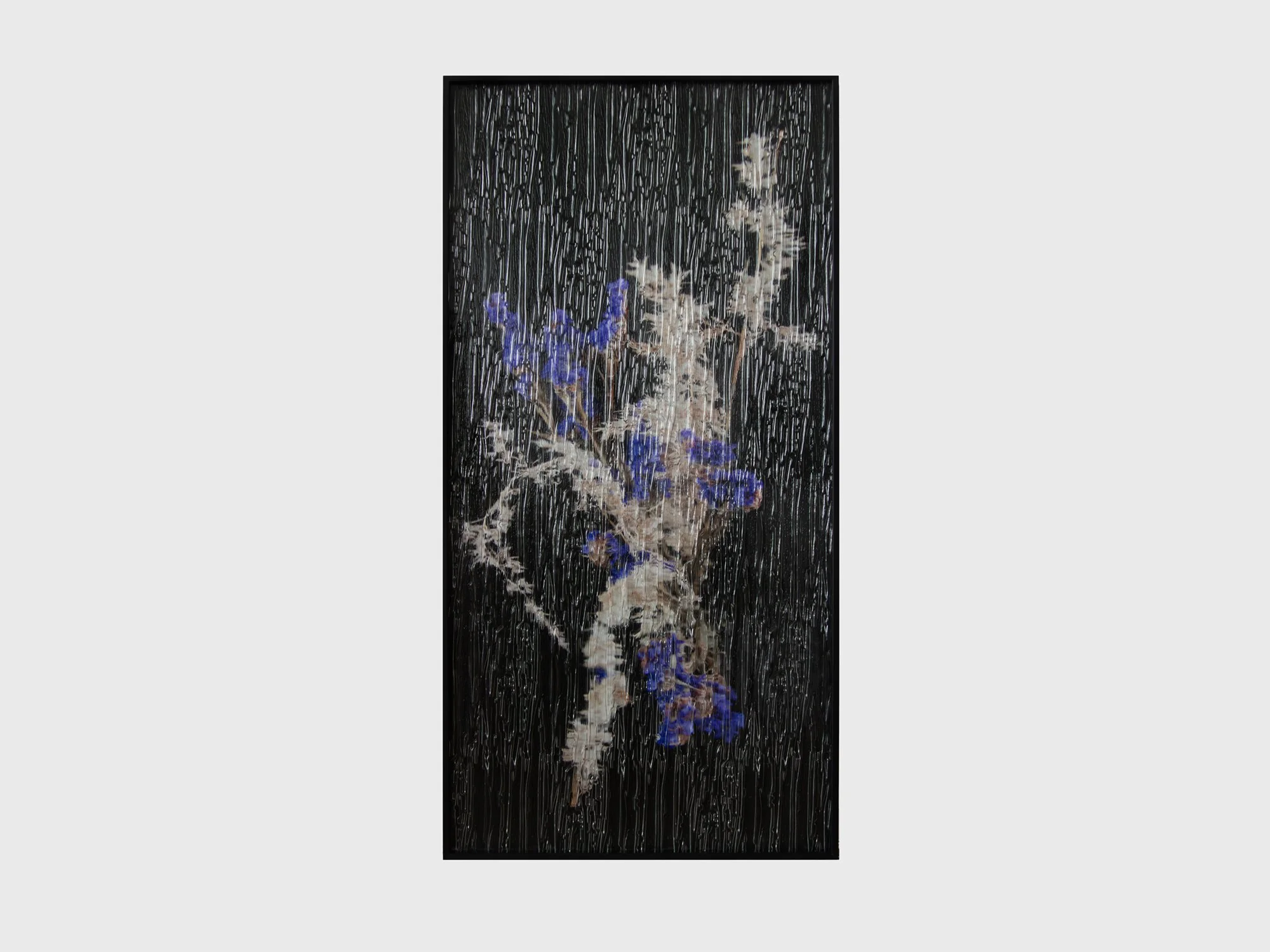
By Sophie de Vos
90 × 45 cm, unique, 2025
Hahnemuhle photo rag pearl, framed in black, niagara glass
From the series A Fragile Shift of Sight
This work by Sophie de Vos unfolds as both an image and a window. Against a deep black background, fragile flowers emerge in the foreground, suspended between clarity and obscurity. They are seen not directly, but through textured glass once part of an actual window frame. Its flowing surface recalls falling rain, transforming the act of looking into something layered and elusive.
For Sophie de Vos, art functions as a window onto another world; a threshold to the imaginary. By placing the photograph behind this glass, she invites the viewer to experience the image as something glimpsed rather than fully grasped - a fleeting vision that is both present and just beyond reach. At the same time, the glass evokes a sense of protection, as if the flowers are shielded in their own fragile space, reminding us of the delicate boundary between distance and intimacy, reality and imagination.
Shipping within the Netherlands and Belgium is on us.

By Sophie de Vos
90 × 45 cm, unique, 2025
Hahnemuhle photo rag pearl, framed in black, niagara glass
From the series A Fragile Shift of Sight
This work by Sophie de Vos unfolds as both an image and a window. Against a deep black background, fragile flowers emerge in the foreground, suspended between clarity and obscurity. They are seen not directly, but through textured glass once part of an actual window frame. Its flowing surface recalls falling rain, transforming the act of looking into something layered and elusive.
For Sophie de Vos, art functions as a window onto another world; a threshold to the imaginary. By placing the photograph behind this glass, she invites the viewer to experience the image as something glimpsed rather than fully grasped - a fleeting vision that is both present and just beyond reach. At the same time, the glass evokes a sense of protection, as if the flowers are shielded in their own fragile space, reminding us of the delicate boundary between distance and intimacy, reality and imagination.
Shipping within the Netherlands and Belgium is on us.
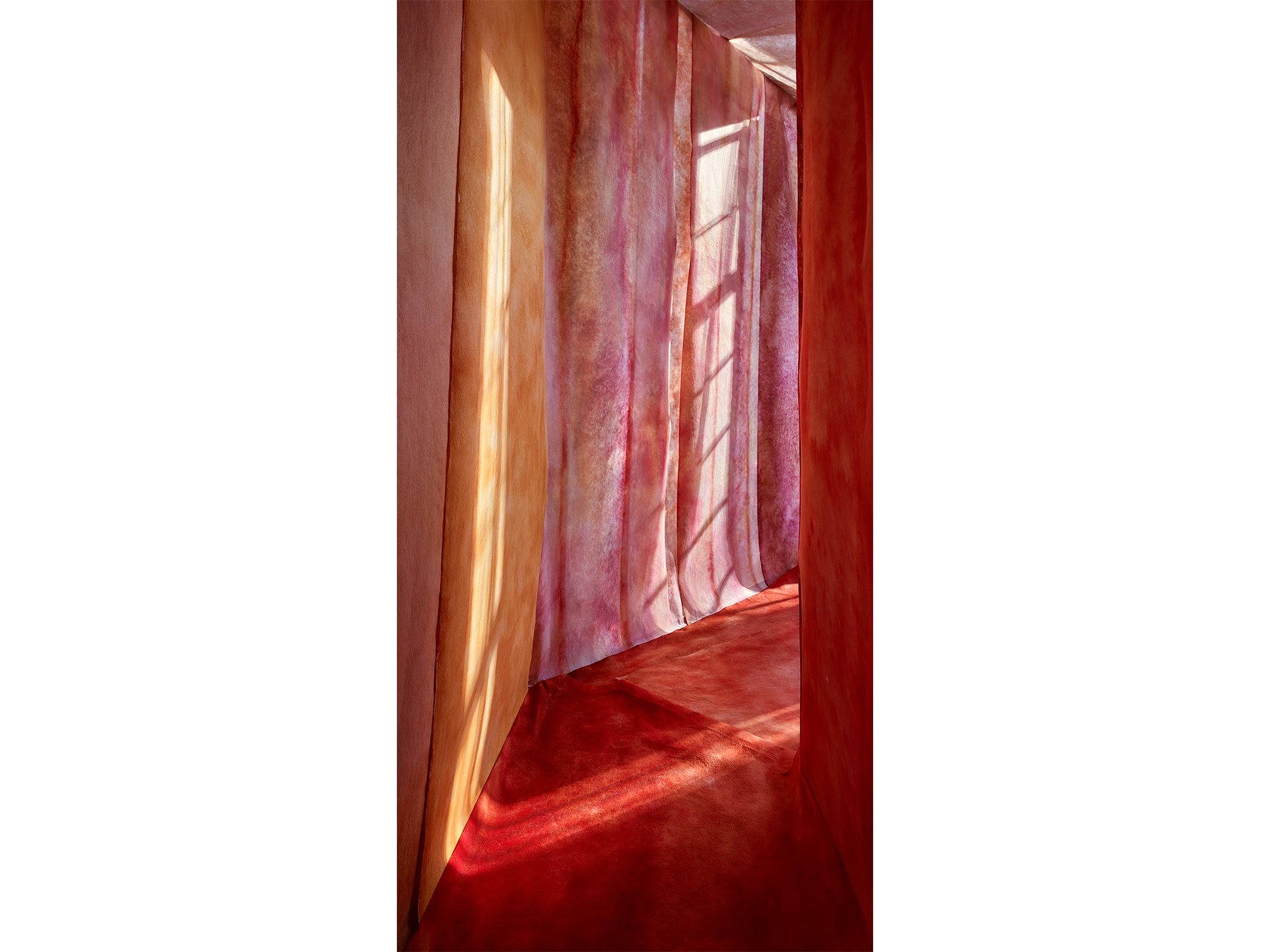
By Jan Theun van Rees
130 × 65 cm, edition 2/3 + 1 AP , 2025
Pigment inkt, op Innova Photorag bright white, op 2 mm museumkarton ‘White Wash’Wenge Veneer with UV 70 Museumglass
(Also available in 90 × 45 cm, edition 2/3)
This work is part of the series Painted Room
In To Catch a Spark of Sunlight, Jan Theun van Rees captures the fleeting moment when light defines space. Built entirely by hand and photographed with precision, the work belongs to his Painted Room series, constructed interiors that exist only for the camera.
This particular composition plays with verticality and contrast, as sunlight appears to slice through the space, catching on surfaces and turning architecture into atmosphere. The title evokes a quiet urgency: the desire to hold onto something ephemeral, to freeze a passing beam of light.
Like much of Van Rees’ work, this image is both real and imagined, rooted in the physicality of construction, but shaped by the artist’s intuition and spatial memory.
Shipping within the Netherlands and Belgium is on us.
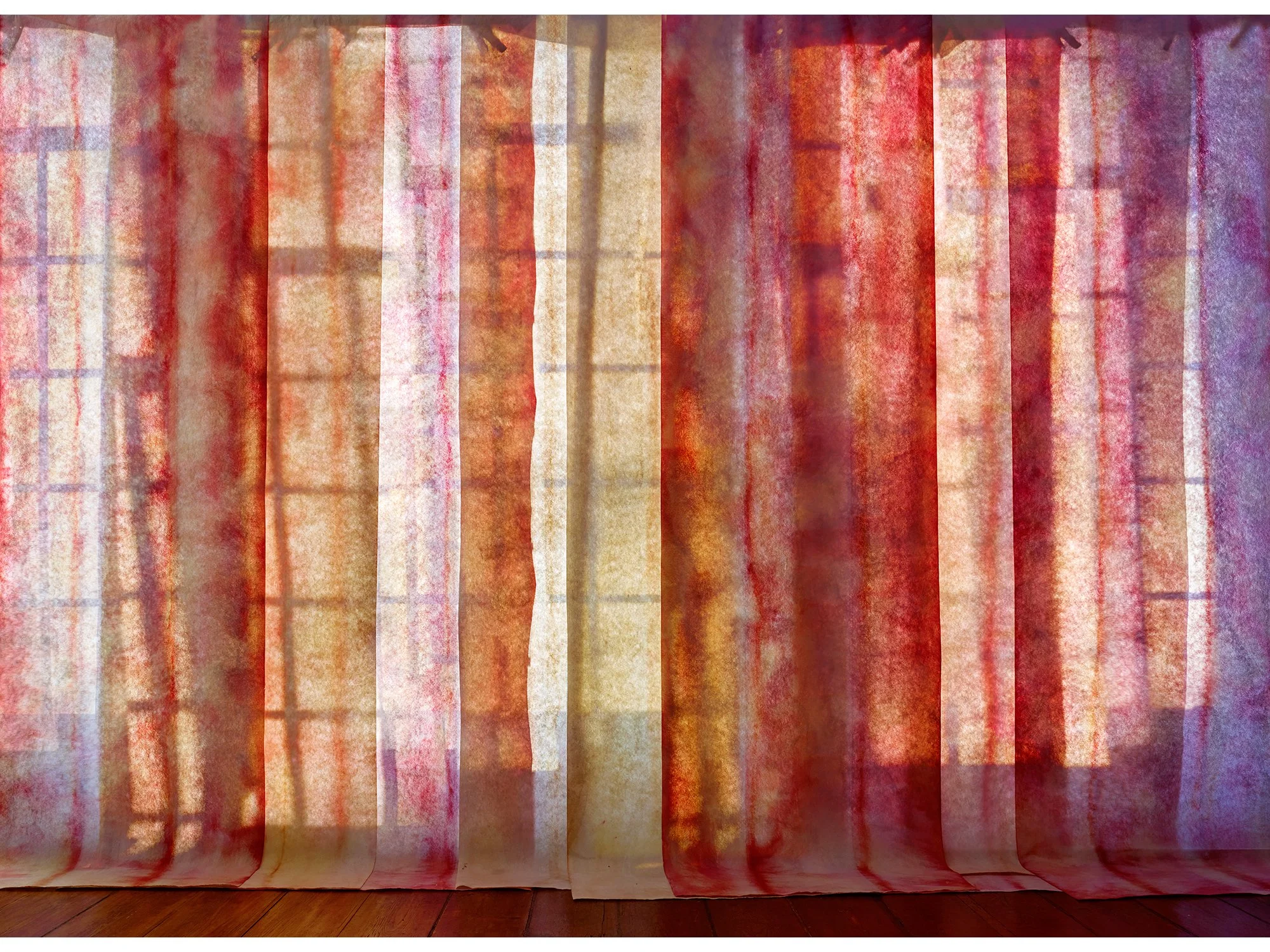
By Jan Theun van Rees
110 × 80 cm, edition 2/3 + 1 AP , 2025
Pigment inkt, op Innova Photorag bright white, op 2 mm museumkarton ‘White Wash’Wenge Veneer with UV 70 Museumglass
(Also available in 40 × 55 cm, edition 2/5)
This work is part of the series Painted Room
In Scrambled Morninglight, Jan Theun van Rees constructs a space where colour, light, and architecture dissolve into pure perception. This large-format work—part of his Painted Room series, is not a depiction of an existing room, but a spatial invention, built solely to explore how light transforms constructed surfaces into image.
The composition is animated by layered tones of red, with flashes of purple, orange, and yellow that appear to scatter like fragments of morning light. The title references both the time of day and the fragmented way in which light and colour are perceived and remembered.
As with all works in the Painted Room series, this space never existed until Van Rees built and photographed it. It is a visual proposition: a way of thinking through architecture, photography, and the physical presence of colour in space.
Shipping within the Netherlands and Belgium is on us.

By Jan Theun van Rees
50 × 40 cm, edition 1/3 + 1 AP , 2025
Pigment ink on Innova Photorag bright white, mounted on 4 mm museum board
Framed in ‘White Wash’ veneer with spacers and UV70 museum glass
(Also available in 25 x 20 cm, edition 10)
This work is part of the series Painted Room
With Red Room, Jan Theun van Rees continues his exploration of how space is perceived and constructed on the flat picture plane. The work is part of the Painted Room series, in which he intuitively builds and photographs entirely constructed environments.
Red Room exists solely to be photographed, a new, not-yet-existing reality created to express a particular spatial quality. The deep red appears to fill the room like a tangible presence, shaped by light and composition.
As in much of his recent work, Van Rees blurs the line between documentation and invention. Red Room invites the viewer to question what space is, how it comes into being, and the role perception plays in its formation.
Shipping within the Netherlands and Belgium is on us.
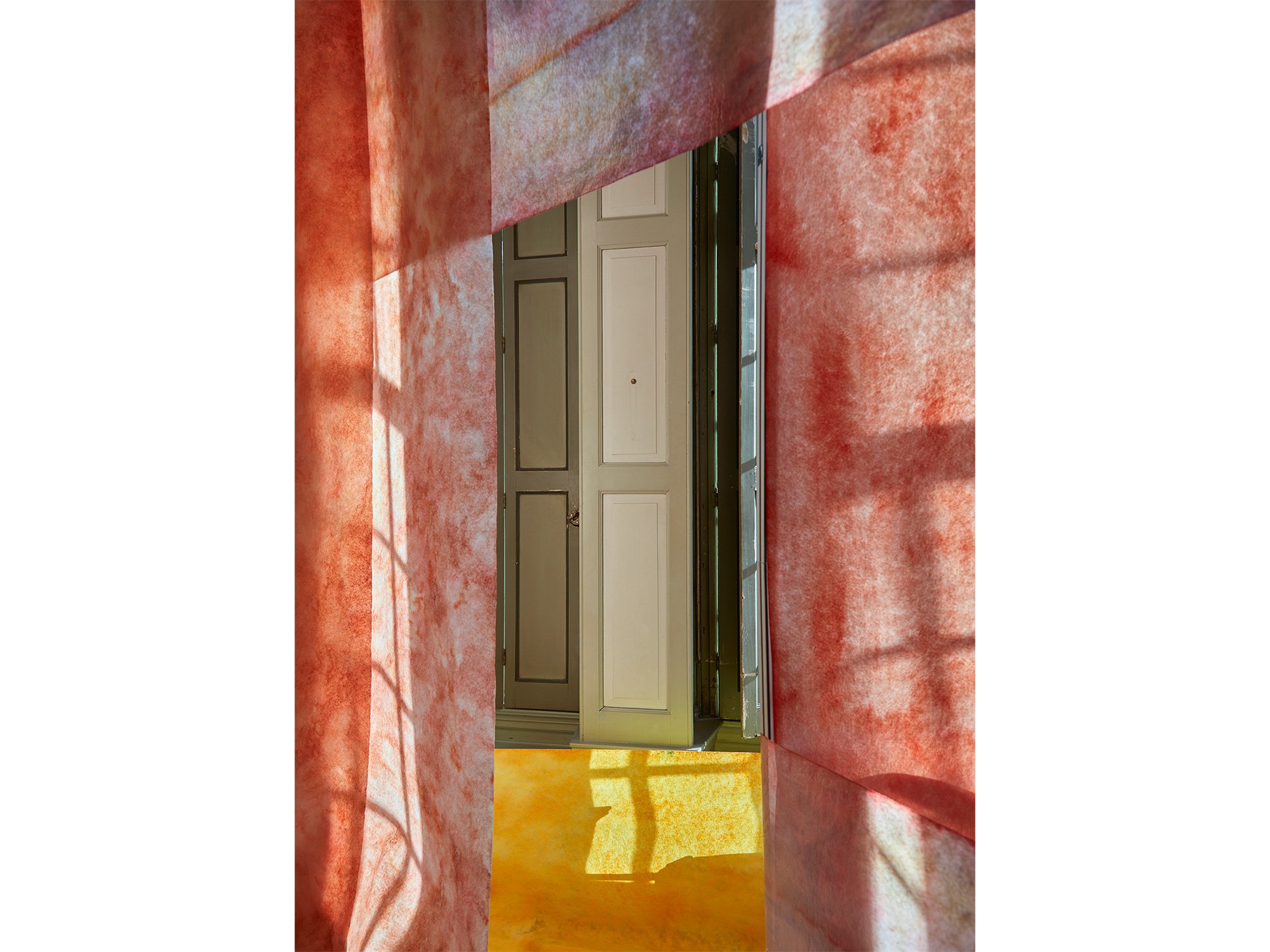
By Jan Theun van Rees
55 × 40 cm, edition 2/5 + 1 AP , 2025
Pigment ink on acid free Innova Soft Textured Bright White - pale wenge wood veneer frame (Nielsen) with Museumglass (UV70)
This work is part of the series Painted Room
In View 1, Jan Theun van Rees constructs a compact, enigmatic space where colour and form suggest more than they reveal. Dominated by deep red tones and punctuated by a single yellow accent, the composition centres around a closed, door-like shape, evoking a sense of tension, as if access is denied or postponed.
Part of the Painted Room series, this image captures a space that exists solely for the camera. It is not a record of reality, but a visual proposition: a space that teases the eye and mind with the suggestion of passage, yet keeps its interior sealed.
View 1 plays with perception, inviting contemplation of what remains hidden just behind the surface.
Shipping within the Netherlands and Belgium is on us.
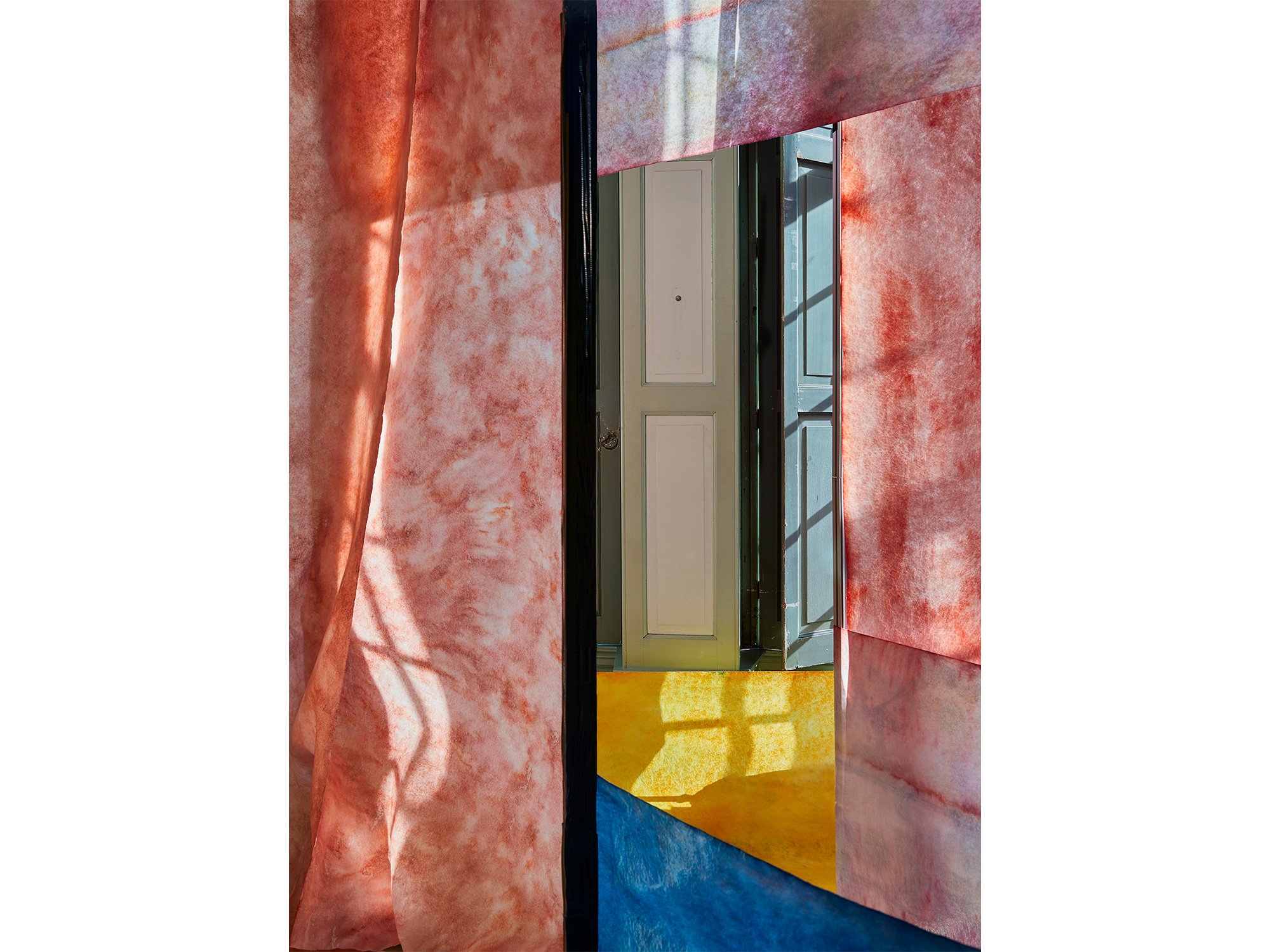
By Jan Theun van Rees
55 × 40 cm, edition 2/5 + 1 AP , 2025
Pigment ink on acid free Innova Soft Textured Bright White - pale wenge wood veneer frame (Nielsen) with Museumglass (UV70)
This work is part of the series Painted Room
In View 2, Jan Theun van Rees continues his exploration of constructed spaces that exist solely to be photographed. Rich red tones dominate the composition, while subtle blue and yellow accents add a sense of spatial tension and visual rhythm.
At the centre, a door-like shape appears slightly ajar, unlike the closed form in View 1. This small shift opens up a new narrative: a hint of access, a glimpse of what might lie beyond.
As with all works in the Painted Room series, View 2 is a visual proposition, suggesting space, movement and meaning through colour, light, and geometry alone.
Shipping within the Netherlands and Belgium is on us.
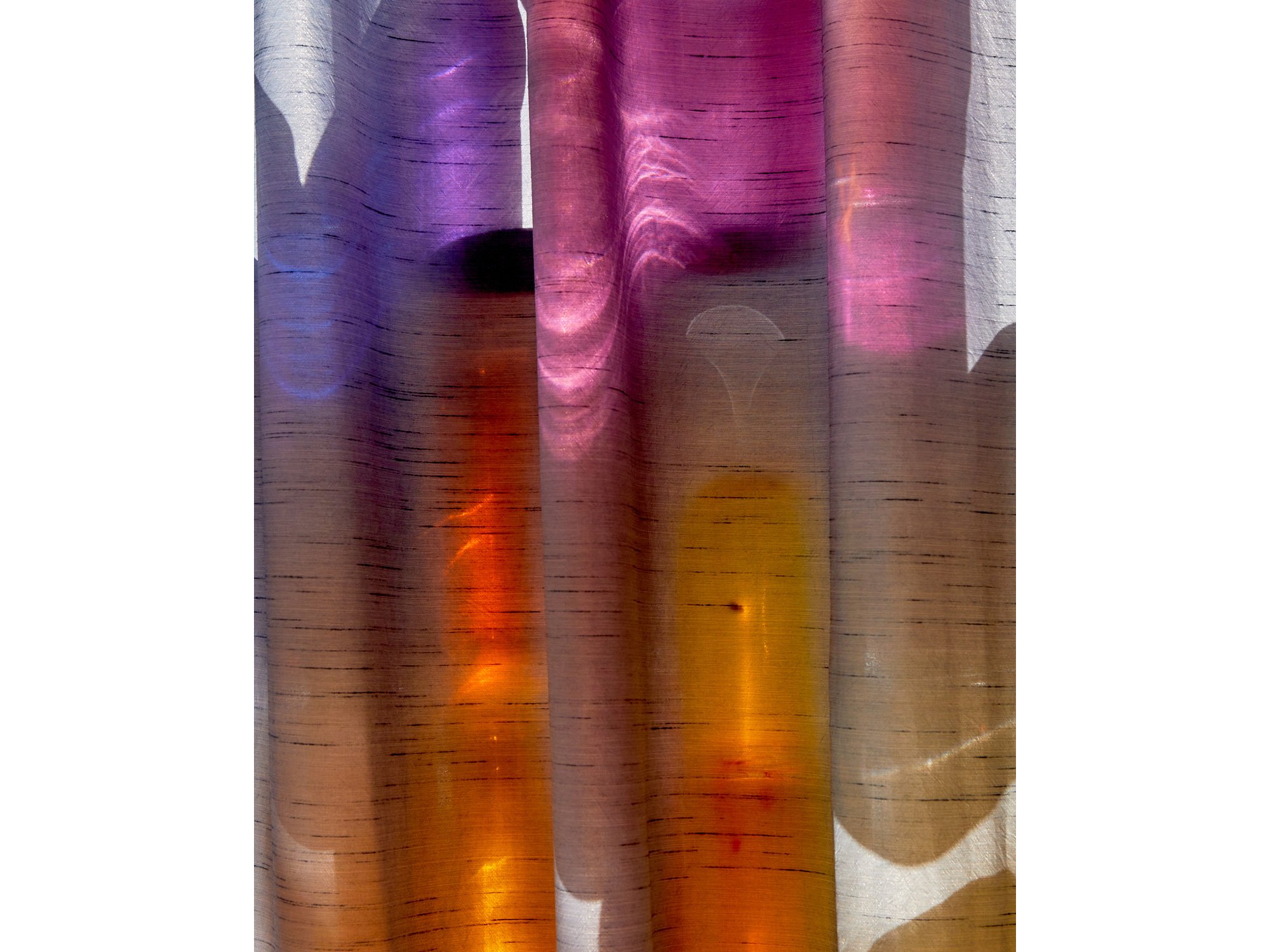
By Jan Theun van Rees
25 x 20 cm, ed. 5/10, 2024
Archival pigment ink on Innova ”Soft Textured BrightWhite Photorag” with nutwood frame and museumglass
This work is part of the series Painted Room
With his art, Jan Theun van Rees focuses on the appearance of space as an image, the perception of that (visualised) space in relation to the space that surrounds us. Through his photographs he tries to visualise the specific qualities of those spaces. “Camera Lucida” is the catch-all term for all his artistic projects that try to visualise a connection between (interior) spaces and the outside world through incoming light. He intervenes in the space, manipulates the incoming light, to emphasise the spatial qualities he experiences. These interventions have become essential to his current practice. He constructs his own spaces, his own versions of a new, not yet existing reality. A certain spatial quality is visualised by constructing a space with the sole purpose to photograph the result.
In his new series Painted Room you can step into a new reality and become mesmerised by the rays of light, colourful surroundings and mystic shadows.
Shipping within the Netherlands and Belgium is on us.

By Sophie de Vos
120 × 90 cm, ed. 1/2, 2024
Hahnemuhle, framed in black, museumglass
From the series Fragments of Clarity
The word ‘reflecting’ carries dual meanings; it can refer to an actual reflection - seeing an image mirrored in a glossy surface like glass - or it can describe the process of deep, thoughtful contemplation.
This photographic series by Sophie de Vos intertwines both interpretations, exploring the intersection between the literal and metaphorical aspects of reflection. In this series, Sophie incorporates glass as a physical and conceptual layer over her subjects, manipulating its positioning to create dynamic visual distortions. By alternating and playing with these layers, she raises profound questions about perception: When we look at something, are we truly seeing it as it is, or are we viewing it through the complex prism of our own experiences, biases, and emotions? Sophie challenges the viewer to consider the nature of clarity itself, suggesting that true understanding may be filtered and refracted by the lenses through which we observe the world.
Through this blending of visual and philosophical reflection, the series becomes not just a study of surfaces and subjects, but a deeper inquiry into the limits of perception and understanding.
Shipping within the Netherlands and Belgium is on us.
Paint: vibrant colours that lasts with ease
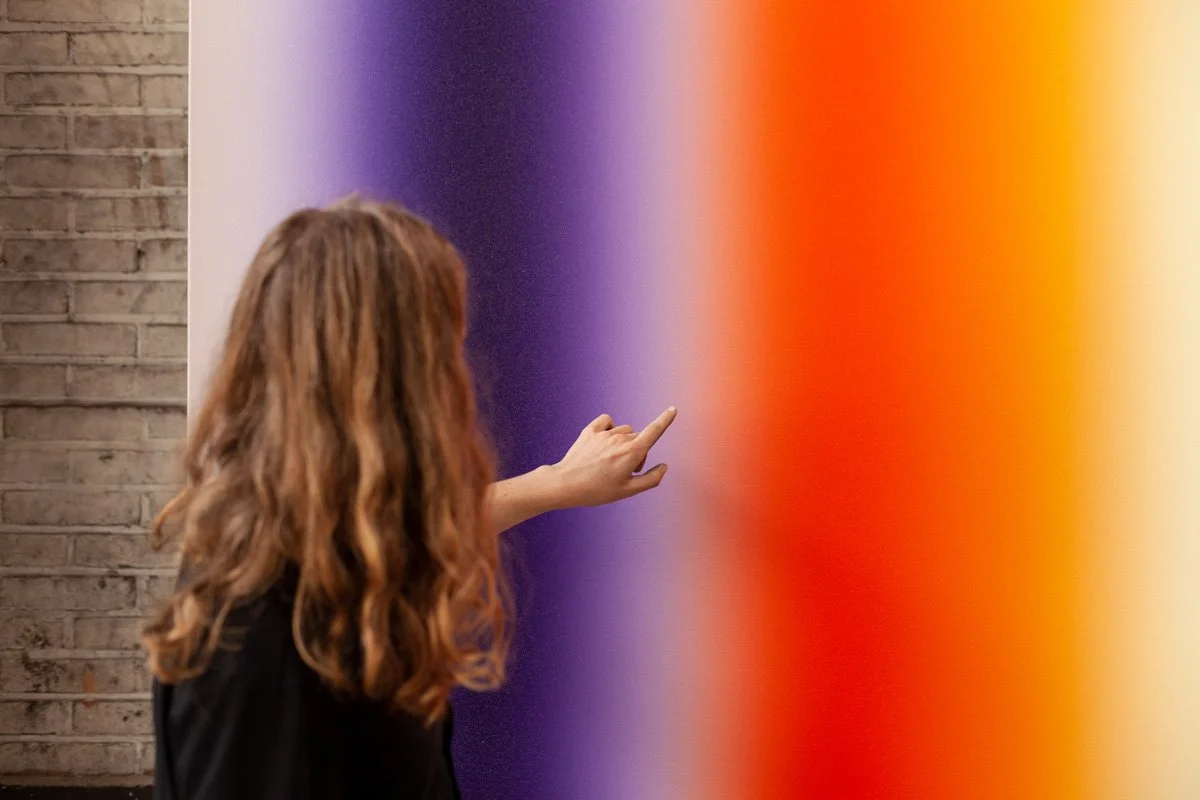
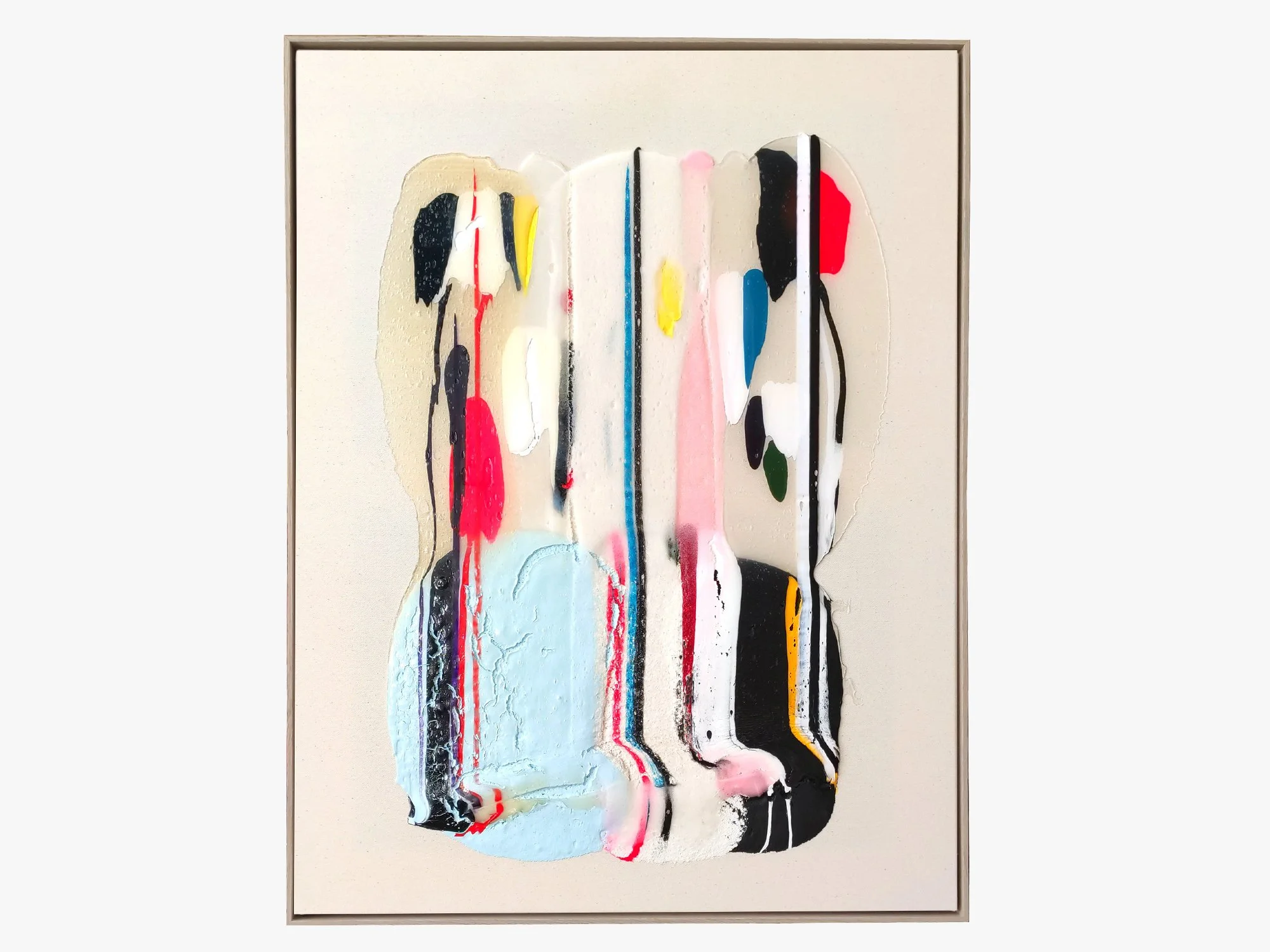
Bright colours - whether oil, acrylic, or mixed media - can bring real energy to a room. Most high-quality pigments are designed to last, especially with a few simple precautions. Some colours, like reds, are naturally a bit more light-sensitive, but that’s easy to manage with thoughtful placement. Fluorescent paints are especially delicate: they’re made from dyes rather than traditional pigments, which means they absorb more light and are quicker to break down under UV exposure.
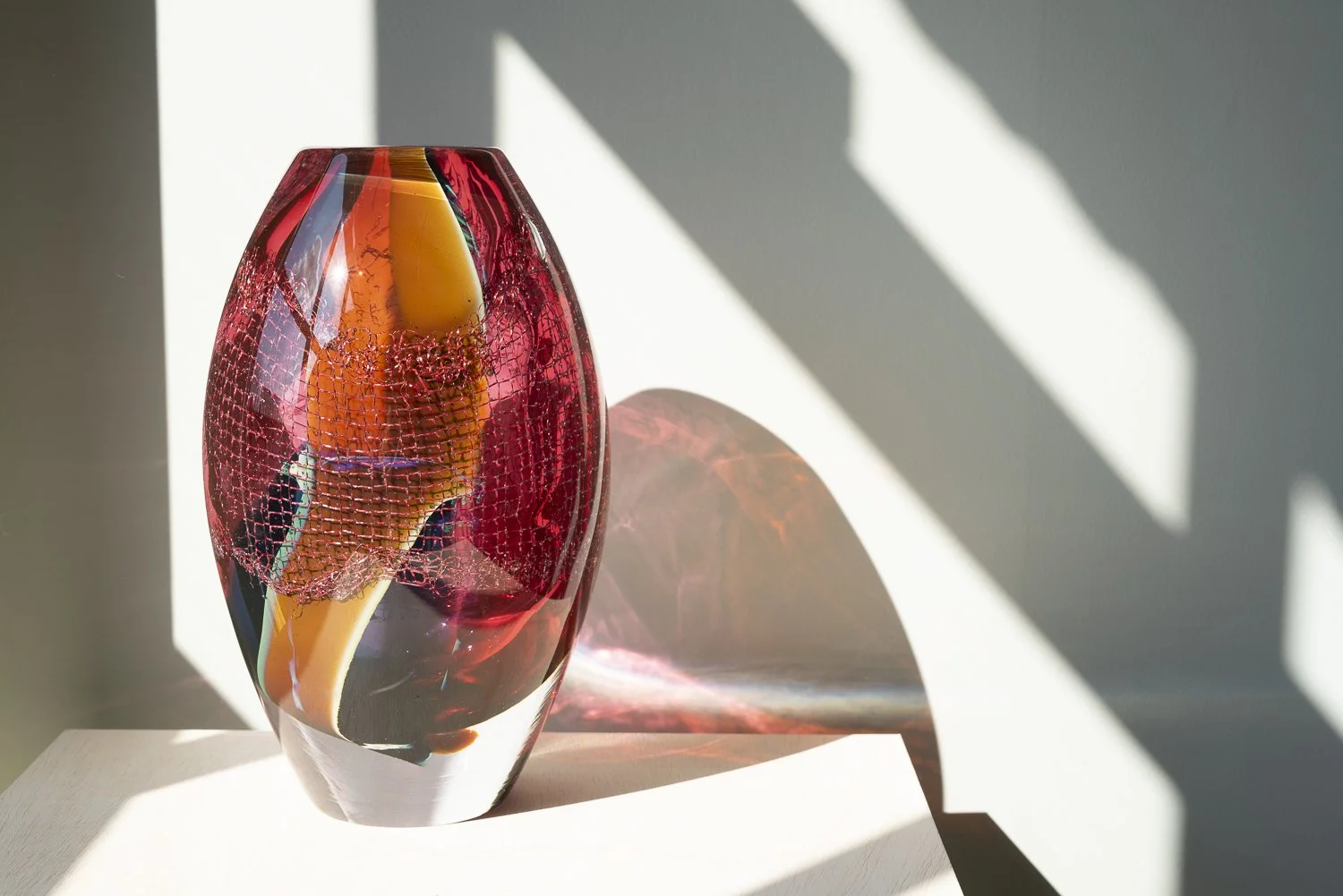
If the fluorescent colour is used on canvas or paper, we recommend UV-filtering glass and avoiding bright sun. Works made from fluorescent plexiglass likes the ones from Lisette Schumacher, on the other hand, are much more durable and resist fading.
Oil paintings in particular need a bit of extra care: they take years to fully cure and remain sensitive to shifts in temperature and humidity. Avoid hanging them near heat sources or in places with strong sunlight.
As with all paintings, keep them in a stable, shaded place. And when moving or adjusting any painted work, wear gloves. Your hands may be clean, but natural oils and traces of sunscreen can affect the surface over time.
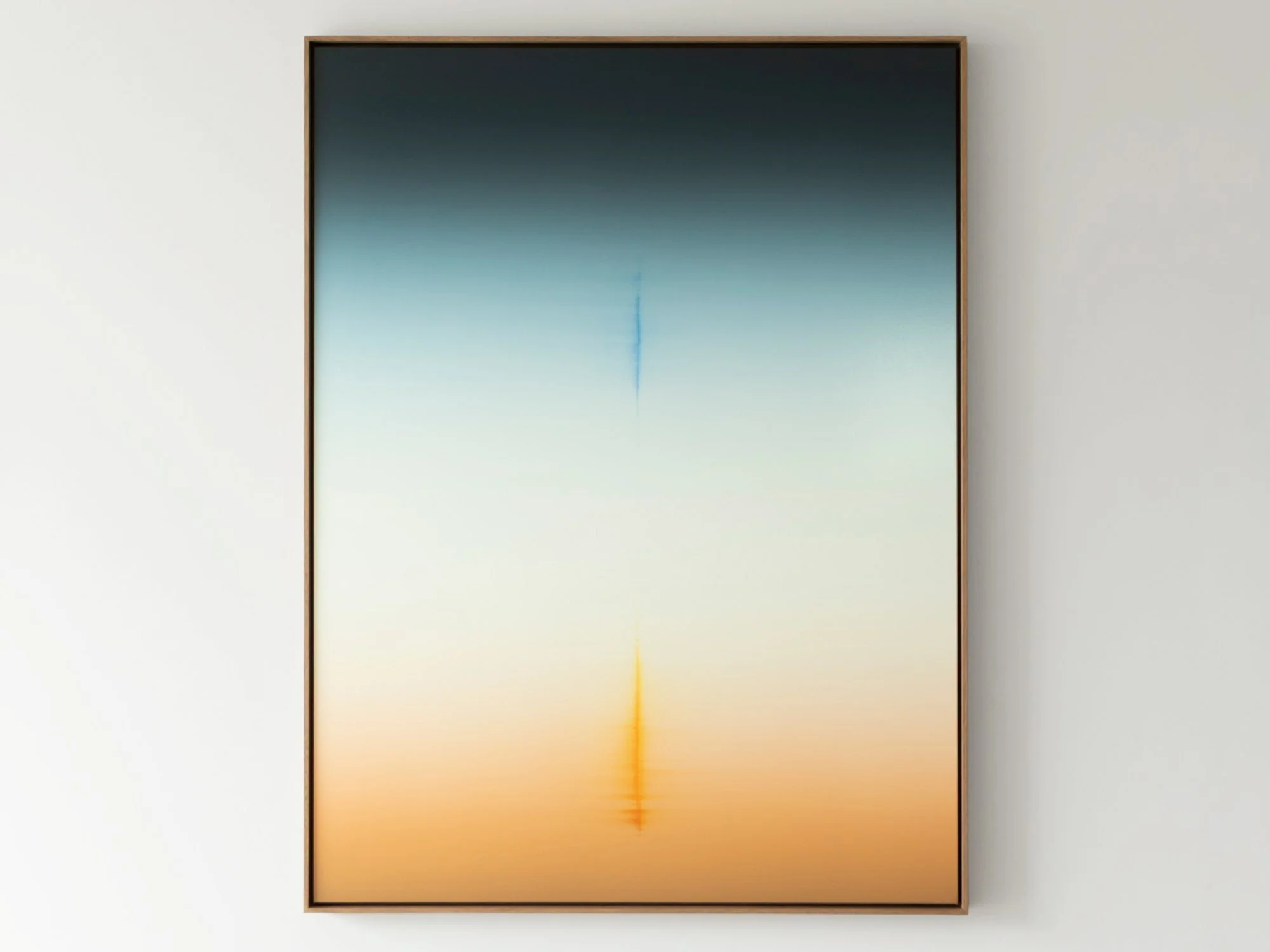
By Donald Schenkel
160 x 120 cm, 2026
oil on canvas, with wooden frame
From the series Painting as screen
In In Praise of Shadows, Donald Schenkel builds a quiet composition through subtle transitions of colour and light. Deep blue gradually dissolves into pale, luminous tones before meeting a warm orange glow. Two delicate vertical forms interrupt the otherwise seamless surface, creating balance, depth and a restrained sense of movement.
Painted in oil through many thin layers, the work has an exceptional softness and intensity. Its minimal composition brings calm to a space, while the shifting colours continue to reveal new nuances as the light changes throughout the day.
Personal delivery and installation within the Netherlands and Belgium are included with this work.
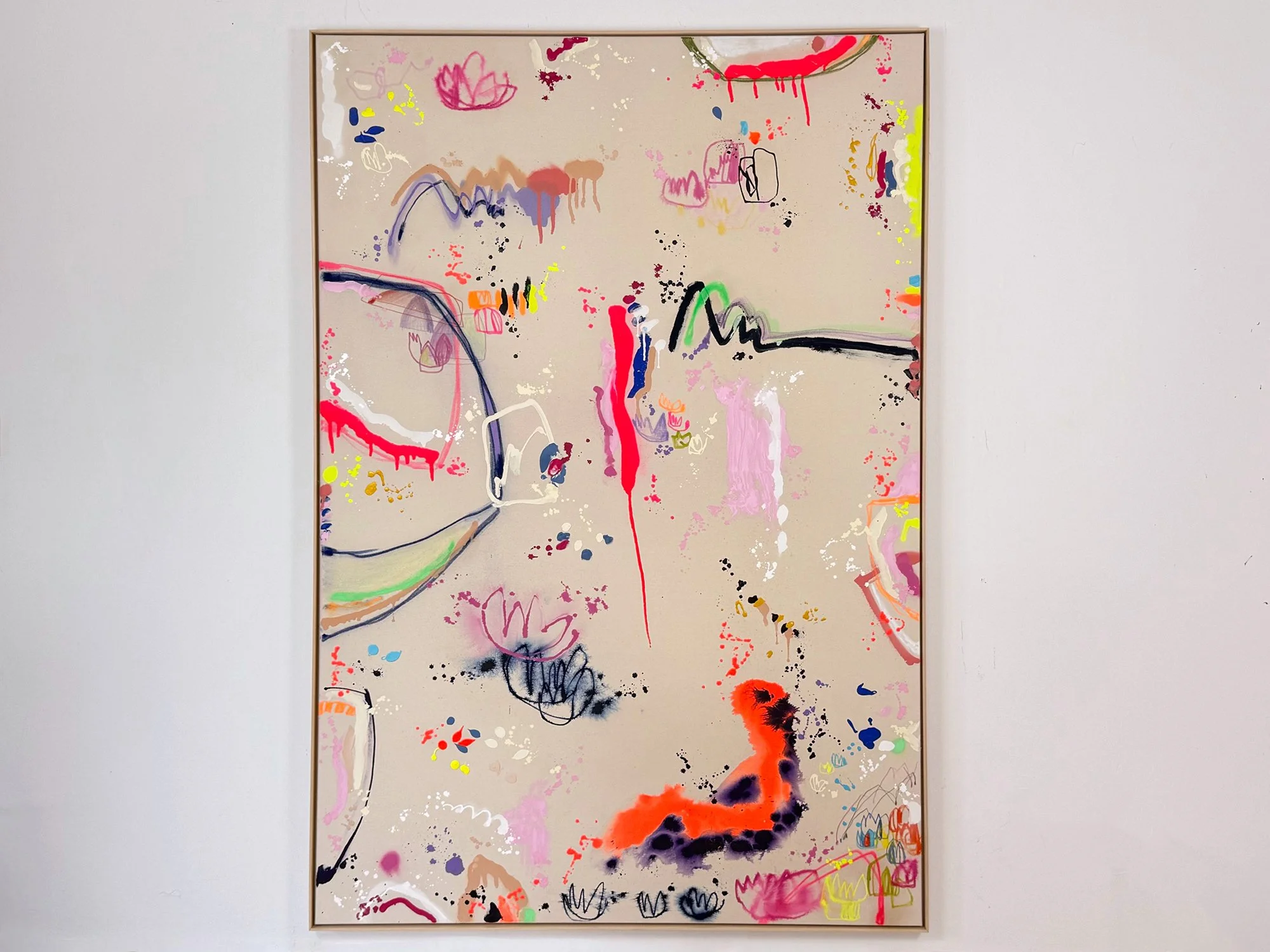
By Vera Klaus
180 × 120 cm, 2026
Mixed media on cotton, framed
Vera Klaus creates contemporary abstract paintings through an intuitive and physical process. Working with pastel chalk and water, she builds layered, gestural compositions in which colour, movement and texture are closely connected. Music plays an important role in her practice, helping her to let go of her surroundings and become fully immersed in the present moment. Her latest colourful paintings introduce pink and blue undertones, marking a new step in her ongoing exploration of pastel and water. The resulting abstract works convey strength, vitality and joy, inviting the viewer to lose themselves in their expressive colours, subtle details and shifting nuances.
Personal delivery and installation within the Netherlands and Belgium are included with this work.
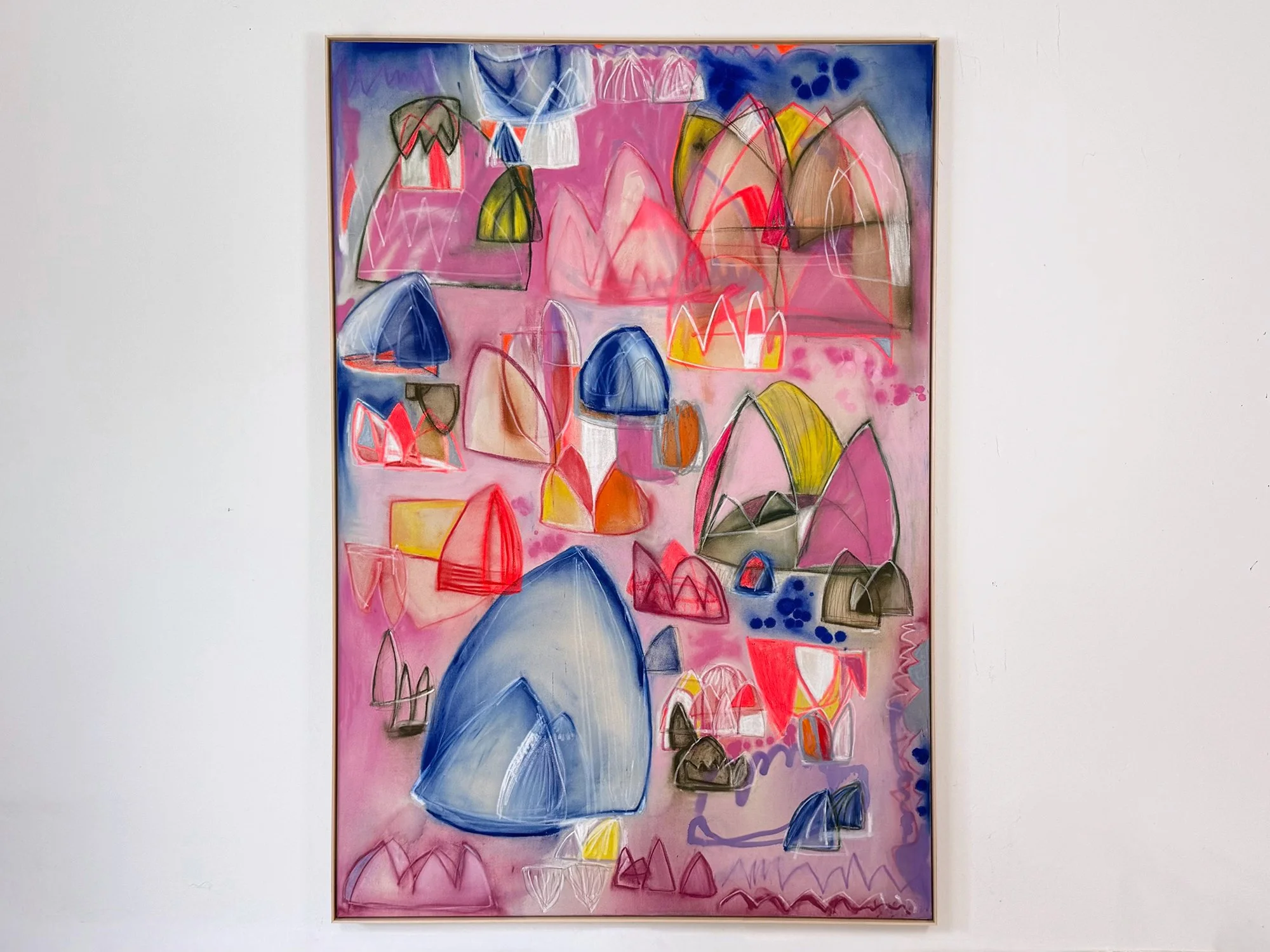
By Vera Klaus
180 × 120 cm, 2026
Mixed media on cotton, framed
Dreams and Hope marks a new direction in the work of Vera Klaus. Across a soft pink ground, recurring arched forms appear like mountains, shelters or elements from an imagined landscape. Deep blue, vivid red, yellow and earthy green are layered through translucent washes, drawn contours and tactile marks.
While Klaus’s earlier paintings were often led by spontaneous gestures, this work introduces a more deliberate visual language. The repeated forms gather, overlap and disperse across the canvas, creating a rhythm that moves between drawing and painting, structure and intuition.
Personal delivery and installation within the Netherlands and Belgium are included with this work.
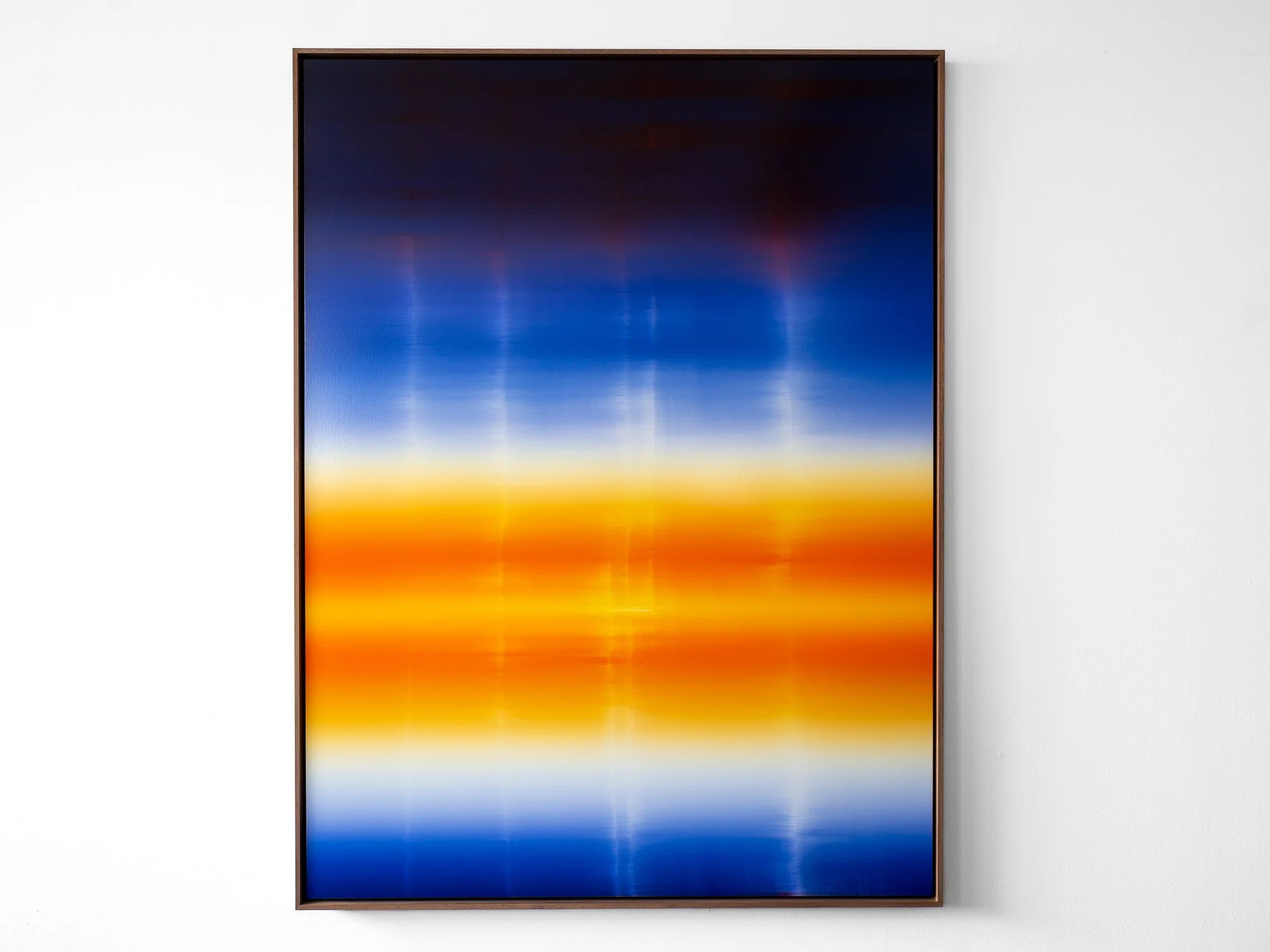
By Donald Schenkel
160 x 120 cm, 2026
oil on canvas, with wooden frame
From the series Painting as screen
With Sudden Flare of Interest, Donald Schenkel continues his exploration of colour as an autonomous element. Built up through numerous layers of oil paint, the composition unfolds gradually, moving from deep blue tones towards a luminous centre of warm orange and white. The painting evokes associations with landscapes, reflections or shifting skies, yet remains firmly rooted in abstraction.
Rather than depicting a specific place, Schenkel creates a space in which atmosphere and perception take centre stage. The slow process of layering and refinement gives the surface depth and subtle complexity, rewarding prolonged viewing. The result is a painting that changes with the surrounding light and invites contemplation without imposing a fixed interpretation.
Personal delivery and installation within the Netherlands and Belgium are included with this work.
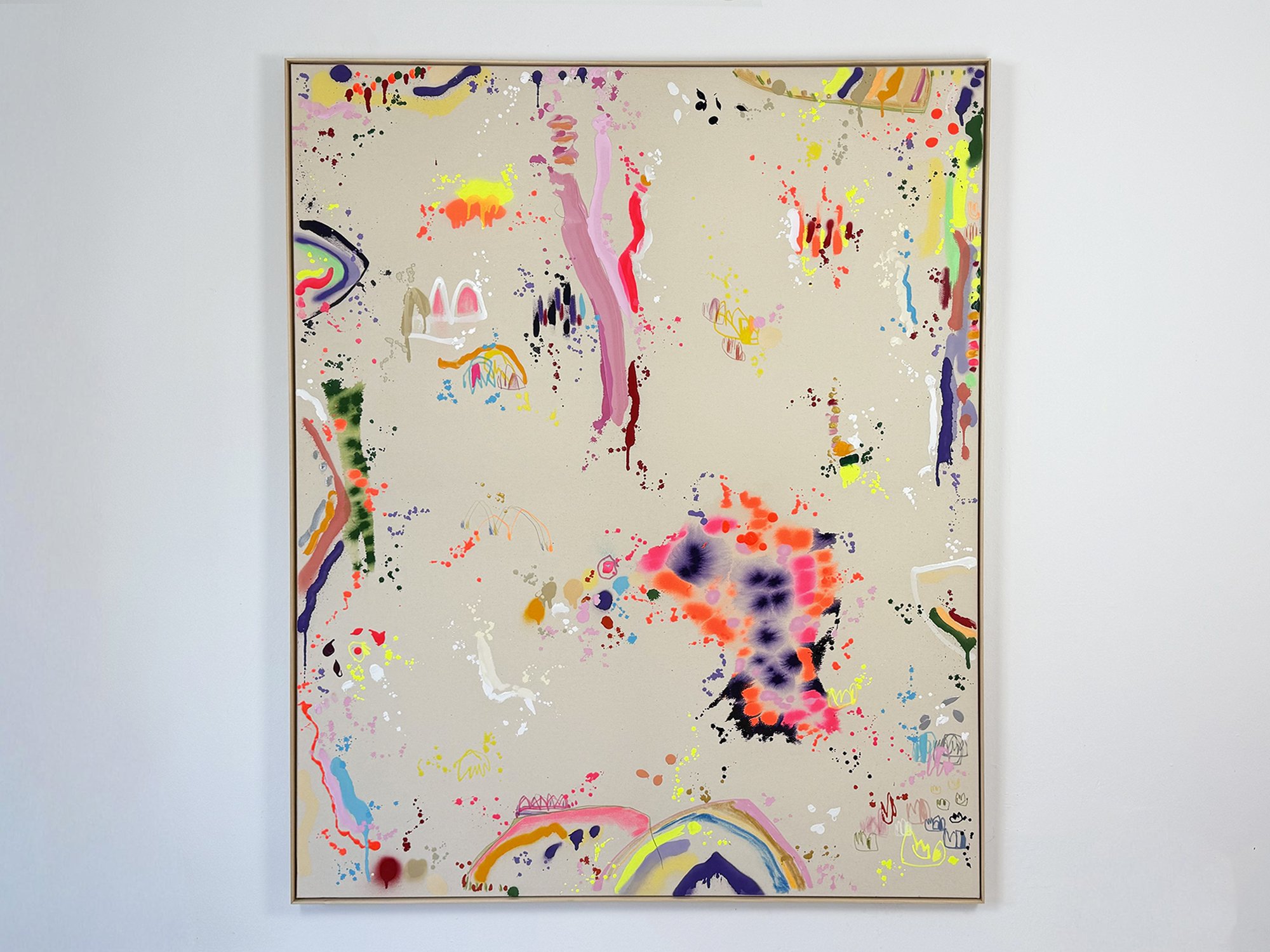
By Vera Klaus
170 × 140 cm, 2026
Mixed media on cotton, framed
Morgens Am See (Morning at the Lake) is a large abstract painting by contemporary artist Vera Klaus, created in 2026. The work is executed in mixed media on canvas and presented in a wooden floater frame.
Vera Klaus’s work often centres on the quiet intensity of small, fleeting moments. Rather than depicting a specific landscape or memory, her paintings build an atmosphere through colour, rhythm and layered gestures. In Morgens Am See, soft transitions and subtle contrasts create a sense of openness and stillness, recalling the experience of early morning light reflected on water.
The composition balances broad colour fields with more delicate passages of paint, allowing the surface to remain active without becoming overwhelming. From a distance, the painting reads as calm and expansive; up close, the layered marks and material traces reveal the artist’s process.
Through this approach, Vera Klaus creates works that invite sustained looking. The painting offers both visual clarity and depth, making it well suited for contemporary interiors where colour, light and space interact with the artwork throughout the day.
Personal delivery and installation within the Netherlands and Belgium are included with this work.

By Vera Klaus
150 × 120 cm, 2025
Mixed media on cotton, framed
Vera Klaus creates vibrant and dynamic compositions using diverse materials, including spray paint, acrylic, and chalk. Inspired by music, she channels its flow to evoke joy and positive emotions, seamlessly translating her happiness into her art. Through evocative titles, she enhances the uplifting energy of her works, inviting viewers to share in her inspiration. Everyday moments - like sunlight on your skin, blooming fields, or warm encounters - fuel her creativity, grounding her art in the beauty of the present. Each painting becomes a tangible expression of these fleeting yet profound experiences, radiating a sense of connection and vitality.
Personal delivery and installation within the Netherlands and Belgium are included with this work.
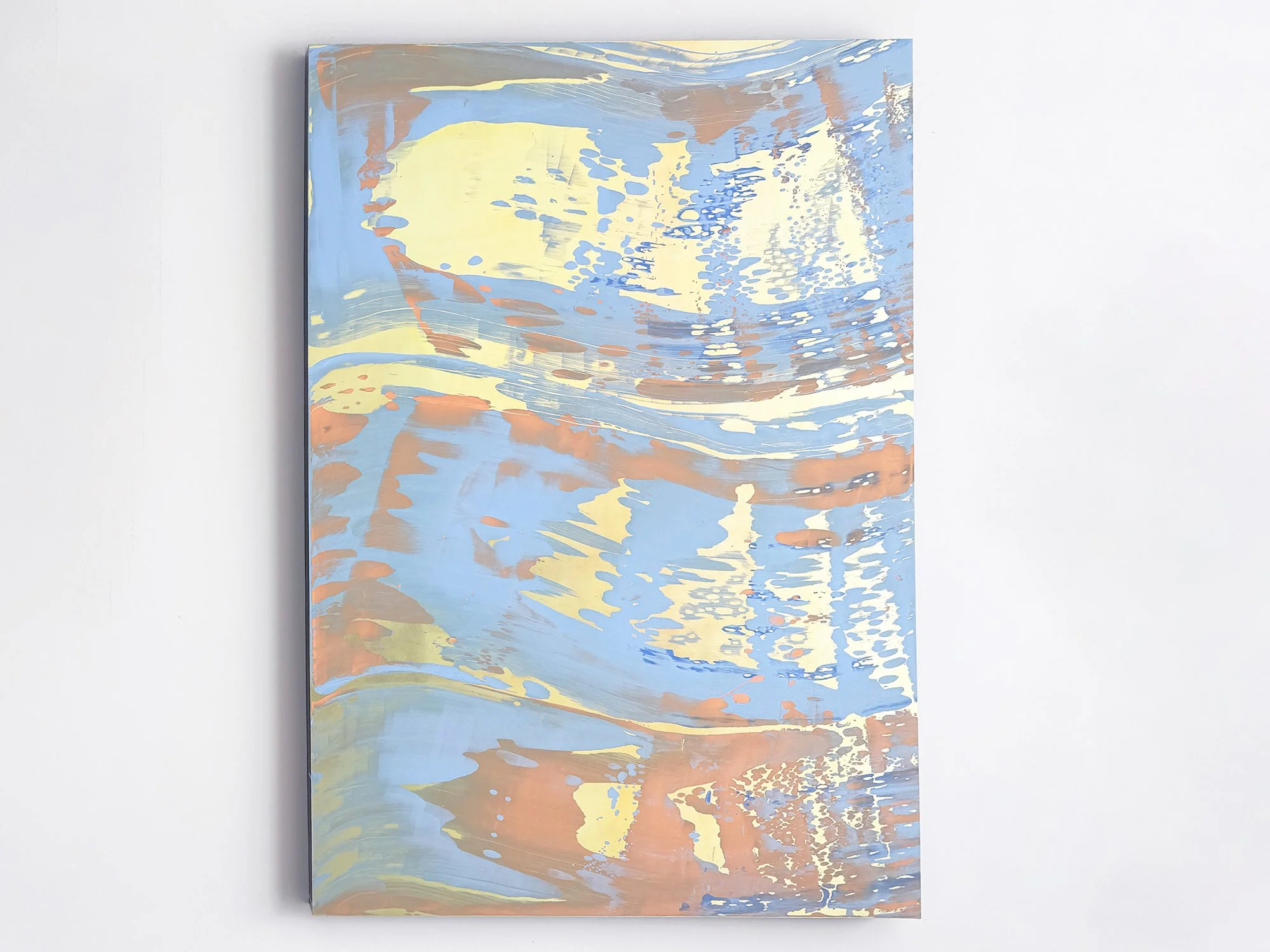
By Lisette Schumacher
160 x 110 x 6 cm, 2025
Mixed Media
From the series View On Sunset
The View on Sunset series reflects Lisette Schumacher’s ongoing exploration of mid-century modern architecture and the specific quality of light found in Los Angeles at dusk. Rather than translating architecture as a fixed image, Schumacher approaches each site as a lived experience, one that is first felt physically before it is understood intellectually.
By moving through a building repeatedly, observing shifts in light, rhythm and material, Schumacher absorbs the atmosphere of a place. This embodied experience is combined with historical research into the site and its architect, followed by an intensive investigation of colour, surface and technique. The resulting works do not depict architecture directly, but translate its presence into layered compositions and subtle colour transitions.
In this work, soft blues, pale yellows and warm earth tones flow across the surface, echoing reflections of sky and structure as daylight fades. The composition remains open and spacious, inviting slow looking and allowing the work to change with its surroundings, much like the architecture that inspired it.
Personal delivery and installation within the Netherlands and Belgium are included with this work.
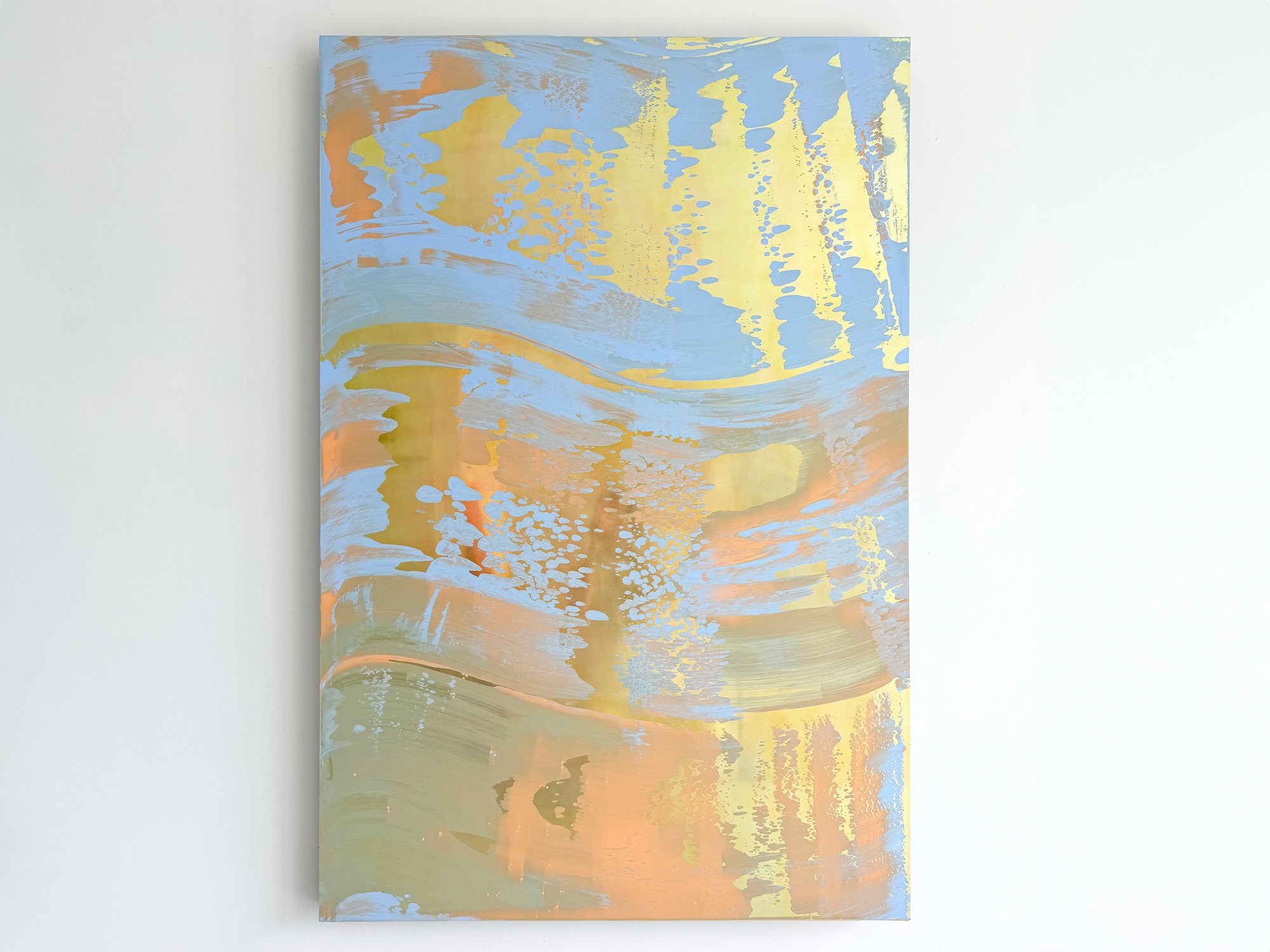
By Lisette Schumacher
160 x 110 x 6 cm, 2025
Mixed Media
From the series View On Sunset
The View on Sunset series reflects Lisette Schumacher’s deep connection with mid-century modern architecture and the captivating sunsets of Los Angeles. Lisette’s interest lies in the idea that architecture engenders a basic physical experience prior to also initiating an intellectual interpretation. By observing the location intensely and moving through each room repeatedly, she can both experience the space in a physical way and interpret it intellectually. After studying the site's history and architect, a period of in-depth research into technique, material and colour schemes follows. This results in a series of works that reflect on the site's atmosphere, history and its design.
Personal delivery and installation within the Netherlands and Belgium are included with this work.

By Lisette Schumacher
190 x 80 x 6 cm, 2023
Mixed media
From the series Novel Trailing Reflections
Endless reflections of sun on glass and water were the starting points to create Lisette Schumacher’s Trailing Reflections series. During her residency in Los Angeles (April – May 2022) she visited The Stahl House, located in the Hollywood Hills. It was designed by Buck Stahl and Pierre Koenig in 1959-60. She was stunned by the pure beauty and tranquility of the Stahl House. During her stay, Lisette noticed an intriguing play of reflections in the glass facades of the home, caused by the water of the swimming pool and the reflections of the sun. She wanted to create a body of work that would visualize her observations and bring an ode to the family home, built from glass and steel. The Stahl House has become the figurehead of modern architecture in Los Angeles. She picked the color palette based on the local rocks, succulents, interior and the swimming pool.
Personal delivery and installation within the Netherlands and Belgium are included with this work.

By Saïd Kinos
150 x 120 cm, 2024
Acrylic on linen
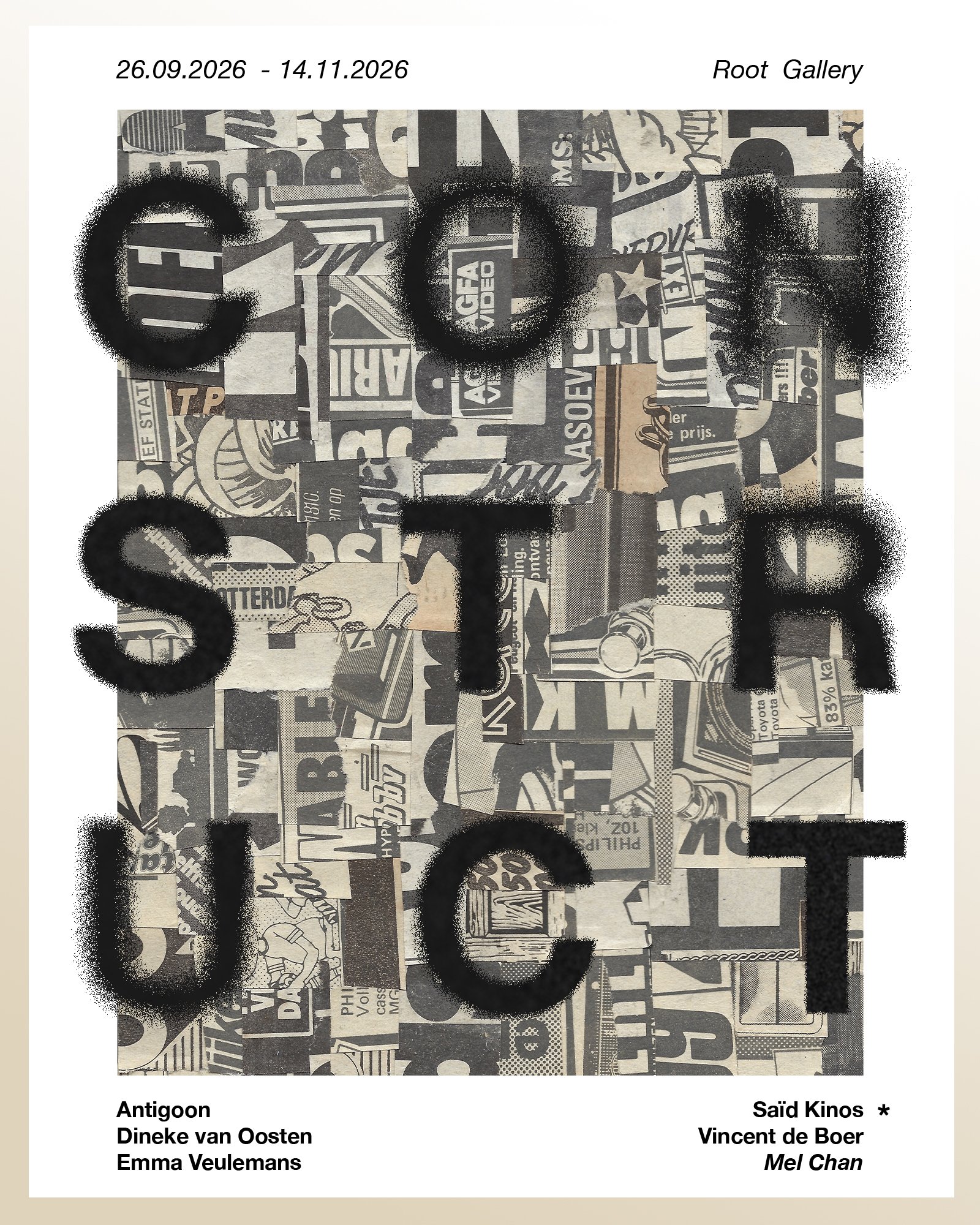
With a background in graffiti and graphic design, Saïd Kinos developed a fascination for typography and various forms of visual communication. He equates the visual experience with language with the functional aspect and is a great advocate of 'post-typography' as an art movement. More specifically, he uses language as a vehicle to explore form, colour and different artistic methods.
Saïd finds an element of abstraction in the subjective associations and differing contexts that can alter the reception of words and messages. Even though the words that can be read share a collective meaning, the mental image that arises when looking at his work will be different for everyone. The interpretation of his textual works are therefore similar to that of abstract art. He explores this element of abstraction through vibrant colour combinations and fragmented typography. Taking visual elements from anywhere he can find and recomposing them in a way to make them his own, Saïd creates his own reconstructed versions of reality
Personal delivery and installation within the Netherlands and Belgium are included with this work.

By Karen van de Vliet
200 x 165 cm, 2023
Mixed acrylic paint on cotton
Moving away from line and figurative art, Karen van de Vliet developed a new approach to her work that is focused on embracing an imperfect beauty. Working with the concept of a stain, Karen was able to go back to the base, to the essence, which continues to be at the core of her practice. She is intrigued by shapes that have arisen on the weathered, chipped, broken, planed and dented surfaces. In these weathered parts Karen finds the essence of true beauty. Taking inspiration from these findings, she creates wondrous abstract pieces that contemplate imperfection. Acrylic paint, water and differing other materials are intuitively applied - often to unstretched cotton - giving free rein to expression.
Personal delivery and installation within the Netherlands and Belgium are included with this work.

By Karen van de Vliet
290 x 140 cm, 2022
Mixed acrylic paint on cotton
Moving away from line and figurative art, Karen van de Vliet developed a new approach to her work that is focused on embracing an imperfect beauty. She is intrigued by shapes that arise on weathered, chipped, broken, planed and dented surfaces. It is in these weathered parts that Karen finds the essence of true beauty. Taking inspiration from these findings, she creates wondrous abstract pieces that depart from her gravitation towards stains. Working with stains enables her to let go of all expectations and give free rein to expression. Hereby, acrylic paint, water and differing other materials are intuitively applied onto the surface. The search for a state of freedom without judgment ends when harmony is reached. When her eye is not drifting away, and attention is brought solely to the work itself. For Karen, creating an artwork is like getting to know a new piece of you with every action you take. In that way, Karen’s work can be described as a reflection of herself, as well as her environment; constantly moving and developing.
Personal delivery and installation within the Netherlands and Belgium are included with this work.

By Karen van de Vliet
290 x 140 cm, 2022
Mixed acrylic paint on cotton
From the series Color Poetry
Moving away from line and figurative art, Karen van de Vliet developed a new approach to her work that is focused on embracing an imperfect beauty. Working with the concept of a stain, Karen was able to go back to the base, to the essence, which continues to be at the core of her practice. She is intrigued by shapes that have arisen on the weathered, chipped, broken, planed and dented surfaces. In these weathered parts Karen finds the essence of true beauty. Taking inspiration from these findings, she creates wondrous abstract pieces that contemplate imperfection. Acrylic paint, water and differing other materials are intuitively applied - often to unstretched cotton - giving free rein to expression.
Personal delivery and installation within the Netherlands and Belgium are included with this work.

By Donald Schenkel
157 x 12 x 12 cm each (6 pcs), 2022
Oil paint on linen, European plane wood
The realisation of his new series has resulted from a new research into the approach of paintings as objects. The immaculate colour transitions which characterise Donald Schenkel’s oeuvre melt together with wooden beams, inviting viewers to view the works from different angles. Gradients follow the shape of the wooden beam, allowing the light to travel to different parts of the work, resulting in the oil paint to expose different tones of its colour. In these new works, Donald plays with the concept of minimalism. To form his compositions, he makes use of a geometric rectangular shape, while also using natural products like wood and oil paint that are at odds with minimalism. The colour lines are applied as an interruption of calm tones incorporating emerald green, cerulean blue and coral orange.
Personal delivery and installation within the Netherlands and Belgium are included with this work.
Paper: natural and sensitive
Paper is full of life – it breathes, it expands, and it can mark easily. Most works on paper at Root come framed with museum glass, but whenever handling any piece, use gloves. Even clean hands carry oils, and sunscreen can damage the surface quickly. Avoid placing paper-based works above fireplaces or near radiators, where dry air and rising heat can lead to curling, discolouration, or long-term damage to both paper and frame.
Bonus tip: don't forget the dust
Even the most stunning work can look dull with a layer of dust. We recommend gently brushing it off every now and then, ideally with a very soft brush or duster. You can also use a cold hairdryer on low to help move the dust while brushing. Just a few seconds of care, and your piece will look fresh and vibrant again.

By Saïd Kinos
40 × 30 cm excl frame, 2025
Pencil on paper, framed with museum glass
In Note to Self, Saïd Kinos takes a more introspective approach. This series is built around personal notes he has written over the past months, fragments of thought, reminders, and observations that serve as a guide in his own life. By translating these notes into works on paper, he bridges the gap between internal reflection and external expression.
Each piece in the series shares the same format, reinforcing a sense of continuity while allowing for variation in texture, colour, and form. Drawings, paintings, watercolours, and collages come together in a modular arrangement that speaks to the fluidity of language and meaning. Note to Self marks the beginning of a new body of work, Between Being and Becoming, where Saïd shifts from broader conceptual themes to a more personal and direct narrative.
Delivery in the Netherlands and Belgium is included.

By Saïd Kinos
40 × 30 cm excl frame, 2025
Collage on paper, framed with museum glass
In Note to Self, Saïd Kinos takes a more introspective approach. This series is built around personal notes he has written over the past months, fragments of thought, reminders, and observations that serve as a guide in his own life. By translating these notes into works on paper, he bridges the gap between internal reflection and external expression.
Each piece in the series shares the same format, reinforcing a sense of continuity while allowing for variation in texture, colour, and form. Drawings, paintings, watercolours, and collages come together in a modular arrangement that speaks to the fluidity of language and meaning. Note to Self marks the beginning of a new body of work, Between Being and Becoming, where Saïd shifts from broader conceptual themes to a more personal and direct narrative.
Delivery in the Netherlands and Belgium is included.

By Saïd Kinos
40 × 30 cm excl frame, 2025
Collage on paper, framed with museum glass
In Note to Self, Saïd Kinos takes a more introspective approach. This series is built around personal notes he has written over the past months, fragments of thought, reminders, and observations that serve as a guide in his own life. By translating these notes into works on paper, he bridges the gap between internal reflection and external expression.
Each piece in the series shares the same format, reinforcing a sense of continuity while allowing for variation in texture, colour, and form. Drawings, paintings, watercolours, and collages come together in a modular arrangement that speaks to the fluidity of language and meaning. Note to Self marks the beginning of a new body of work, Between Being and Becoming, where Saïd shifts from broader conceptual themes to a more personal and direct narrative.
Delivery in the Netherlands and Belgium is included.

By Saïd Kinos
40 × 30 cm excl frame, 2025
Collage on paper, framed with museum glass
In Note to Self, Saïd Kinos takes a more introspective approach. This series is built around personal notes he has written over the past months, fragments of thought, reminders, and observations that serve as a guide in his own life. By translating these notes into works on paper, he bridges the gap between internal reflection and external expression.
Each piece in the series shares the same format, reinforcing a sense of continuity while allowing for variation in texture, colour, and form. Drawings, paintings, watercolours, and collages come together in a modular arrangement that speaks to the fluidity of language and meaning. Note to Self marks the beginning of a new body of work, Between Being and Becoming, where Saïd shifts from broader conceptual themes to a more personal and direct narrative.
Delivery in the Netherlands and Belgium is included.

By Saïd Kinos
40 × 30 cm excl frame, 2025
Acrylics on paper, framed with museum glass
In Note to Self, Saïd takes a more introspective approach. This series is built around personal notes he has written over the past months, fragments of thought, reminders, and observations that serve as a guide in his own life. By translating these notes into works on paper, he bridges the gap between internal reflection and external expression.
Each piece in the series shares the same format, reinforcing a sense of continuity while allowing for variation in texture, colour, and form. Drawings, paintings, watercolours, and collages come together in a modular arrangement that speaks to the fluidity of language and meaning. Note to Self marks the beginning of a new body of work, Between Being and Becoming, where Saïd shifts from broader conceptual themes to a more personal and direct narrative.

By Saïd Kinos
40 × 30 cm excl frame, 2025
Acrylics on paper, framed with museum glass
In Note to Self, Saïd Kinos takes a more introspective approach. This series is built around personal notes he has written over the past months, fragments of thought, reminders, and observations that serve as a guide in his own life. By translating these notes into works on paper, he bridges the gap between internal reflection and external expression.
Each piece in the series shares the same format, reinforcing a sense of continuity while allowing for variation in texture, colour, and form. Drawings, paintings, watercolours, and collages come together in a modular arrangement that speaks to the fluidity of language and meaning. Note to Self marks the beginning of a new body of work, Between Being and Becoming, where Saïd shifts from broader conceptual themes to a more personal and direct narrative.
Delivery in the Netherlands and Belgium is included.

By Saïd Kinos
40 × 30 cm excl frame, 2025
Acrylics on paper, framed with museum glass
In Note to Self, Saïd Kinos takes a more introspective approach. This series is built around personal notes he has written over the past months—fragments of thought, reminders, and observations that serve as a guide in his own life. By translating these notes into works on paper, he bridges the gap between internal reflection and external expression.
Each piece in the series shares the same format, reinforcing a sense of continuity while allowing for variation in texture, colour, and form. Drawings, paintings, watercolours, and collages come together in a modular arrangement that speaks to the fluidity of language and meaning. Note to Self marks the beginning of a new body of work, Between Being and Becoming, where Saïd shifts from broader conceptual themes to a more personal and direct narrative.
Delivery in the Netherlands and Belgium is included.

By Saïd Kinos
42 x 29,7 cm excl frame, 50 x 40 cm incl frame, 2024
Gouache and colored pencil on paper, framed with museum glass
With a background in graffiti and graphic design, Saïd Kinos developed a fascination for typography and various forms of visual communication. He equates the visual experience with language with the functional aspect and is a great advocate of 'post-typography' as an art movement. More specifically, he uses language as a vehicle to explore form, colour and different artistic methods.
Saïd finds an element of abstraction in the subjective associations and differing contexts that can alter the reception of words and messages. Even though the words that can be read share a collective meaning, the mental image that arises when looking at his work will be different for everyone. The interpretation of his textual works are therefore similar to that of abstract art. He explores this element of abstraction through vibrant colour combinations and fragmented typography. Taking visual elements from anywhere he can find and recomposing them in a way to make them his own, Saïd creates his own reconstructed versions of reality through paintings, sculptures, installations, and large (public) murals.
Delivery in the Netherlands and Belgium is included.

By Saïd Kinos
50 x 70 cm, 2023
Colored Pencil on paper
Saïd Kinos is fascinated by the ways in which people communicate through language, symbols and changing technologies. The high speed in which information is presented to us, and with it the transience of our modern forms of communication, is a common denominator in all his work. Meanwhile, subjective associations and differing contexts can alter the reception of words and messages. In this, Saïd finds an element of abstraction which he explores through high-contrast, vibrant colour combinations and fragmented typography. Taking visual elements from anywhere he can find and recomposing them in a way to make them his own, Saïd creates his own reconstructed versions of reality through paintings, installations, and large (public) murals.
Delivery in the Netherlands and Belgium is included.
Let art live with you, and stay with you
Some of the pieces we exhibit are acquired by museums. But most end up in homes, above sofas, next to bookcases, on hallway walls. Art belongs in life. And with just a little awareness, it can stay beautiful for decades.
Even better: many modern homes already offer ideal conditions. Underfloor heating keeps temperatures stable, and UV-filtered windows help protect colour and texture. Your home might be more art-friendly than you think.
Have a question about a piece or where to hang it? Send us a photo. We’d love to help you find the perfect spot.



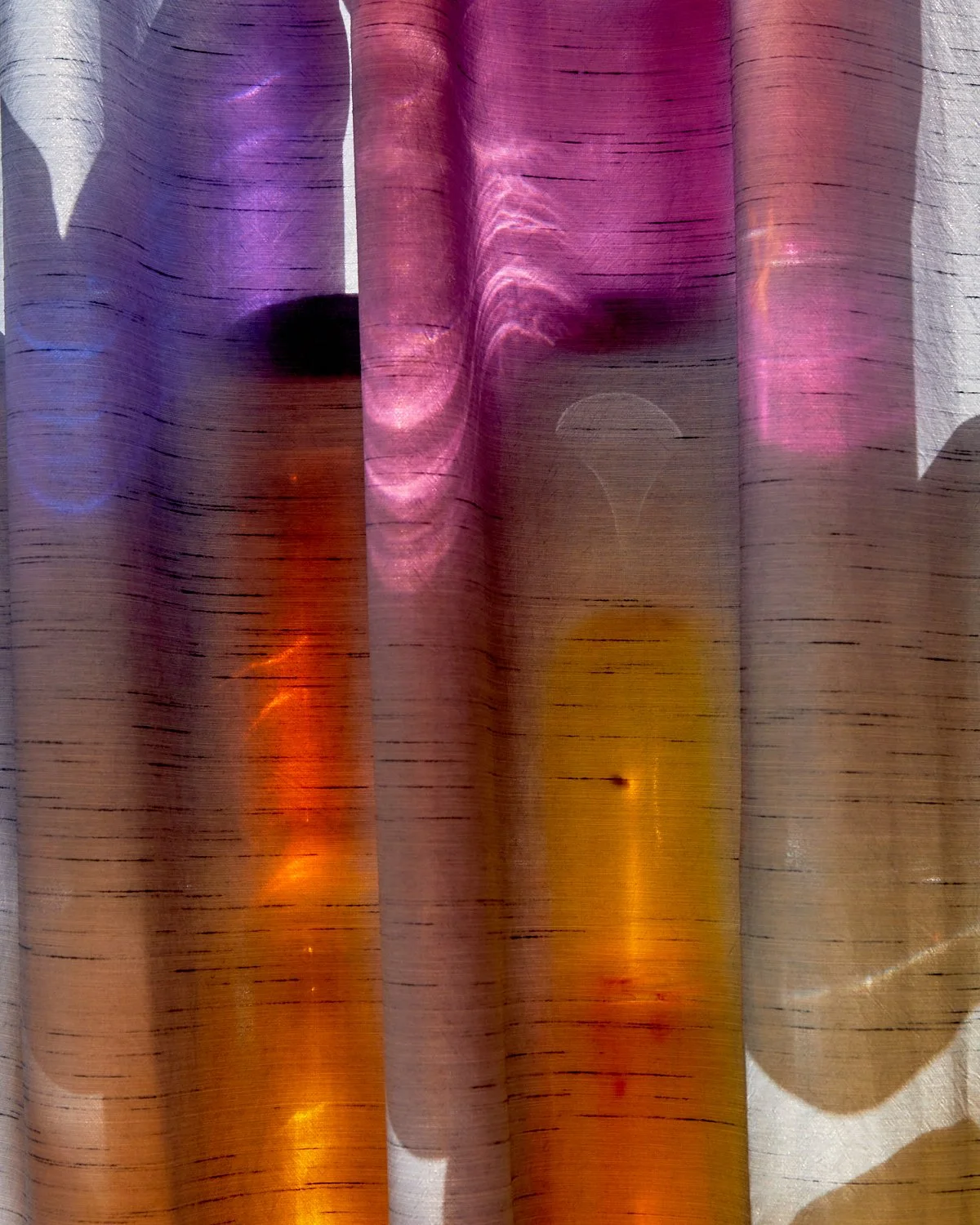
By Jan Theun van Rees
20 × 25 cm, ed. 3/10, 2026
Archival pigment ink on Innova ”Soft Textured BrightWhite Photorag” with nutwood frame and museumglass
This work is part of the series Painted Room
In this series, Jan Theun van Rees explores the relationship between art and the spaces in which it is displayed. He photographs museum interiors through reflections in artworks or the glass of their frames. Blurred fragments of the original work remain visible, merging with the surrounding architecture and creating a new photographic composition.
This small-scale photograph was created at the Arp Museum Bahnhof Rolandseck in Germany during Silent Spaces, a retrospective exhibition of photographer Axel Hütte. The reflection shows how an artwork can shape the atmosphere and perception of the room around it.
Shipping within the Netherlands and Belgium is on us.